Jewish Rye Deli Bread
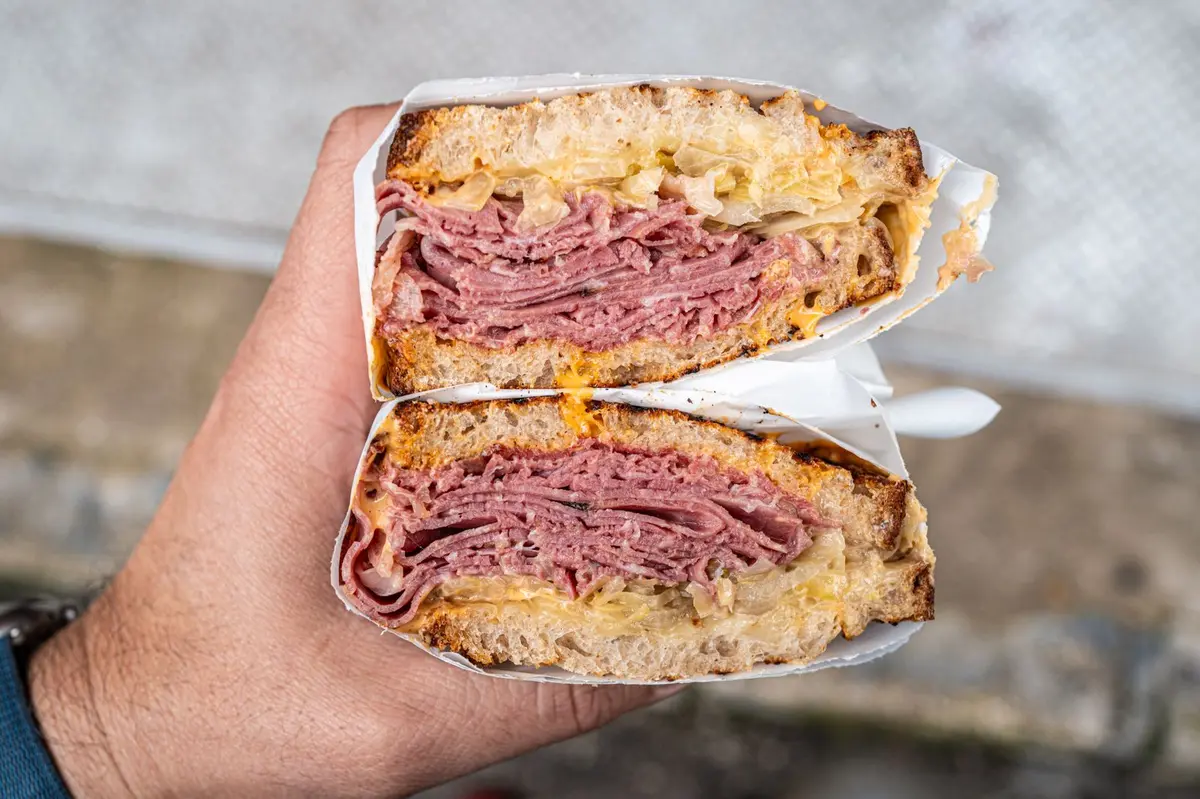
Jewish rye deli bread is a dense, tangy loaf made with rye flour, caraway seeds, and a small amount of whole wheat flour, shaped into an oval and baked until the crust is dark and crackled. The dough ferments overnight or longer, developing the sourness that defines it. What makes it work is the long, cool rise and a spray of water in the oven at the start of baking.
- Difficulty
- Intermediate
- Total time
- 16 hr 30 min
- Hands-on
- 30 min
- Serves
- 1 loaf (about 1.5 lb)
Ingredients
- 300g bread flour
- 150g rye flour
- 50g whole wheat flour
- 10g salt
- 3g instant yeast
- 320ml water, room temperature
- 15g caraway seeds
- 1g caraway seeds, for topping
Step by step
Mix the dough
In a large bowl or the bowl of a stand mixer, combine bread flour, rye flour, whole wheat flour, salt, yeast, and caraway seeds. Add water all at once. Mix on low speed with a dough hook for 6 minutes, or by hand until no dry flour remains and the dough comes together. It will be shaggy and slightly tacky—this is correct. Do not overwork it. Stop as soon as the dough pulls away from the sides of the bowl.
Let it rest covered
Cover the bowl with a damp towel or plastic wrap. Leave it at room temperature for 30 minutes. This is an autolyse—the flours are absorbing water and gluten is beginning to develop without kneading.
Perform one fold
After 30 minutes, wet your hand and grab one side of the dough. Fold it up and over the center, then rotate the bowl 90 degrees and repeat three more times (four folds total, one minute elapsed). You are building strength without kneading. Cover again and move to the refrigerator.
Cold ferment overnight
Refrigerate the dough for 12 to 16 hours. The dough will rise slowly, developing sourness. You want it to increase by about 50 percent—not doubled. It should feel slightly puffy when you press it gently.
Shape the loaf
Remove the dough from the refrigerator 30 minutes before shaping. Dust a work surface with rye flour. Turn the dough out and gently shape it into an oval about 10 inches long by 5 inches wide. The dough will be sticky—use a bench scraper and handle it minimally. Place it seam-side up in a floured banneton or bowl lined with a towel.
Final proof
Let the shaped dough sit at room temperature for 3 to 4 hours. You're waiting for it to increase by about 50 percent again. Press it gently with a finger—the dimple should spring back slowly, not immediately. If it springs back fast, it needs more time. If it doesn't spring back at all, you've overproofed it.
Prepare to bake
Preheat your oven to 475°F (245°C) for at least 45 minutes. If using a Dutch oven, put it in now. If using a baking stone, place it on the middle rack.
Score and load
Turn the dough out onto parchment paper. Using a sharp blade or lame, score the top with a single long slash at a shallow angle, or three shorter diagonal slashes. If using a Dutch oven, carefully flip the dough into the pot, parchment and all. If using a stone, place the dough on the stone. Spray the dough and the oven walls with water from a spray bottle.
Bake covered
If using a Dutch oven, cover it and place it in the oven. Bake for 25 minutes covered. If not using a Dutch oven, spray the oven again with water and continue. The steam trapped in the oven is what gives you the crackled, dark crust.
Finish baking uncovered
Remove the Dutch oven lid (or stop spraying). Bake for 20 to 25 minutes more. The crust should be dark brown to nearly black in spots. The loaf should sound hollow when tapped on the bottom.
Cool completely
Remove from the oven and place on a wire rack. Do not slice for at least 2 hours. Rye bread continues to set as it cools. If you slice it hot, the inside will be gummy.
Questions people ask
What's the difference between rye deli bread and pumpernickel?
Deli rye contains more wheat flour and less rye, giving it a lighter color and a less dense crumb. Pumpernickel is often made with mostly rye flour, sometimes with added cocoa or molasses, and is darker and denser. Deli rye is the sandwich bread; pumpernickel is more of a statement.
Can I use all-purpose flour instead of bread flour?
Yes. The loaf will be slightly less open in crumb, but it will still work. Bread flour has more protein, which helps develop gluten—but rye dough relies less on gluten development than wheat dough does, so the difference is smaller than you might expect.
My dough is too sticky to handle. What did I go wrong?
Rye dough is supposed to be sticky. If it's more like batter than dough, you may have added too much water or used a particularly wet batch of rye flour. On your next loaf, reduce water by 20ml and see how it goes. Always weigh your flour if possible; volume measurements for rye can be imprecise.
Can I skip the overnight ferment?
You can reduce it to 6 to 8 hours at room temperature if you're in a hurry, but the bread will be less sour and the flavor will be flatter. The long, cool ferment is not optional if you want that tangy, developed taste. That is what this bread is about.
Why does my crust crack unevenly or not at all?
Cracks come from oven spring—the rapid expansion of the loaf in the first few minutes of baking. If you're not getting them, your dough may be overproofed (it has expanded all it's going to before it hits heat) or your oven may not be hot enough. Ensure the oven is fully preheated for 45 minutes and that you spray it with water right when the bread goes in.
Tips
- Rye dough is wetter and stickier than wheat dough. This is not a sign of failure. A bench scraper is your friend.
- The sourness comes from time, not ingredients. If you want it more sour, extend the cold ferment to 18 or 20 hours. If you want it less sour, reduce the ferment to 10 hours.
- A Dutch oven is not required, but it makes the crust better. The trapped steam creates the shattered appearance. If you don't have one, spray the oven walls generously with water every few minutes for the first 15 minutes of baking.
- Slice this bread with a serrated knife and a gentle sawing motion. The dense crumb can compress if you press down hard.
- This bread keeps for three days wrapped tightly at room temperature. After that, it begins to stale. Freeze it for longer storage—it thaws in about 4 hours.
Variations
- Pumpernickel-style (darker): Increase rye flour to 180g and reduce bread flour to 270g. Add 1 tablespoon of molasses or dark brown sugar to the dough. The result is denser, darker, and slightly sweeter. Bake time may increase by 3 to 5 minutes.
- With fennel instead of caraway: Replace caraway seeds with an equal amount of fennel seeds. The flavor will be slightly more delicate and less assertive. This version pairs well with milder deli meats.
- Seeded crust: After scoring, brush the dough lightly with water and press caraway and sesame seeds onto the surface. The seeds stick better if applied before the final proof rather than after shaping.
More breads: American breads, British breads and Italian breads.