All-Butter Pie Crust
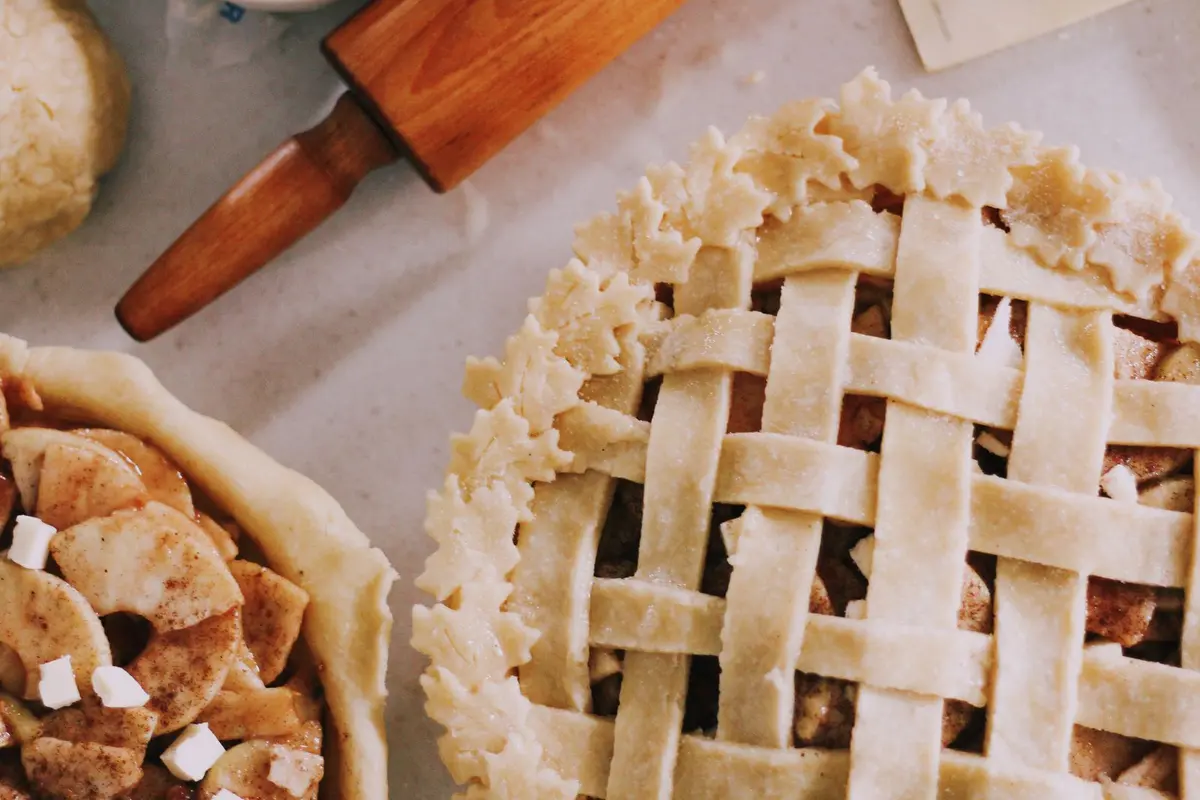
All-butter pie crust is made by cutting cold butter into flour, then adding just enough ice water to bring it together into a shaggy dough. The butter stays in distinct pieces as you work—those pockets of fat are what create flaky layers when the crust bakes. Chill the dough for at least an hour before rolling and baking.
- Difficulty
- Intermediate
- Total time
- 2 hr 30 min (includes chilling)
- Hands-on
- 20 min
- Serves
- 1 (9-inch pie)
- You will need
- food processor or two forks, rolling pin, bench scraper or dough cutter, plastic wrap, pie pan, pie weights or foil (for blind baking)
Ingredients
- 2.5 cups all-purpose flour
- 1 tsp kosher salt
- 1 tbsp sugar (optional, but helps browning)
- 1 cup (2 sticks) unsalted butter, cut into 1/2-inch cubes and kept very cold
- 6-8 tbsp ice water
Step by step
Mix flour, salt, and sugar
Mix flour, salt, and sugar in a bowl or food processor. If using a processor, pulse for 3 seconds to combine.
Cut cold butter into flour until shaggy
Add cold butter cubes and pulse (if using processor) or cut with two forks until the mixture looks like coarse cornmeal with some pea-sized butter pieces still visible. You want shards, not a smooth paste. This should take 1-2 minutes in a processor, or 5-10 minutes by hand.
Add ice water until dough just comes together
Sprinkle ice water over the mixture a tablespoon at a time, tossing gently with a fork or pulsing the processor. Stop as soon as the dough just comes together in a shaggy mass. Do not overwork. If a few dry flour bits remain, that's fine—they'll hydrate during chilling.
Shape into disk and chill at least 1 hour
Gently press the dough into a thick disk. If making a two-crust pie, divide in half and shape each into a disk. Wrap tightly in plastic wrap and refrigerate for at least 1 hour, or up to 2 days.
Roll dough to 1/8-inch thickness
Remove dough from fridge and let it sit at room temperature for 5-10 minutes until pliable but still cold. On a lightly floured surface, roll from the center outward, rotating the disk as you work. Aim for a round about 1/8 inch thick and 2 inches wider than your pie pan.
Transfer to pan and crimp edges
Loosely roll the dough around your rolling pin and unroll it over the pie pan. Press gently into the bottom and sides. For a single-crust pie, trim the overhang to 1 inch, fold it under itself, and crimp with a fork or your fingers. For a double-crust pie, leave the overhang and add the top crust before crimping.
Chill in pan 20 minutes before baking
Once the dough is in the pan, refrigerate for at least 20 minutes before filling and baking. This helps prevent shrinkage. If prebaking is called for, prick the bottom with a fork, line with foil and pie weights, and bake at 400°F for 12-15 minutes until set but not golden.
Questions people ask
Why is my crust tough and not flaky?
You likely overworked the dough. Mixing activates gluten, which makes the crust chewy instead of tender and layered. Stop as soon as the dough comes together in a shaggy mass, even if you still see a few dry bits. Also check that you're using enough fat—2 sticks of butter to 2.5 cups flour is the standard ratio.
Can I make pie crust ahead of time?
Yes. Wrapped dough keeps in the fridge for 2 days or in the freezer for 3 months. Thaw frozen dough in the fridge overnight before rolling. You can also make the dough, roll it out, transfer it to the pan, and freeze it like that—bake directly from the freezer, adding 5-10 minutes to the baking time.
My dough is too dry. Can I add more water?
Yes, but carefully. Add ice water 1 teaspoon at a time and toss gently. The dough should come together without being sticky. If you add too much and it becomes wet, there's not much to do—it will still work, but the crust will be less flaky. Next time, start with 7 tbsp water instead of 6.
Why did my crust shrink in the oven?
Two reasons: gluten development or not enough chill time. Gluten pulls the dough inward as it bakes. To prevent this, don't overwork the dough and always chill it at least 20 minutes in the pan before baking. You can also dock the bottom with a fork or use pie weights.
What's the difference between this and store-bought crust?
Homemade all-butter crust has actual butter flavor and true flakiness from the butter pieces. Store-bought crusts often use shortening or oil for shelf stability and convenience, which changes both taste and texture. Once you bake a real butter crust, the difference is obvious.
Can I use salted butter instead of unsalted?
You can, but reduce the salt in the recipe to 1/2 tsp. Unsalted butter gives you control over the salt level and is better for baking.
How do I know when the crust is done baking?
For a blind-baked (prebaked) crust, look for it to set and turn pale golden at the edges, about 12-15 minutes. For a filled pie, the crust should be deep golden brown all over, and the filling should show signs of doneness (bubbling at the edges for fruit pies, a set top for custard). If the crust is browning too fast, loosely tent it with foil.
Tips
- Butter temperature is non-negotiable. If your kitchen is warm, chill the flour and mixing bowl first. Some bakers freeze the butter cubes for 15 minutes before starting.
- Ice water matters. Use actual ice water, not room-temperature water. Fill a glass with ice and water before you start, then measure from it.
- Don't skip the second chill. After rolling and transferring to the pan, chilling the dough again prevents dramatic shrinkage during baking.
- Visible butter shards in the raw dough are a sign you did it right. If you can see them when you roll it out, you'll get layers.
- A food processor is faster but a fork works fine. If using a processor, be careful not to let it run continuously—pulse and check frequently.
- For a golden crust, brush with an egg wash (1 egg beaten with 1 tbsp water) before baking. For a less shiny finish, use cream or milk.
- If the dough cracks as you roll it out, let it warm slightly or patch with a scrap of dough; the pie will still bake well.
- Crimping the edges not only seals the crust but signals that you made it yourself. Use a fork or your thumb and forefinger in a consistent pattern.
Variations
- Tart crust: Use the same method but add 1 egg yolk after the water. This makes the dough a bit richer and easier to press into a tart pan without rolling. Reduce water to 4-5 tbsp.
- Whole wheat variation: Replace 1/2 cup all-purpose flour with whole wheat flour. Whole wheat absorbs more water, so start with 5 tbsp ice water and add more as needed. The crust will be nuttier and slightly less flaky.
- Savory herb crust: Add 1 tsp dried thyme, 1/2 tsp black pepper, and a small pinch of cayenne to the dry ingredients. Use this for chicken pot pie or vegetable galettes.
- Vodka crust: Replace 2-3 tbsp of the ice water with vodka. Vodka evaporates faster than water, which helps create a flakier crust. Use the same total liquid amount overall.
Use it for: custard tart, more American pastry and kouign amann for another laminated bake.