Pain au Chocolat from Scratch
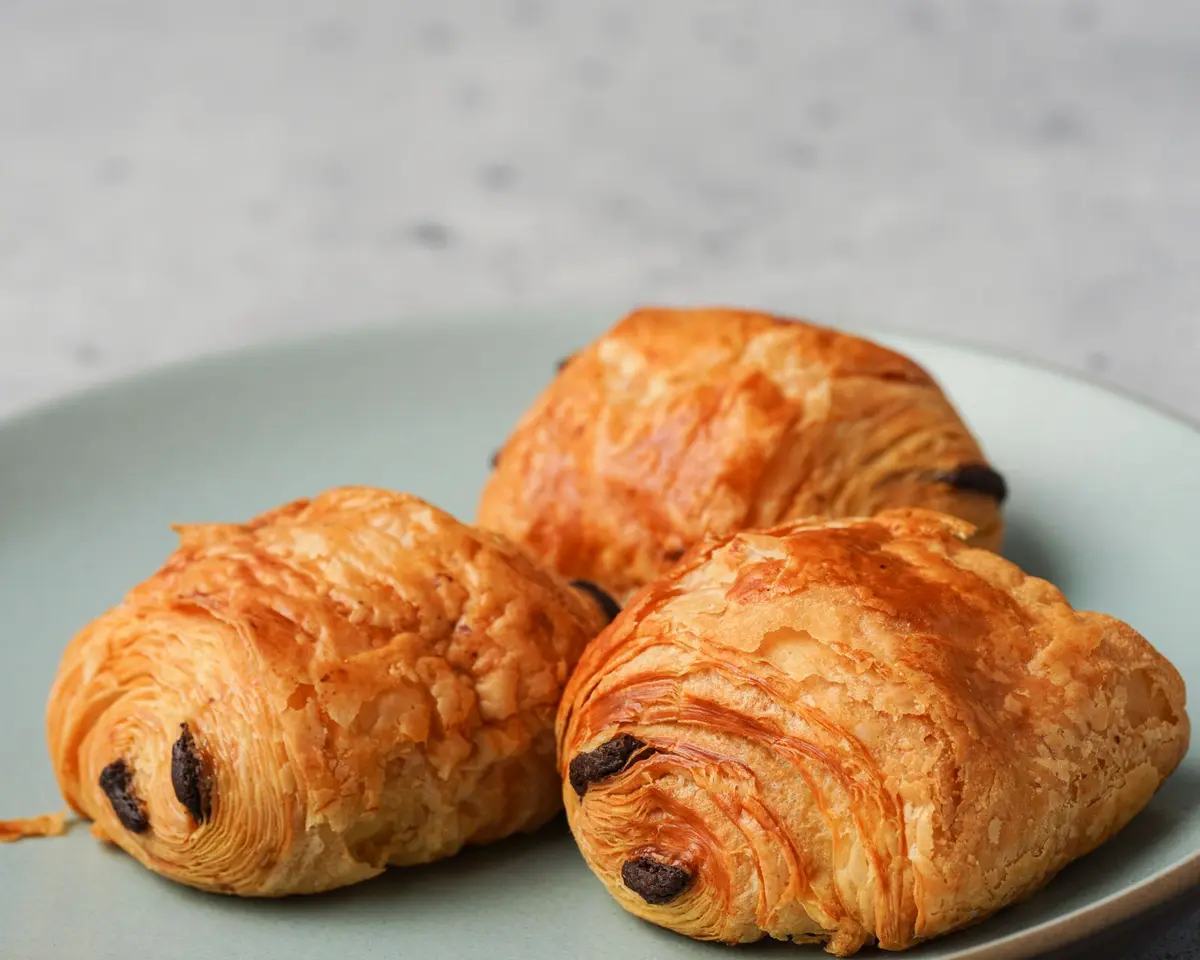
Pain au chocolat is a laminated pastry—butter folded into dough multiple times to create hundreds of crisp, flaky layers—with chocolate bars tucked inside. The dough ferments slowly in the fridge, which develops flavor and makes the lamination possible. Bake at 400°F until deep golden and the chocolate just begins to leak at the edges.
- Difficulty
- Advanced
- Total time
- 18 hours (mostly hands-off fermentation)
- Hands-on
- 1 hour 15 minutes
- Serves
- 8
- You will need
- stand mixer with dough hook, bench scraper, rolling pin, baking sheets, parchment paper, instant-read thermometer, pastry brush
Ingredients
- 500 g bread flour
- 10 g fine sea salt
- 8 g instant yeast
- 30 g granulated sugar
- 100 ml whole milk, warmed to 27°C (80°F)
- 100 ml water, at room temperature
- 25 g unsalted butter, softened (for dough)
- 250 g cold unsalted butter (for lamination)
- 100 g bittersweet chocolate bars (divided into 8 sticks)
- 1 egg, beaten with 1 tablespoon water (egg wash)
Step by step
Mix the dough.
In a stand mixer, combine flour, salt, yeast, and sugar. Add the warm milk and water. Mix on low with the dough hook for 2 minutes until shaggy. Increase speed to medium-low and mix for 8 minutes. The dough should be smooth and slightly tacky. Add the 25 g of soft butter in small pieces while mixing. Continue for another 2 minutes until the butter is fully incorporated and the dough is supple. It will stick slightly to the bowl; that's correct.
First bulk fermentation.
Turn the dough onto a lightly floured surface. Shape it into a rough rectangle. Place it in a container or on a baking sheet, cover with plastic wrap, and refrigerate for 1 hour. This rests the gluten and cools the dough before lamination begins.
Prepare the butter block.
Remove the 250 g of cold butter from the fridge. Place it between two sheets of parchment paper. Use a rolling pin to pound and roll it into a 15 × 20 cm rectangle, roughly the thickness of a pencil. It should be cold and pliable but not cracking. Set aside on parchment.
Complete the first letter fold.
Remove the cold dough from the fridge. On a floured surface, roll it into a rectangle roughly 20 × 30 cm. Place the butter block in the center. Fold the left third of the dough over the butter. Fold the right third over that, so you have three layers of dough with butter in between. Rotate 90 degrees so the open edges face left and right (like a book spine facing you). This is one letter fold. Wrap in plastic and refrigerate for 30 minutes.
Complete the second letter fold.
Remove the dough. On a floured surface, roll it again into a 20 × 30 cm rectangle, always rolling from the spine toward the open edges. Fold the left third over the center, then the right third over that. Rotate 90 degrees. Wrap and refrigerate for 30 minutes.
Extended cold rest overnight.
After the second fold, the dough can rest in the fridge for 8 to 12 hours, or overnight. This long rest allows the gluten to fully relax and the flavor to develop. It also keeps the butter cold and stable.
Shape pastries with chocolate.
Remove the dough from the fridge. On a floured surface, roll it into a rectangle 16 × 32 cm and about 5 mm thick. Using a sharp knife, cut it into 8 squares, each roughly 8 × 8 cm. Place one chocolate stick on each square, positioned diagonally. Roll the square tightly over the chocolate, wrapping it so the seam is on the bottom. The pastry should be snug around the chocolate. Place seam-side down on a parchment-lined baking sheet, leaving 5 cm between each one.
Final proof at room temperature.
Cover the shaped pastries with plastic wrap. Let them rise at room temperature (about 21°C / 70°F) for 2 to 3 hours. They should increase in volume by about 50 percent and feel slightly puffy when poked gently. The dough should not fully double—laminated dough proofs more gently than regular enriched dough.
Egg wash and bake until golden.
Heat your oven to 200°C (400°F). Brush each pastry with egg wash, covering the top and sides but not pooling it in the corners. Bake for 20 to 25 minutes. The pastries should be deep golden brown, with chocolate just beginning to emerge at the edges. Rotate the baking sheet halfway through for even color. They are done when the bottoms are firm and caramelized.
Cool and serve.
Remove from the oven and transfer to a wire rack. Let cool for at least 5 minutes before eating. The pastries will continue to set as they cool. Serve warm or at room temperature. They are best eaten the day they are baked.
Questions people ask
Can I make this dough in a food processor?
Not effectively. A stand mixer develops gluten evenly and controls temperature better. A food processor risks overworking the dough and generating heat, which compromises lamination.
What if I don't have time for 12 hours in the fridge?
You need at least 8 hours after the second fold. You can reduce resting time between the two letter folds to 20 minutes each, but the final rest is non-negotiable for flavor development and gluten relaxation.
Can I use margarine or plant-based butter instead of real butter?
No. Margarine and plant-based butters have different water and fat content. They won't laminate the same way and won't produce the flaky, shattered texture. Use real unsalted butter.
How do I know when the pastries are done proofing?
They should feel slightly puffy and spring back slowly when you press a finger gently into the dough. They will have increased in volume but won't be fully doubled. If they feel hard and don't spring back at all, they need more time.
Why is chocolate leaking from my pain au chocolat?
This is not a flaw—it means the chocolate has melted, which is the goal. A little leakage at the edges is normal and signals the pastry is done. If chocolate is pouring out into the pan, your oven may be too hot, or your pastries may have over-proofed.
Tips
- Keep your hands and work surface cold. Work quickly when rolling or folding laminated dough. Warmth is the enemy of clean layers.
- If the butter block begins to soften during lamination and you see butter leaking from the edges, stop. Wrap everything and refrigerate for 15 minutes, then continue.
- Use a bench scraper instead of your hands to lift and fold the dough. It reduces warmth transfer and prevents stretching.
- Chocolate sticks should be cold when you wrap them. If your kitchen is very warm, keep them in the fridge until the moment you shape.
- The egg wash should be applied thinly and evenly. Pools of egg in corners will bake darker and can make the pastry taste eggy.
- Pain au chocolat is a laminated pastry, not an enriched one. Do not skip the folds or reduce resting time—the texture depends on it.
Variations
- Pain au Chocolat with Hazelnut Spread: Spread 1 teaspoon of hazelnut-cocoa spread on each square before adding the chocolate bars. The spread melts into the chocolate as it bakes.
- Pain aux Raisins: After the second letter fold, roll the dough thin, brush with softened butter, sprinkle with brown sugar and plump raisins (soaked in warm water first), roll tightly, cut into spirals, and proof and bake as for pain au chocolat. No chocolate bars needed.
- All-Butter Lamination (No Extra Liquid): Some bakers use only the butter block without adding any soft butter to the dough. This dough is slightly drier and requires careful hydration monitoring, but lamination is cleaner and layers are more pronounced.
More laminated pastry: French pastry, kouign amann and palmiers.