Tunisia vs Japan: Harissa and Miso Ramen
Two fermented pastes, two ancient traditions, one very late Saturday night.
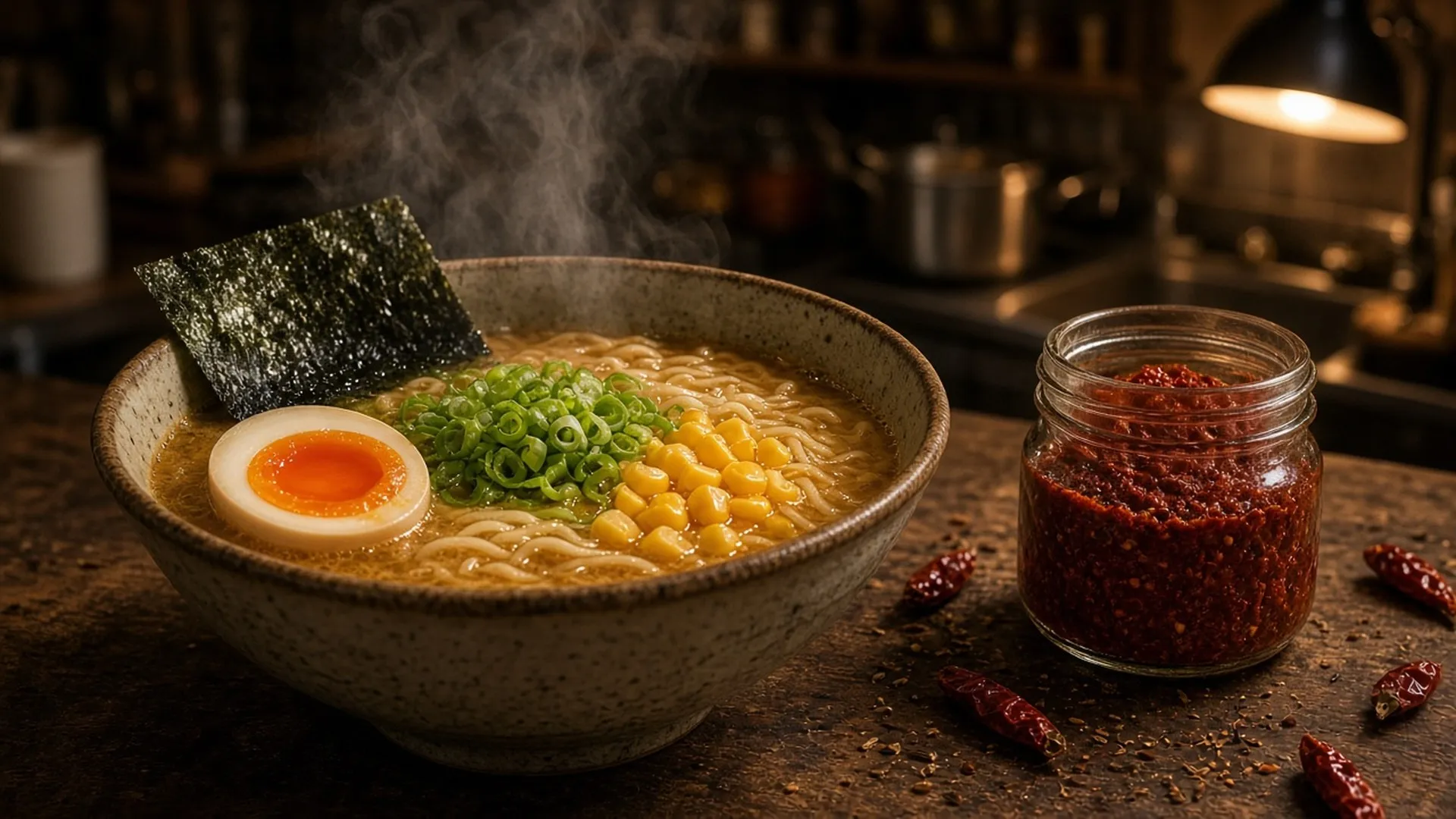
Two fermented pastes, two ancient traditions, one very late Saturday night.
- Tunisia: Harissa
- Japan: Miso Ramen
- Match: Group Stage · Monterrey · June 20, 2026
This match begins at midnight. I am not going to apologize for it or pretend it is something other than what it is: a late-night football match that requires food suited to the hour. Not elaborate food. Not slow food. Food that is warming, umami-forward, and can be ready in the time between kickoff and the first substitution.
Tunisia and Japan share something that most people do not immediately notice: both cuisines are built around fermented condiments that are the flavor foundation for everything else. Harissa is not just chilli paste — it is a complex fermented sauce with caraway, coriander, and garlic that has been made in North Africa for centuries and is used in everything from couscous to eggs to fish. Miso is fermented soybean paste with similar depth, similar ubiquity, and similar complexity.
For this match: homemade harissa on flatbread with good butter, and a proper miso ramen that takes twenty minutes because we are not making ramen broth from scratch at midnight. We are using a correct shortcut. You have my permission.
Homemade harissa and midnight miso ramen.
Serves: 4 · Time: 40 minutes · Active: 30 minutes
Ingredients
For the homemade harissa:
- 200g dried red chillies (a mix of mild and hot — ancho for body, bird's eye for heat)
- 4 garlic cloves
- 1 tsp caraway seeds, toasted
- 1 tsp coriander seeds, toasted
- ½ tsp cumin seeds, toasted
- 2 tbsp tomato paste
- 3 tbsp olive oil, plus more to cover
- juice of ½ lemon
- salt
For the midnight miso ramen:
- 1.5 litres good chicken stock
- 3 tbsp white miso paste
- 1 tbsp soy sauce
- 1 tbsp mirin
- 1 tsp sesame oil
- 1 thumb-sized piece of ginger, sliced
- 4 portions ramen noodles (fresh or dried)
- 4 soft-boiled eggs, halved (cook 6.5 minutes from boiling, cool in ice water, peel)
- 4 slices chashu pork (use good quality sliced pork belly, or sear thick slices of bacon as a substitute)
- spring onions, sliced
- nori sheets
- sesame seeds
- chilli oil
Method
- For the harissa: stem and seed the dried chillies — keep some seeds if you want more heat. Cover with boiling water and soak 20 minutes until softened. Drain.
- Toast the whole spices in a dry pan until fragrant — 1-2 minutes. Grind to a powder in a mortar or spice grinder.
- In a food processor, combine the soaked chillies, garlic, ground spices, tomato paste, and lemon juice. Process to a rough paste. With the motor running, add the olive oil in a slow stream until incorporated. Season with salt.
- Transfer to a sterilized jar. Smooth the top, cover with a thin layer of olive oil. This will keep refrigerated for 3-4 weeks. Serve tonight on warm flatbread with cold salted butter. The rest will be there tomorrow.
- For the ramen: bring the chicken stock to a simmer. Add the ginger slices. Simmer 10 minutes, then remove the ginger.
- Whisk the miso paste with a ladleful of hot stock until smooth — do not add it directly to the pot or it will clump. Add back to the pot with the soy sauce and mirin. Do not boil the miso — heat destroys its living cultures and dulls its flavor. Keep it below a simmer.
- Cook the ramen noodles separately according to their package instructions. Drain and divide between four deep bowls.
- Ladle the miso broth over the noodles. Top each bowl with a halved soft-boiled egg, pork slices, spring onions, a sheet of nori, sesame seeds, and a drizzle of chilli oil. Eat immediately.
Two fermented pastes, two ancient traditions. Do not rush either.
— On patience after midnight
What fermentation does that cooking cannot.
Both harissa and miso develop their complexity through fermentation — the transformation of raw ingredients by microbial activity over time. In miso, Aspergillus mold breaks down soybean proteins into amino acids, including glutamates, which register as umami. The process also produces hundreds of flavor compounds that fresh soybeans do not contain. White miso ferments for weeks; red miso ferments for years. The difference in flavor is not subtle.
Harissa's fermentation is more subtle — dried chillies that have been soaked, combined with garlic, and stored under oil develop additional complexity over days and weeks in the jar. Fresh harissa made today and harissa made last week are measurably different. Both are good. The week-old version is better.
This is what separates condiments from seasonings: a condiment built on fermentation carries the history of its making into every dish it touches. Salt seasons. Miso transforms.
If you must vary it
- Red miso instead of white. Red miso (aka miso) is more intensely flavored and saltier. Use 2 tablespoons instead of 3 and taste before adjusting. The broth will be darker and more complex. I prefer it.
- Harissa with fresh chillies. Char 400g fresh red chillies under a broiler until blackened. Proceed from step 2. The paste will be brighter and less smoky than the dried chilli version. Both are correct.
The harissa starts by toasting whole spices in a dry pan, a step explained in detail in Gusto's guide to toasting and blooming. Japan also plays the Netherlands, with tonkatsu and bitterballen, in Netherlands vs Japan. Other late-night and early-evening menus are on the tournament food hub.
Gusto / June 2026
It is midnight and you are making ramen. This is a good decision.