Ecuador vs Curaçao: Ceviche and Orange Cake
One coast built a dish on acid. The other built a liqueur on orange peel. Both require patience and a good knife.
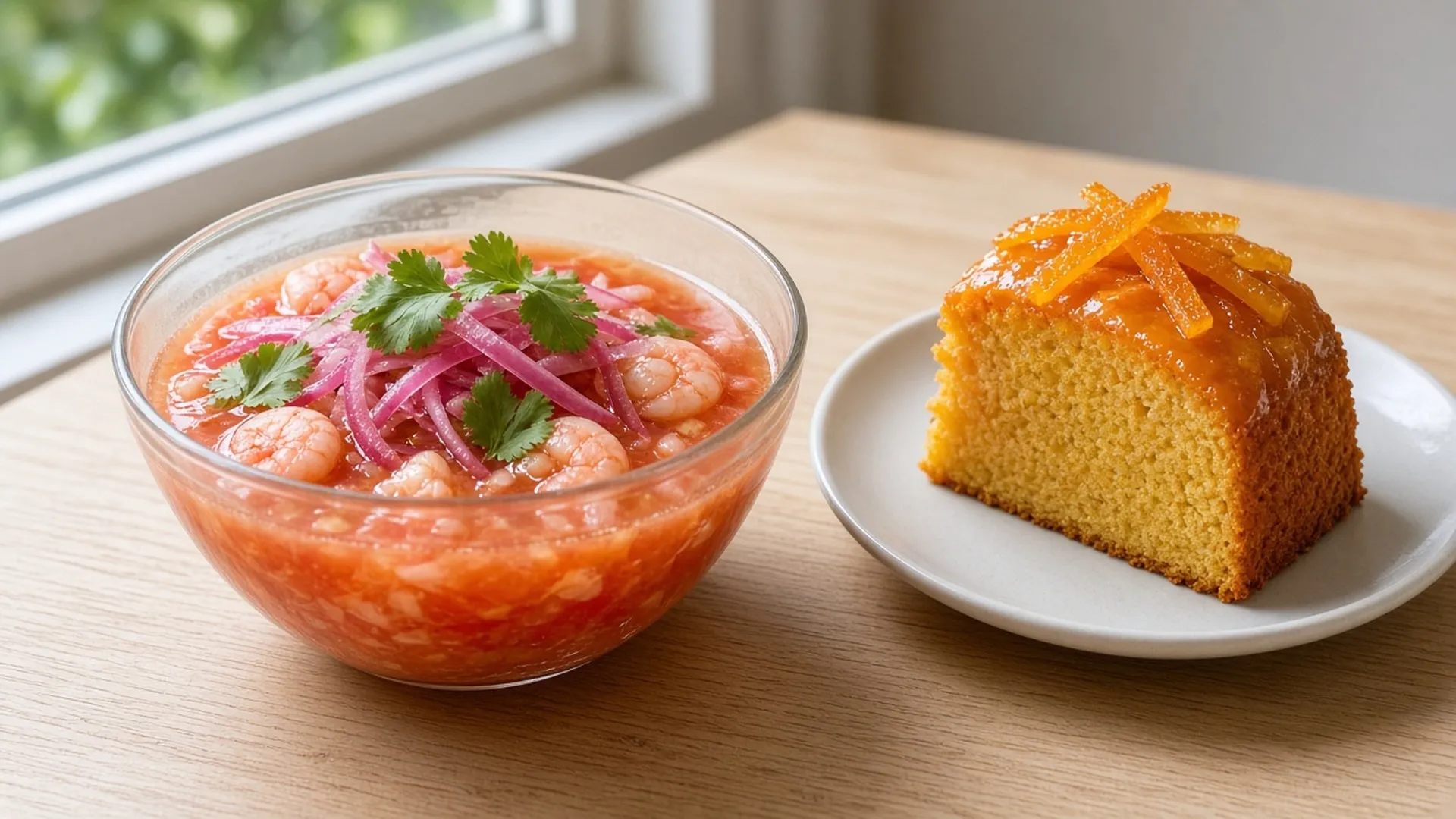
One coast built a dish on acid. The other built a liqueur on orange peel. Both require patience and a good knife.
- Ecuador: Ceviche
- Curaçao: Orange Cake
- Match: Group Stage · Kansas City · June 20, 2026
Ecuadorian ceviche is not Peruvian ceviche. People confuse them constantly and it is understandable — both involve raw seafood treated with citrus juice — but the differences are significant enough to treat them as separate dishes from a separate philosophy.
Peruvian ceviche is made to order, the fish marinated for two to three minutes, served immediately while the texture is still almost raw at the center. Ecuadorian ceviche is cooked. Not with heat — with time. The shrimp sit in a bath of tomato, citrus, and onion for thirty minutes to an hour, which both firms the proteins and allows the marinade to penetrate fully. The result has a softer, more relaxed texture and a flavor that is rounder and more integrated.
Curaçao contributes its famous blue liqueur — which is technically orange liqueur with food coloring, made from the dried peel of the laraha citrus, a bitter orange that grows on the island, descended from Valencia oranges the Spanish planted there. I am not making cocktails tonight. I am using the peel in an orange and rum cake that pairs with the ceviche the way a good digestif pairs with a long lunch.
Ecuadorian shrimp ceviche and Curaçao orange cake.
Serves: 4 · Time: 1 hour 15 minutes (including marinating time) · Active: 30 minutes
Ingredients
For the Ecuadorian shrimp ceviche:
- 600g raw shrimp, peeled and deveined, tails off
- juice of 6 limes
- juice of 2 oranges
- 2 large ripe tomatoes, finely diced
- 1 red onion, very finely sliced into half-moons
- 1 bunch coriander, leaves only
- 1 scotch bonnet or rocoto pepper, finely minced (or less, depending on tolerance)
- 2 tbsp ketchup — do not look at me like that
- 1 tsp sugar
- salt
To serve:
- popcorn, plain and salted (traditional Ecuadorian accompaniment)
- plantain chips or tostones
- sliced avocado
For the Curaçao orange cake:
- 200g plain flour
- 200g caster sugar
- 3 eggs
- 150ml neutral oil
- 150ml fresh orange juice
- zest of 2 oranges
- 1 tbsp dark rum
- 1 tsp baking powder
- ½ tsp salt
- icing sugar to finish
Method
- Start the cake. Preheat oven to 170°C / 340°F. Whisk eggs and sugar until pale and slightly thickened — 3-4 minutes with an electric whisk. Add oil, orange juice, rum, and zest. Fold in flour, baking powder, and salt until just combined. Pour into a greased 20cm round tin and bake 35-40 minutes until a skewer comes out clean. Cool completely before serving.
- For the ceviche: bring a pot of well-salted water to a boil. Add the shrimp and cook for exactly 90 seconds — they should be just pink and barely cooked through. They will continue to cook in the marinade. Drain and cool immediately under cold running water.
- Combine the lime juice, orange juice, ketchup, sugar, and a pinch of salt in a large bowl. Taste — it should be tart with a slight background sweetness. Add the tomato, onion, and chilli. Stir to combine.
- Add the cooled shrimp. Toss everything together. Cover and refrigerate for 30-45 minutes. The shrimp will firm slightly and the marinade will take on a pinker color from the tomato and ketchup. This is correct.
- Before serving, add the coriander and check seasoning. The dish should be bright and acidic with a little heat. Serve in wide shallow bowls with popcorn sprinkled over the top — I know, and I am telling you to do it anyway — plantain chips on the side, and avocado.
- Dust the cake with icing sugar before serving. It is tender and citrus-forward. It is the right end to this meal.
The acid is doing the work. Your job is to let it.
— On ceviche patience
Why citrus juice changes the texture of shrimp.
Citrus juice is acidic — lime juice sits at approximately pH 2. When protein is exposed to a highly acidic environment, the amino acid chains denature: they unfold and then re-bond in a different configuration, producing a firmer, less translucent texture that resembles cooked protein. This is why ceviche made with raw fish appears to "cook" in lime juice over time.
Ecuadorian ceviche differs from Peruvian in that it starts with briefly heat-cooked shrimp and then continues with an acid treatment. The shrimp enters the marinade already firmed from heat, and the acid then works more gently over a longer time, primarily flavoring rather than structuring. The result is a more tender final texture than a pure acid-cure would produce on raw shrimp.
The orange in the marinade contributes sweetness and a different flavor profile of citric acid — slightly more fragrant and less sharp than lime. The balance of the two is the flavor of Ecuadorian ceviche.
If you must vary it
- White fish instead of shrimp. Firm white fish — sea bass, halibut, snapper — cut into small cubes, no pre-cooking required. Marinate 20-30 minutes maximum or the texture will become rubbery. Taste at 15 minutes.
- No rum in the cake. Replace with additional orange juice. The rum's function is depth and a slight caramel note — without it the cake is brighter and more citrus-forward. Both are good.
Curaçao's other match brings keshi yena, the stuffed Edam wheel, in Germany vs Curaçao. Another South American side gets asado-style short ribs and chimichurri in Argentina vs Algeria. The full list of matches with menus is on HowTo Food's World Cup page.
Gusto / June 2026
The popcorn is not optional. I have already said my piece.