Custard Tart
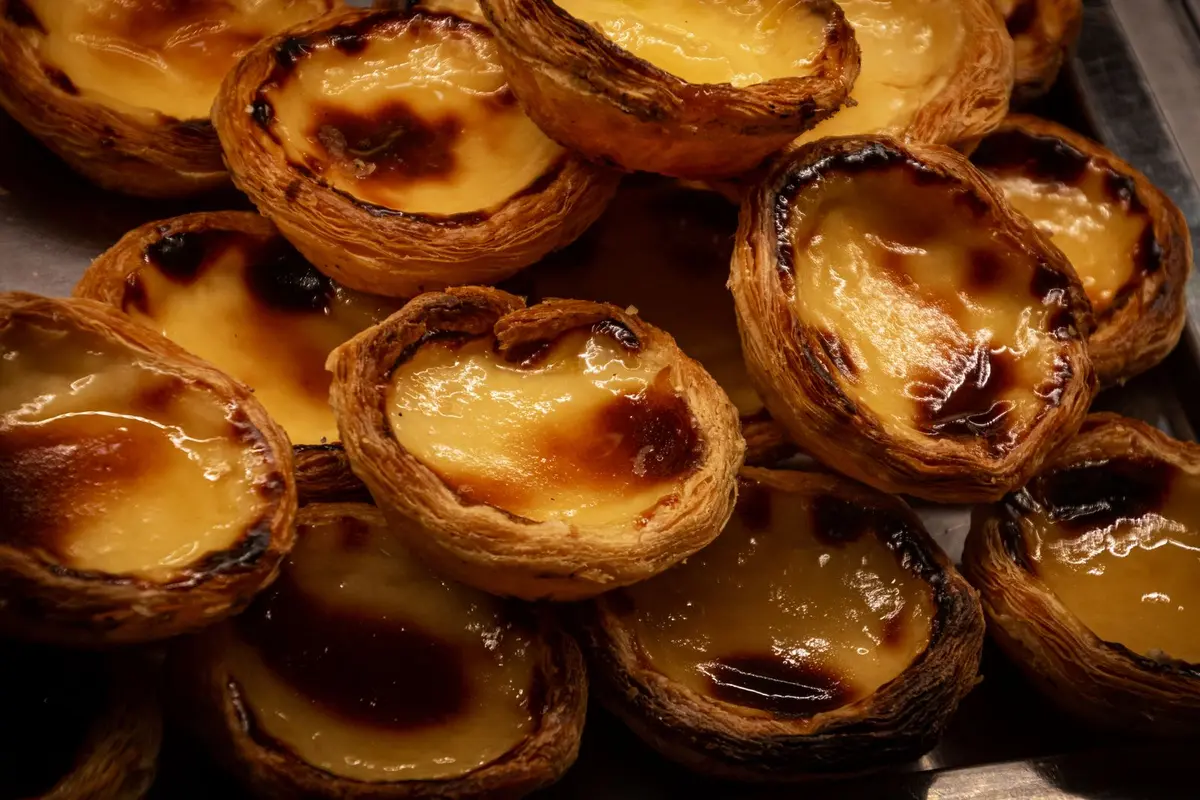
A custard tart is a pastry shell filled with a smooth, set custard and baked until the filling is just firm but still slightly creamy in the center. The shell should be golden and crisp, the custard pale yellow with a whisper of nutmeg on top. It takes about two hours total, most of it hands-off in the oven.
- Difficulty
- Intermediate
- Total time
- 2 hr
- Hands-on
- 20 min
- Serves
- 8
- You will need
- 9-inch tart tin with removable base, blind-baking weights or dried beans, fine sieve, oven thermometer
Ingredients
- 8 oz shortcrust pastry (store-bought or homemade)
- 4 large eggs
- 10 fl oz whole milk
- 2 fl oz double cream
- 1 tablespoon caster sugar
- 1/4 teaspoon salt
- 1/2 teaspoon vanilla extract or a scrape of vanilla pod
- pinch freshly grated nutmeg (for topping)
Step by step
Line and chill the tart tin
Roll out your shortcrust to about 3mm thickness and press it into the tin, letting it overhang slightly. Prick the base all over with a fork. Chill for at least 15 minutes while you preheat the oven to 200°C (180°C fan).
Blind-bake until golden and crisp
Line the chilled shell with greaseproof paper and fill with baking weights or dried beans. Bake for 15 minutes, then carefully remove the weights and paper. If the base looks wet, return it to the oven for 3-4 minutes. The pastry should be light golden and crisp to the touch. Remove from the oven and keep it warm.
Whisk and sieve the custard mixture
Whisk together the eggs, milk, cream, sugar, salt, and vanilla in a bowl. Pour the mixture through a fine sieve into another bowl—this removes any stringy bits of egg white and creates a silky texture. Let it sit for a minute or two; any foam will rise to the surface and you can skim it off with a spoon.
Pour and bake until barely set at center
Pour the custard into the warm pastry case. Lower the oven to 180°C (160°C fan). Bake for 25-35 minutes, watching carefully after 25 minutes. The filling should barely wobble at the very center when you gently move the tin. The edges should look just set but never browned. A small knife inserted into the custard about 1 inch from the edge should come out clean; the very center will be softer.
Cool and dust with nutmeg
Remove the tart from the oven and let it rest in the tin for 5 minutes. Run a small knife around the inside edge and push the base up to release the tart onto a cooling rack. Once completely cool, dust the top with freshly grated nutmeg just before serving. The tart can be served at room temperature or slightly warm.
Questions people ask
Can I make the pastry case ahead?
Yes. You can blind-bake the pastry case up to a day in advance and keep it in an airtight container. Reheat it gently in a 160°C oven for 3-4 minutes before pouring in the custard to ensure it's warm when the custard goes in.
Why does my custard sometimes have a watery layer on top?
Overbaking. The custard proteins have contracted and expelled their liquid. Pull it out sooner next time—when the center still has that slight jiggle. You're looking for barely-set, not fully-set.
Can I use a store-bought pastry case?
Yes, but blind-bake it first following the package instructions. Many store-bought cases are not pre-baked and will be soggy if you pour custard straight in.
Why does the recipe call for sieving the custard?
It removes air bubbles and any lumps of coagulated egg white, giving you a smooth, silky filling with no pockets or rough texture. It's not strictly necessary, but it's the difference between good and excellent.
How long does the tart keep?
Best eaten the same day or the next day. After that the pastry begins to soften from the moisture in the custard. Store it covered in the fridge and eat within 2 days. It doesn't freeze well because the custard texture breaks down.
Tips
- If your pastry case cracks during blind-baking, brush the crack with a little beaten egg white and return it to the oven for 2 minutes to seal it.
- Cold custard is grainy custard. Always pour into a warm pastry case, not a cold one.
- The oven temperature is more important than the exact baking time. A 10-degree difference in actual oven temperature can shift the baking time by 5 minutes or more.
- Don't rely on the top browning to tell you it's done—custard tarts rarely brown noticeably on top. Go by the wobble test instead.
- If you overbake and the custard splits, it's still edible but the texture will be slightly curdled. Serve it slightly chilled, which helps mask the issue.
Variations
- Portuguese Custard Tart: Use a higher ratio of egg yolks to whole eggs (6 yolks and 2 whole eggs instead of 4 whole eggs), reduce the milk to 6 fl oz, and increase the cream to 4 fl oz. Add a cinnamon stick to the custard as it sits. The result is richer, more intensely yellow, and slightly less stable—it should jiggle more noticeably. Dust the baked tart with cinnamon and a light scattering of icing sugar instead of nutmeg.
- Treacle Custard Tart: Add 1 tablespoon of black treacle or dark molasses to the custard mixture and omit the vanilla. The custard becomes slightly darker and more complex. Proceed as normal. This version sits somewhere between custard and chess pie.
- Lemon Custard Tart: Add the zest of 1 lemon and 1 tablespoon of lemon juice to the custard mixture. The acidity can cause the custard to set slightly faster, so watch the timing closely. Dust with caster sugar instead of nutmeg.
For more British bakes, see British baking and British cakes, or the French pastry guides.