Kkakdugi (Cubed Radish Kimchi)
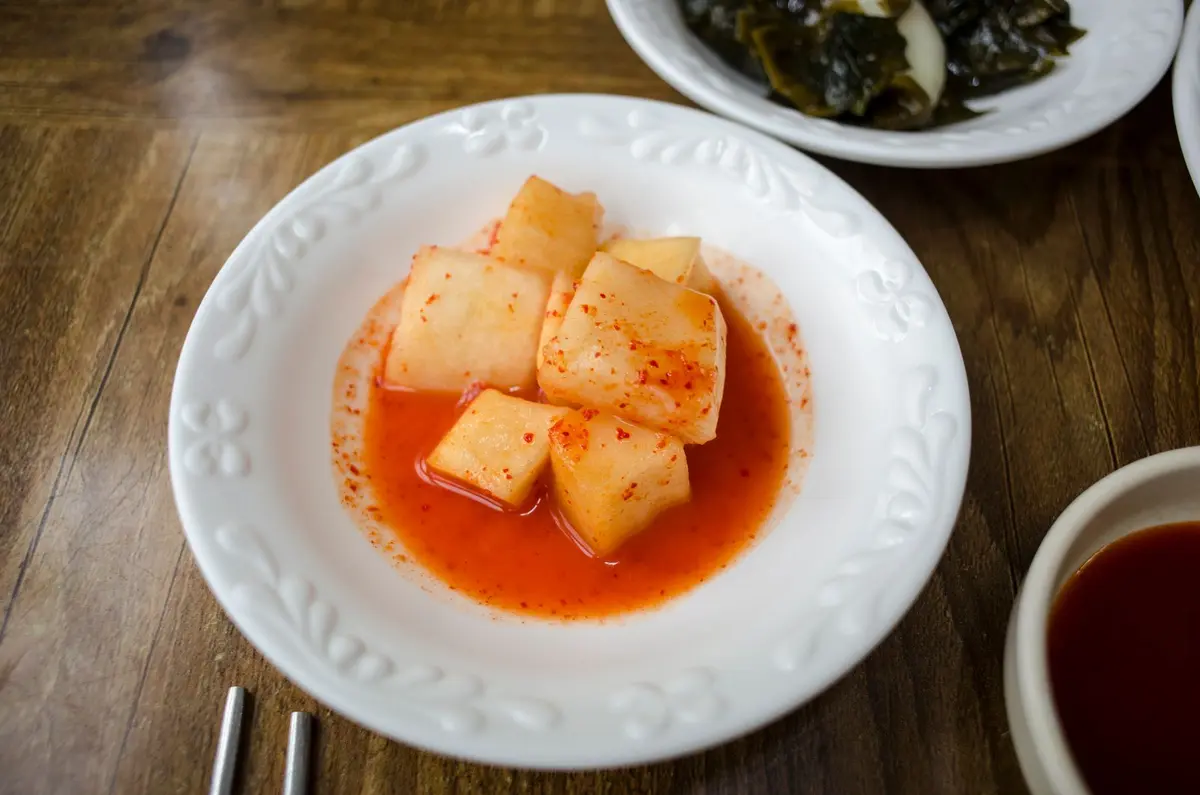
Kkakdugi is a quick-fermented side dish made by salting cubes of Korean radish and tossing them in a punchy paste of gochugaru, garlic, ginger, and fish sauce. The radish stays crunchy while the seasonings penetrate the flesh, creating a bright, sharp bite that mellows over a few days on the counter.
- Difficulty
- Intermediate
- Total time
- 2 days
- Hands-on
- 45 min
- Serves
- 6-8
Ingredients
- 4 lb Korean radish (mu), peeled and cut into 1-inch cubes
- 2 tbsp coarse sea salt
- 1 tbsp sugar
- 1/2 cup gochugaru (Korean red chili flakes)
- 1/4 cup fish sauce
- 3 tbsp minced garlic
- 1 tsp grated ginger
- 4 scallions, cut into 1-inch pieces
- 2 tbsp sweet rice flour mixed with 1 cup water, cooked into a thin porridge and cooled
Step by step
Cure the radish
Place cubed radishes in a large bowl. Sprinkle with salt and sugar. Toss well and let stand for 60 minutes, tossing once halfway through.
Prepare the paste
In a separate bowl, whisk together the cooled rice porridge, gochugaru, fish sauce, garlic, and ginger until it forms a thick, vibrant red slurry.
Drain
Drain the liquid from the radishes. Do not rinse them; keep that residual salinity.
Combine
Add the red paste and scallions to the radishes. Use gloved hands to massage the paste into every cube, ensuring even coating.
Pack
Press the mixture into a clean glass jar. Push down firmly to remove air pockets, leaving at least an inch of headspace at the top.
Ferment
Keep at room temperature for 24 hours, then move to the refrigerator. It is ready to eat after 48 hours but peaks in brightness around day five.
Questions people ask
How do I know if it has fermented enough?
The radish will taste less like raw vegetable and more like a cohesive, tangy pickle. You will smell a distinct sourness when you open the jar.
Can I use low-sodium fish sauce?
Stick to standard fish sauce. The salt content is a necessary component for the fermentation process to safely preserve the radish.
Tips
- Wear gloves when mixing the paste to protect your skin from the chili capsaicin.
- If the jar lid bulges slightly, it means gas is building up—that is normal. Just burp the jar by opening it quickly to release the pressure.
- Use Korean radish (mu) if possible; its firm, dense structure is superior to common daikon, which can turn soft too quickly.
Variations
- Heavy Garlic: Double the minced garlic for a sharper, more pungent finish that stands up well to fatty meats.
- Sea-salt heavy: Use a coarse-grain mineral salt instead of standard sea salt to slow down the fermentation rate.
More fermenting: Korean preserves, preserving and Middle Eastern preserves.