Tonkotsu Ramen
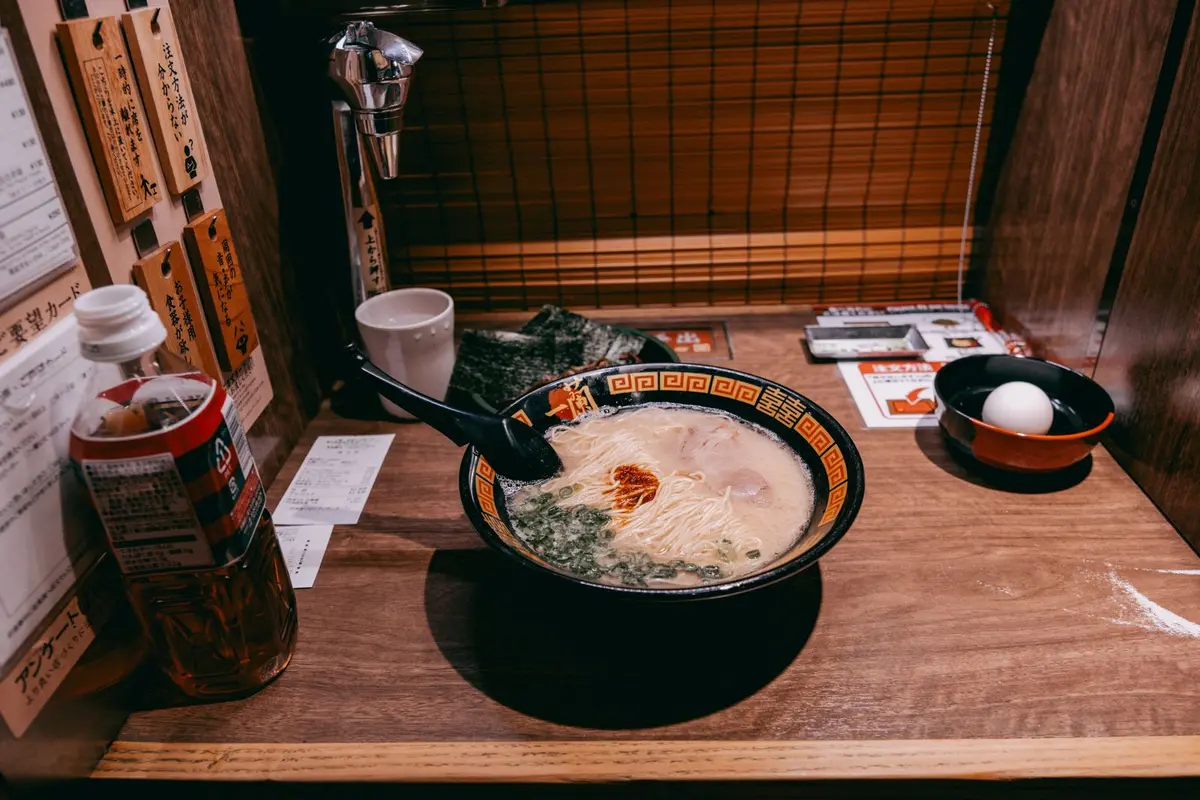
Tonkotsu ramen relies on a rolling boil of pork trotters and marrow bones to emulsify fat and collagen into a creamy, opaque broth. You achieve the signature texture by maintaining high heat for at least twelve hours, followed by a careful strain and a focused assembly with alkaline noodles, soft-boiled eggs, and rendered pork belly.
- Difficulty
- Advanced
- Total time
- 14 hours
- Hands-on
- 2 hours
- Serves
- 6
Ingredients
- 5 lb pork trotters and marrow bones, split
- 1 lb pork back fat
- 2 heads garlic, halved horizontally
- 4 inches fresh ginger, smashed
- 2 yellow onions, halved
- 12 oz fresh alkaline ramen noodles
- 6 soft-boiled eggs, marinated
- to taste shio tare (seasoning base)
Step by step
Blanch the bones
Cover bones with cold water in the stockpot, bring to a boil for 15 minutes, then drain. Scrub each bone clean of gray scum under cold running water.
The long boil
Return clean bones to the scrubbed pot. Add the pork fat, garlic, ginger, and onions. Cover with fresh water by two inches. Boil uncovered for 12 hours, topping off with boiling water to keep bones submerged.
Emulsify
In the final hour, use an immersion blender to break up the softened aromatics and fat directly into the broth. The liquid should transform from translucent to a milky, pale cream.
Strain
Pass the broth through a fine-mesh chinois into a clean pot. Use a ladle to press as much liquid through the solids as possible before discarding the bones.
Assembly
Add 2 tablespoons of tare to each bowl. Pour in the boiling broth and whisk to combine. Add cooked noodles, sliced pork, and a halved egg.
Questions people ask
Why does my broth look brown instead of white?
The bones were likely not cleaned thoroughly enough after the initial blanch. Any residual blood or impurities will muddy the color.
Can I use a pressure cooker?
You can shorten the cooking time to 90 minutes in a pressure cooker, but you will still need to finish it with a high-heat boil in an open pot to achieve the right texture.
Tips
- Always use boiling water when topping off the pot to prevent the temperature from dropping and stalling the emulsification.
- If the broth isn't creamy enough, boil it harder in the final hour to force the fat to integrate.
- Freeze leftover broth in single-serving portions; the collagen content will make it set like jelly when cold.
Variations
- Black Garlic Oil (Mayu): Drizzle with blackened garlic oil for a bitter, charred depth that cuts through the richness of the fat.
- Spicy Miso: Whisk a tablespoon of spicy red miso into the tare for a heavier, punchier broth base.
More Japanese food: Japanese lunch, Japanese cooking and Gusto's signature ragù for another long simmer.