Samosa Aloo
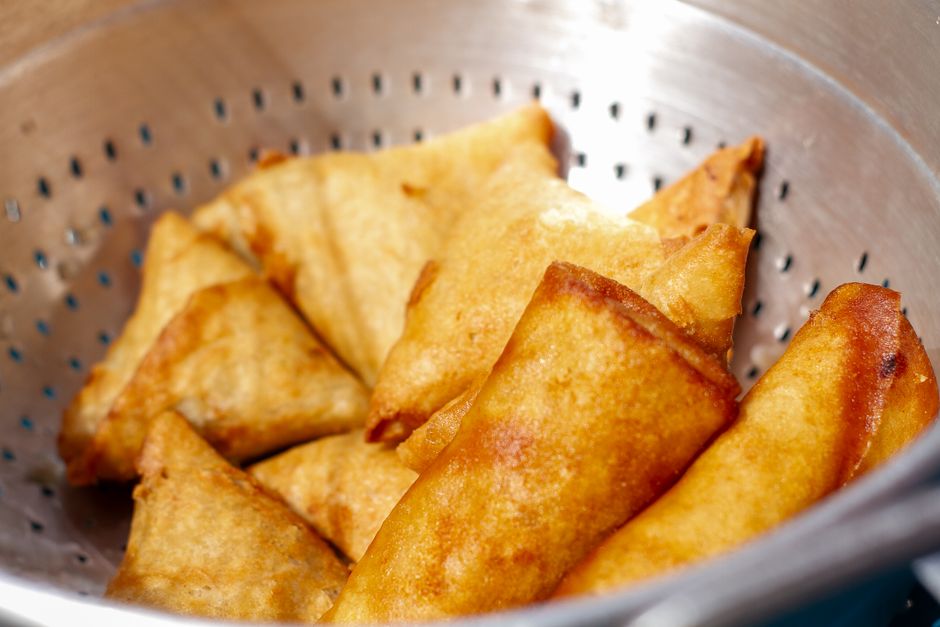
Samosa aloo is a savory pastry pocket filled with spiced potato and pea filling, then deep-fried or baked until the exterior is golden and crisp. The filling relies on a few key spices—cumin, coriander, amchur—and the technique is straightforward: make the dough, rest it, roll thin, fill, fold into a triangle, and fry or bake until the pastry is shattered and light. Most home cooks finish them fried, but baking works if you want less oil.
- Difficulty
- Intermediate
- Total time
- 2 hr
- Hands-on
- 1 hr 15 min
- Serves
- 18–20 samosas
- You will need
- rolling pin, 2-inch round cutter or small bowl, deep skillet or frying pan, wooden spoon, kitchen thermometer, small bowl for water
Ingredients
- 2 cups all-purpose flour
- 1 tsp salt
- 1/4 cup neutral oil or ghee
- 1/2 cup warm water
- 1.5 lb medium potatoes
- 1 cup fresh or frozen peas
- 1 medium onion, finely diced
- 2 tbsp neutral oil
- 1 tsp cumin seeds
- 1/2 tsp ground coriander
- 1/4 tsp red chili powder (adjust to taste)
- 1/4 tsp turmeric powder
- 1/2 tsp amchur (dry mango powder) or juice of 1/2 lemon
- 1/2 tsp garam masala
- to taste salt
- 2 tbsp fresh cilantro, chopped (optional)
- for frying or brushing oil (neutral oil or ghee)
Step by step
Mix and rest the dough
Mix flour and salt in a bowl. Add oil and rub it between your fingers until the mixture looks like breadcrumbs. Add warm water a splash at a time, mixing with your fingers until a stiff dough forms. Knead for 2–3 minutes until smooth. Cover with plastic wrap or a damp cloth and rest for at least 30 minutes at room temperature.
Cook and break potatoes
Cut potatoes into 1-inch chunks and boil in salted water until completely tender, about 15 minutes. Drain and let cool slightly. When cool enough to handle, break each potato into rough chunks with your fingers or a fork—you want pieces, not a smooth mash.
Toast spices and combine filling
Heat 2 tbsp oil in a skillet over medium-high heat. When shimmering, add cumin seeds and let them crackle for 20–30 seconds. Add diced onion and cook until it turns translucent and then edges of amber, about 5 minutes. Add coriander, chili powder, and turmeric; stir for 30 seconds until fragrant. Add the potato pieces, breaking them into bite-sized bits as you stir. Fold in the peas and cook for 2 minutes. Stir in amchur or lemon juice, garam masala, and salt to taste. Taste and adjust. Spread on a plate to cool.
Roll dough thin
Divide the rested dough into 18–20 equal pieces, each about the size of a large grape. Roll each into a ball. Working one at a time, roll a ball into a thin circle about 3–4 inches across, dusting with flour as needed. You want it thin enough to see your hand through it, but not so thin it tears.
Fill and fold into triangles
Using a 2-inch round cutter or the rim of a small bowl, cut a circle from each rolled-out square. Place 1 tablespoon of filling on one half of the circle, leaving a small border. Wet the edge with a wet fingertip, fold the circle in half to create a semicircle, then press the edges to seal. Bring the two corners of the semicircle together and press to form a triangle, sealing that point as well. The samosa should feel sturdy and hold its shape.
Fry or bake until golden
For frying: Heat 2–3 inches of oil in a deep skillet to 325–350°F. Fry samosas in small batches (don't crowd the pan) until golden on both sides, about 3–4 minutes total, turning once. Drain on paper towels. For baking: Brush samosas with oil, place on a baking sheet, and bake at 400°F for 20–25 minutes until golden and crisp, turning halfway through.
Questions people ask
Why does my samosa dough keep shrinking when I roll it?
The dough didn't rest long enough. Gluten is contracted and needs time to relax. Try resting for 45 minutes to an hour instead of 30 minutes. If it still shrinks, cover the rolled dough with a cloth and let it rest for 5 minutes before cutting.
Can I make the dough ahead?
Yes. Wrap it tightly and refrigerate for up to 24 hours. Bring it to room temperature for 15 minutes before rolling, as cold dough is harder to work with.
What's the difference between frying and baking?
Fried samosas are crispier and more shattered; baked ones are drier and less rich. Both are valid. Baking uses less oil but takes a bit longer and requires brushing with oil to achieve color.
My samosas are bursting open during frying. What went wrong?
Either the oil wasn't hot enough, the filling was too wet, or the seal wasn't tight. Make sure your oil is at 325–350°F, your filling is cooled and relatively dry, and you're pressing the edges firmly when sealing.
Can I use a food processor to make the dough?
Yes, but be careful not to overwork it. Pulse flour, salt, and oil until breadcrumb texture, then add water and pulse just until a shaggy mass forms. Don't let it become smooth.
How do I store cooked samosas?
Keep them in an airtight container at room temperature for up to 2 days. Reheat in a 350°F oven for 5–10 minutes to restore crispness. You can also freeze cooked samosas for up to 2 months and reheat from frozen.
Tips
- Don't skip the dough rest. It makes rolling easier and keeps the pastry tender.
- Break the potatoes by hand rather than mashing them; you want texture, not paste.
- Have all your filling made and cooled before you start folding—assembly should be quick.
- If oil temperature drops below 325°F when frying, samosas will absorb too much oil and become greasy.
- Samosas can be assembled, frozen on a tray, and then fried or baked straight from the freezer without thawing.
- Serve warm with mint chutney, tamarind chutney, or fresh lime and salt.
Variations
- Samosa aloo with sprouted moong: Replace half the peas with sprouted moong beans for earthiness and a slight nuttiness. Toast them lightly in the pan with the onions before adding other spices.
- Green samosa aloo: Finely mince fresh green chili and cilantro into the filling, and add a tablespoon of ginger-garlic paste. Use 1/2 tsp of green cardamom powder instead of garam masala for a fresher, more herbaceous samosa.
- Baked samosa aloo: If you prefer to avoid frying, brush assembled samosas with oil (or a mixture of oil and water) and bake at 400°F for 20–25 minutes, turning halfway through. They'll be less crisp than fried versions but still satisfying.