Jjajangmyeon: Black Bean Noodles
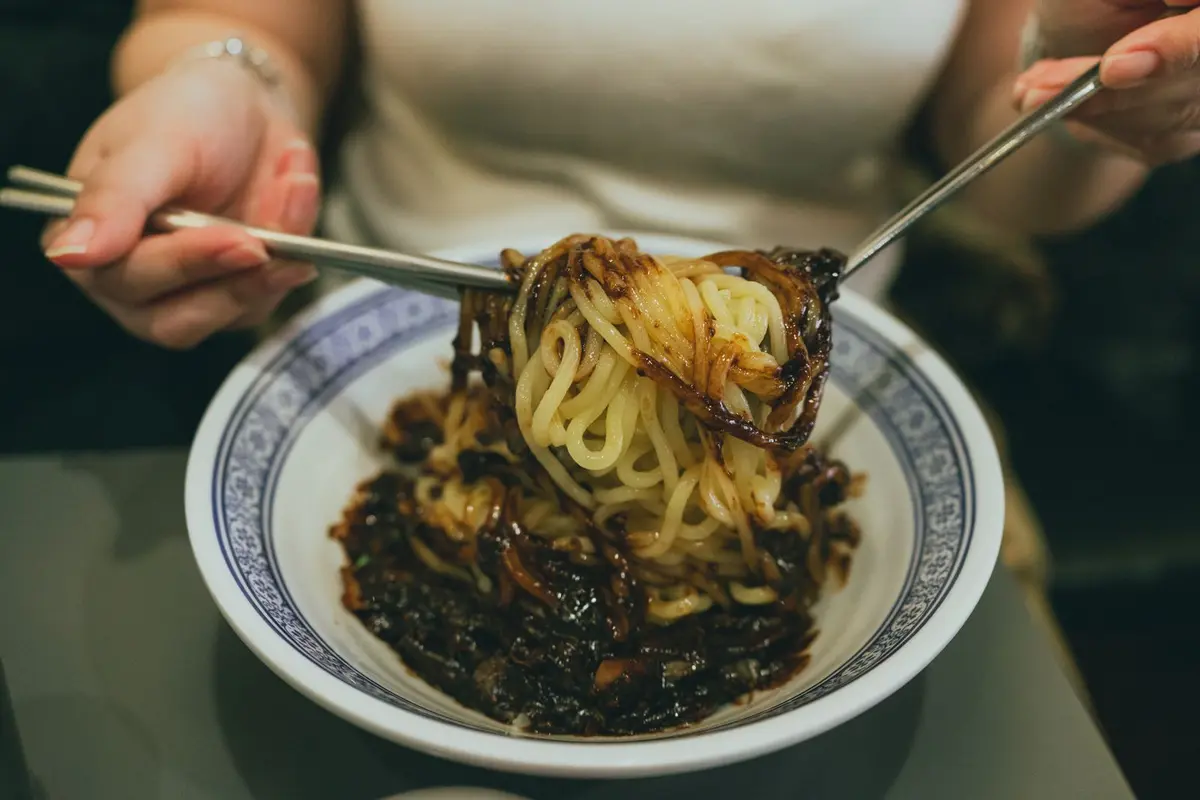
Jjajangmyeon is a dish of thick, chewy wheat noodles coated in a rich, dark sauce made by frying chunjang (black bean paste) in oil and simmering it with diced pork and vegetables. The key to the sauce is cooking the paste until it loses its raw bitterness, then balancing it with sugar and thickening it into a glossy, clinging gravy.
- Difficulty
- Intermediate
- Total time
- 40 min
- Hands-on
- 40 min
- Serves
- 4
Ingredients
- 1 lb fresh jjajangmyeon wheat noodles
- 1/2 cup chunjang (korean black bean paste)
- 1/2 lb pork belly or shoulder, diced into 1/2 inch cubes
- 2 medium yellow onions, diced
- 1 large zucchini, diced
- 1/2 large cabbage, diced
- 3 tbsp neutral oil, plus more for frying paste
- 2 tbsp sugar
- 1 tbsp soy sauce
- 2 tbsp cornstarch mixed with 2 tbsp water
- 2 cups chicken or vegetable stock
Step by step
Fry the paste
Heat 4 tablespoons of oil in a wok over medium heat. Add the chunjang and stir constantly for 3 minutes until the oil turns dark and the paste thins out. Remove the paste from the pan and set aside, leaving the oil behind.
Sear the pork and aromatics
In the same wok, add the diced pork and brown it well. Add the onions, zucchini, and cabbage. Stir-fry until the onions turn translucent and soft.
Combine
Add the fried bean paste back into the pan with the vegetables and pork. Stir in the soy sauce and sugar. Pour in the stock and bring to a simmer for 5 to 7 minutes until the vegetables are tender.
Thicken
Slowly pour in the cornstarch slurry while stirring. The sauce should turn thick, dark, and glossy enough to coat the back of a spoon.
Serve
Boil the noodles according to the package instructions until chewy. Drain well, portion into bowls, and ladle the hot sauce generously over the top.
Questions people ask
Can I use store-bought instant noodles?
You can, but the texture will differ significantly from the thick, alkaline-heavy fresh noodles used in restaurants.
Why is my sauce watery?
The vegetable water content varies; if it looks loose after adding the cornstarch, increase your slurry ratio slightly and let it simmer for one more minute.
Tips
- Do not overcook the noodles; they should maintain a distinct chewiness to stand up against the thick sauce.
- If the sauce tastes too bitter, add an extra teaspoon of sugar to balance the saltiness of the fermented paste.
- Serve with pickled yellow radish (danmuji) on the side to cut through the richness of the bean sauce.
Variations
- Samseon Jjajangmyeon: Add fresh shrimp, squid, or sea cucumber during the vegetable stir-fry stage for a seafood-heavy version.