Crafting a Kaiseki-Style Meal at Home
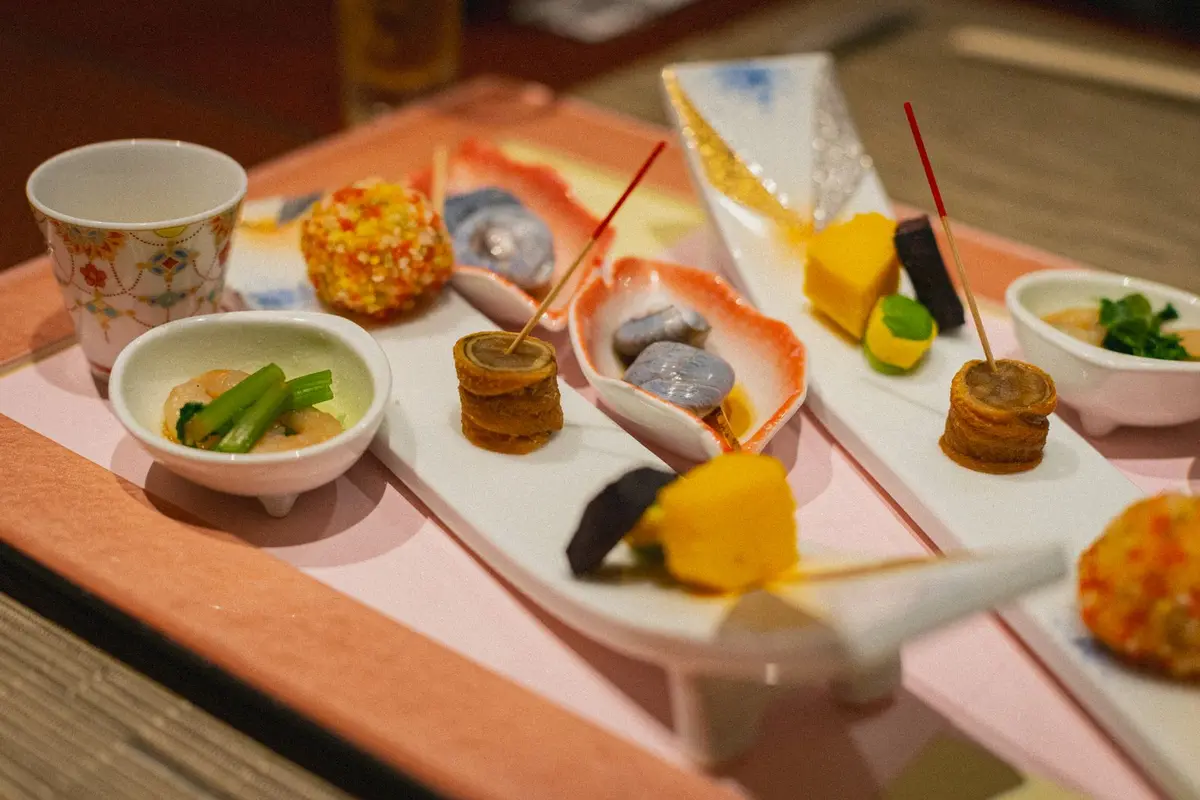
Kaiseki is less a recipe and more a rhythm of preparation that honors the current season through five fundamental methods: raw, simmered, grilled, steamed, and fried. To replicate this at home, focus on serving multiple small, restrained courses that emphasize the natural texture of one primary seasonal ingredient per plate.
- Difficulty
- Advanced
- Total time
- 3 hr
- Hands-on
- 2 hr
- Serves
- 4
Ingredients
- 1 lb fresh seasonal white fish, sashimi-grade
- 2 bunches young asparagus or fiddlehead ferns
- 1 block silken tofu
- 2 cups dashi broth (kombu and bonito)
- 4 tbsp soy sauce
- 2 tbsp mirin
- 1 piece daikon radish
Step by step
Prepare the raw course
Slice the fish against the grain into thin, uniform rectangles. Arrange them with a small mound of grated daikon to serve as the first course.
Simmer the seasonal vegetable
Briefly poach the asparagus in a solution of dashi, mirin, and a splash of soy sauce. Remove them while they retain a sharp snap.
Steam the tofu
Place the silken tofu in a shallow heatproof dish. Steam over high heat for five minutes until warmed through, then garnish with a single drop of fresh wasabi.
Grill the fish
Sear the remaining fish skin-side down in a dry, hot skillet until the skin is brittle and amber. Serve immediately with a pinch of sea salt.
Questions people ask
Does it have to be fourteen courses?
The number is symbolic of tradition, not a requirement for home cooking. Focus on a progression of three to five dishes that flow logically.
Tips
- Serve each dish on a different plate to highlight the season.
- Use a light hand with seasonings; salt and soy sauce should support, not overwhelm.
- Keep serving sizes small so the palate remains fresh between courses.
Variations
- Vegetarian Focus: Replace fish with seasonal mushrooms like maitake or king oyster, adjusting the dashi to use only kombu.