How to Make Brazilian Feijoada
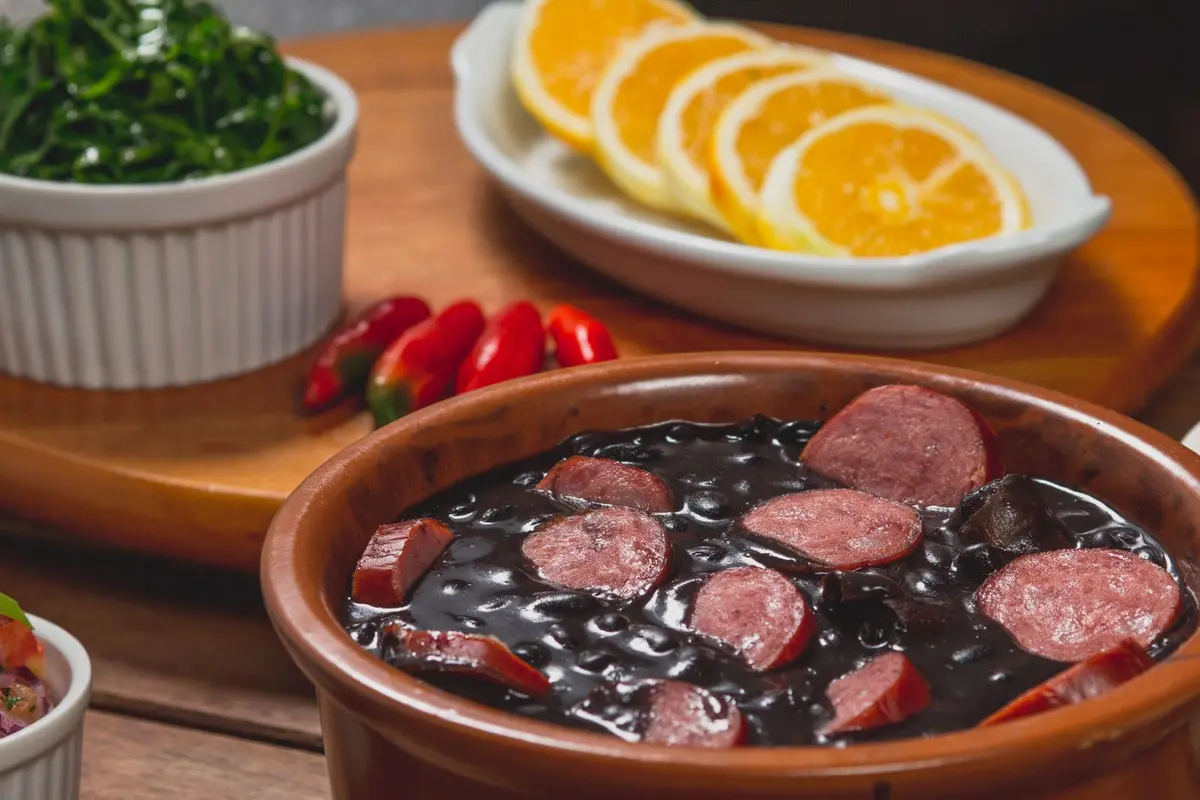
Feijoada is Brazil's national stew of black beans simmered with pork and beef, traditionally served on Wednesdays and Saturdays. The key is building layers of smoky, salty flavor through different cuts of meat and letting everything bubble together for hours until the beans break down into a rich, thick base.
- Difficulty
- Medium
- Total time
- 2 hr 30 min
- Hands-on
- 30 min
- Serves
- 6
- You will need
- Dutch oven or large heavy-bottomed pot with lid, large mixing bowl, wooden spoon, cutting board, chef's knife
Ingredients
- 1 pound dried black beans
- 2 pounds Brazilian linguiça or chorizo, smoked pork ribs, pork shoulder, and dried beef
- 2 onions
- 6 cloves garlic
- 2 bay leaves
- to taste salt
- to taste black pepper
Step by step
Soak black beans overnight
Use 1 pound of dried black beans in a large bowl with water covering them by 3 inches. They'll double in size, so give them room.
Cut and organize all meats
You need about 2 pounds total: Brazilian linguiça or chorizo, smoked pork ribs, pork shoulder, and dried beef (carne seca) if you can find it. Cut everything into 2-inch chunks except the sausage.
Brown meats in batches
Heat a heavy Dutch oven over medium-high heat. Brown each type of meat separately, building up fond on the bottom of the pot. Don't crowd them. Set aside as you go.
Sauté onions, garlic, and bay leaves
In the same pot with the drippings, sauté 2 diced onions, 6 minced garlic cloves, and 2 bay leaves until the onions turn golden. This takes about 8 minutes.
Combine beans and meats
Drain the soaked beans and add them to the pot with all the browned meats. Pour in enough water to cover everything by 2 inches.
Simmer for 2–3 hours
Bring to a boil, then reduce to the barest simmer. Partially cover and cook for 2-3 hours, stirring occasionally and adding hot water as needed to keep everything covered.
Test beans and meat for tenderness
The beans should be completely tender and starting to break apart, thickening the liquid. The meat should fall apart when pressed with a spoon.
Season and rest before serving
Taste and add salt and black pepper. Remove from heat and let it sit for 30 minutes before serving. The flavors meld and the stew thickens as it cools slightly.
Questions people ask
Can I use canned beans instead of dried?
Yes, but use about 3 cans of black beans and reduce the cooking time to 1 hour. The texture won't be quite as creamy, but it still works.
What if I can't find Brazilian sausage?
Spanish chorizo or Polish kielbasa work well. Look for something smoky and not too spicy since feijoada isn't a hot dish.
How thick should the final stew be?
Think somewhere between soup and chili. It should coat a spoon but still be pourable. The beans breaking down naturally thicken it.
Can I freeze leftover feijoada?
Absolutely. It freezes for up to 3 months and reheats beautifully. Add a splash of water when reheating since it thickens as it sits.
Tips
- Save some of the bean cooking liquid - it makes the perfect base for thinning the stew if it gets too thick
- The stew tastes better the next day, so make it ahead if you can
- Serve with white rice, farofa (toasted cassava flour), collard greens, and orange slices to cut the richness
- Don't add salt until the very end - the cured meats will provide plenty of saltiness
- If you can't find Brazilian carne seca, substitute with bacon or pancetta
Variations
- Vegetarian Feijoada: Replace meats with smoked mushrooms, roasted vegetables, and liquid smoke. Add extra garlic and onions for depth.
- Quick Feijoada: Use canned black beans and pre-cooked meats. Simmer everything together for 45 minutes to marry the flavors.
- Feijoada Completa: Add pig's ears, tail, and feet for the most traditional version. Requires longer cooking time and careful cleaning of the organs.
More Brazilian food: Brazil vs Haiti: feijoada and griot, Brazilian dinners and Brazilian cooking.