The Denim Holy Trinity
JT on the three pairs of jeans every man needs — a dark, a medium, a light — and the fourth pair nobody else will tell you about.
You need three pairs of jeans. Not seven. Not two. Three. The argument for which three — and the part nobody else will tell you about.
Recommended pairs — 3 (plus one in the garage)
Price range — $80 – $150
Decade — One decision, ten years
Sponsored — None
I want to talk about jeans.
Not in the way fashion people talk about jeans — selvage this, heritage that, don't wash them for a year. That's a different conversation for a different person. I want to talk about jeans the way a man who has wasted real money on bad denim over the years and finally figured it out wants to talk about them.
Here's what I figured out. You need three pairs. Not seven. Not two. Three. And if you buy the right three, you won't need to think about denim again for the better part of a decade.
That's the whole article. Everything else is just the argument.
Why You're Doing It Wrong
Most men treat jeans like a consumable. You grab a pair off a rack, wear them until they look rough, replace them with something similar. Repeat. You spend money constantly and never actually own a great pair of jeans.
The problem isn't the buying. It's the replacing.
A well-made pair of jeans from a brand you trust — worn regularly, washed properly, treated like something worth keeping — doesn't need replacing in two years. It needs replacing in ten. Maybe never. The denim gets better. The fit becomes yours. You stop thinking about it.
The investment isn't in the pair. It's in the system.
Three pairs. A dark wash, a medium wash, and something lighter for the days when you're not trying to impress anyone including yourself. Each one does a specific job. Together they cover everything.
The system, photographed in three plates.
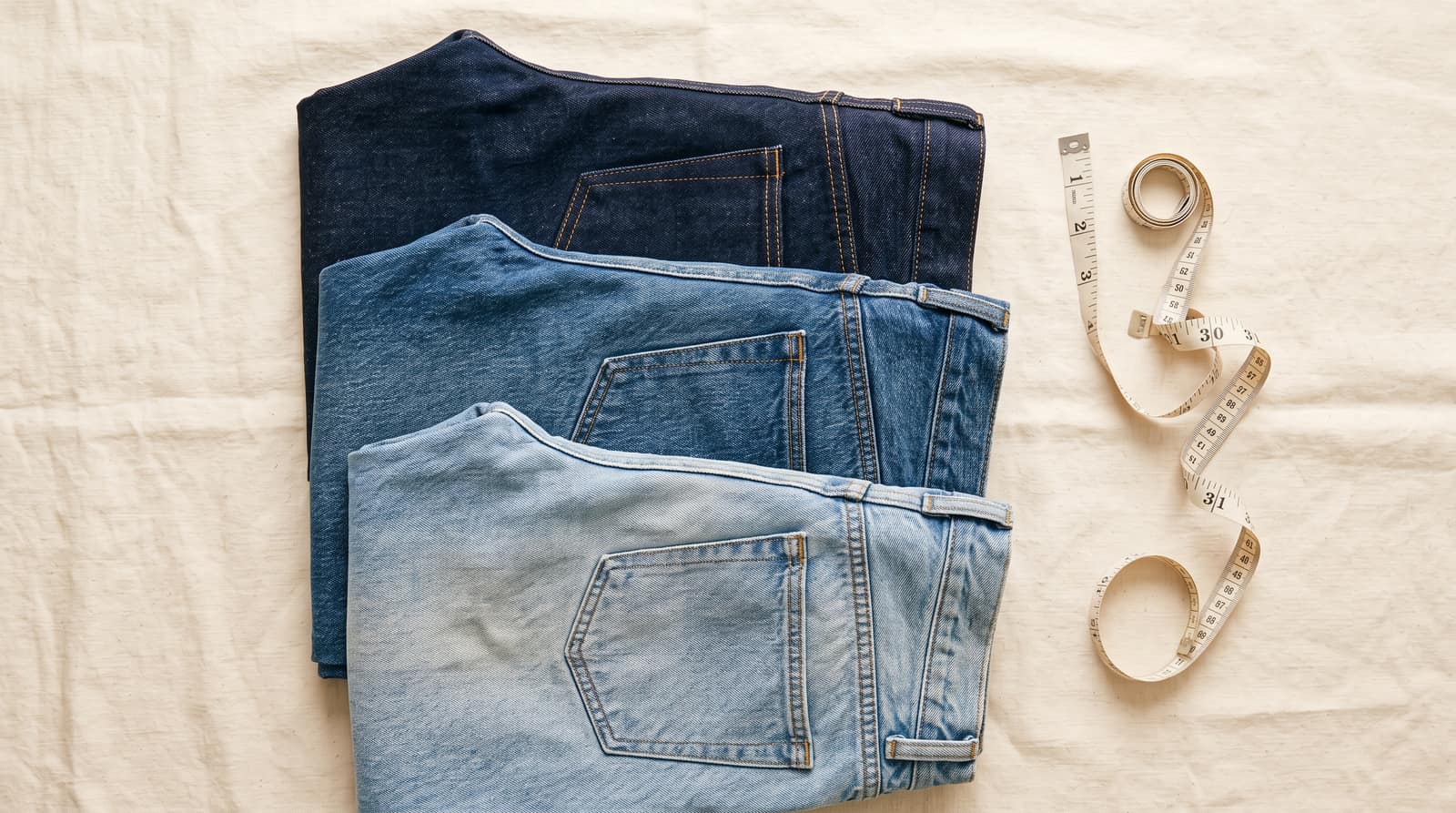
The Trinity.
Plates I — III
#0E1B2E · Dark wash
The Dark Wash.
This is your dressed-up jean. The one you wear when jeans are technically acceptable but you want to look like you made a decision.
Dark wash denim reads as intentional in a way that other washes don't. Dinner that's not quite a restaurant requiring dress pants but not casual enough for whatever you grabbed this morning — dark wash. Client meeting where the dress code is vague — dark wash with a good shoe and you're fine. Date where you want to look like you thought about it without looking like you tried — dark wash, full stop.
What you're looking for: no fading, no distressing, no whiskering. Clean and dark, straight or slightly tapered through the leg. Not slim. Slim jeans have a shelf life. A straight or relaxed straight cut in dark denim looks right in 2025 and it'll look right in 2035.
Find your brand and stay there. I wear Lucky Brand. You might wear something else. The brand matters less than the consistency — once you find the cut that fits your body correctly, buy every wash in that cut and stop experimenting.
Worn for
- Dinner the kind that requires a decision
- Client meeting where the dress code is vague
- Date night without looking like you tried
#3A5274 · Medium wash
The Medium Wash.
This is your everything jean. The one that goes with the navy crewneck, the one you grab on a Saturday, the one that works for the hardware store and the casual lunch and the afternoon where you have no particular agenda.
Medium wash is the most forgiving wash in denim. It doesn't demand a specific context. It doesn't require you to dress it up or down because it already sits in the middle of both. It's the grey crewneck of jeans — except medium wash is actually interesting, which grey crewneck is not, so the analogy breaks down but you understand the point.
Same cut as the dark. Same brand. Different wash. That's the whole decision.
Worn for
- Saturday the navy crewneck pair
- Hardware store and the casual lunch after
- No agenda the afternoon does not require one
#7B8FA8 · Light wash
The Light Wash.
This one is optional in the sense that you can live without it. It's not optional in the sense that once you own it you will wonder what you were doing before.
A light or medium-light wash — the kind of blue that looks like the jeans have a history even when they're new — is for the days when you want to look like a person who is completely comfortable existing. Weekend morning. Backyard. Low-stakes everything. The dark wash would be trying too hard. The medium wash is fine. The light wash is exactly right.
One note: this is the wash most susceptible to looking dated. Avoid heavy distressing, heavy fading patterns, or anything that looks like it was manufactured to tell a story the jeans haven't actually lived. Buy clean. Let them develop on their own.
Worn for
- Weekend morning before anything starts
- Backyard where the day takes you
- Low-stakes everything
— End of trinity —
Find your brand and stay there. Once you find the cut that fits your body correctly, buy every wash in that cut and stop experimenting.
— JT · Starter Five, No. 02
The Part Nobody Tells You
Here's the practical truth that no one in fashion will ever say out loud.
Keep one old pair.
Not for the wardrobe. For the yard. For the mud. For the Saturday where you're cutting grass or moving furniture or doing the thing that requires you to not think once about what you're wearing. That pair of jeans you've been meaning to donate that still fits but has a stain on the knee and a small tear that you keep ignoring — don't donate it. Put it in the garage.
Good jeans are worth protecting. The way you protect them is by having something you don't care about for the moments that require not caring.
It's not a fashion tip. It's just common sense. But somehow nobody ever says it.
Same math as the crewneck.
A quality pair of jeans in the $80–$150 range, worn three or four times a week for a full year, washed correctly — cold water, hang dry, not every week — will last years before they show real wear. The cost per wear is negligible. The cost of replacing a mediocre pair every eighteen months is not.
Three pairs at the right price point is a $300 decision you make once. Seven pairs of whatever was on sale is a decision you make constantly and never feel good about.
Stop buying jeans like they're disposable. Buy three. Buy them right. Keep the beater pair in the garage.
You're done.
If the cut is still the open question, the men's denim fit guide covers rise, thigh room and hemming, and Nelly's fitting-room sequence for jeans works on the same problem from the women's side.
— JT