How Your Father Dressed
JT on how his father dressed — clothes as presentation, not self-expression — and what a white dress shirt worn for forty years was actually saying. A Father's Day essay.
How To: Fashion
JT
How Your Father Dressed.
A work wardrobe, a church wardrobe, and everything else. The Fashion Edition · Father's Day 2026
My father dressed to get the job done.
He never looked like he was trying.
Not in a careless way. He was neat. His clothes were clean and pressed and appropriate for the occasion. But the frame he operated in was entirely different from the one most men my age grew up inside. For him, clothes were functional. They covered you, they fit the situation, they didn't cause problems. That was success.
He had a work wardrobe, a church wardrobe, and everything else. The categories were clear and the clothes didn't cross between them. His work shoes were for work. You didn't wear work shoes on a Saturday. This was not a formal rule. It was just obvious.
Presentation, not self-expression
He did not think about clothes the way I think about clothes. Not because he lacked taste — he had taste, you could see it in how he put things together, a kind of quiet coherence that came from knowing who he was and dressing accordingly. But he was not interested in clothes as self-expression. He was interested in clothes as presentation. There is a difference and it is a generational one.
The generation I came up in was sold something different. We were told that what you wear is who you are. That style is identity. That the right pair of sneakers means something about you as a person. We spent a lot of money and a lot of attention on things that probably didn't need either.
My father spent almost none of his mental energy on clothes and was correctly dressed for every situation he walked into.
I'm not sure he had the worse approach.
Different shirts over the years, same approach.
Here is what I think he understood that took me too long to figure out: the goal is not to be noticed for what you're wearing. The goal is to be appropriate, clean, and coherent, and then to be noticed for everything else. Clothes that call attention to themselves are doing your job for you and not doing it as well as you could.
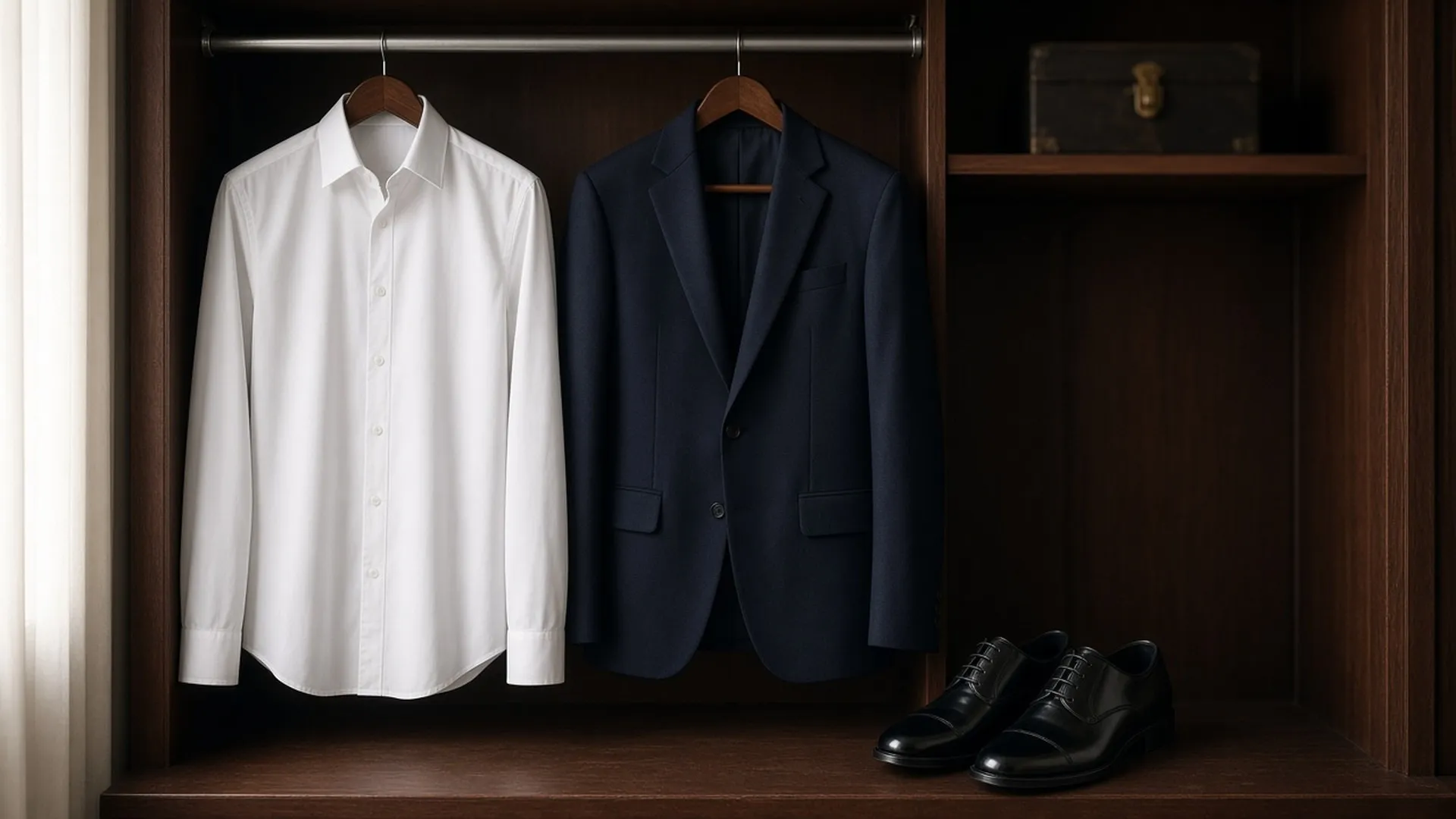
He wore a white dress shirt to church for forty years. It was the same category of shirt — well-fitted, pressed, collar right. Different shirts over the years, same approach. He never looked wrong. He never looked like he was trying. He looked like himself, which is the hardest thing to look like and the most valuable.
He looked like himself, which is the hardest thing to look like and the most valuable.
The generational shift I see now — and I say this having participated in it myself — is that men started treating clothes as something to figure out and optimize rather than something to simply get right. We read articles about capsule wardrobes and investment pieces and the correct way to roll a sleeve. We turned getting dressed into a project.
My father got dressed in ten minutes and spent the rest of the day doing the things that actually mattered.
I want to be careful here because I'm not arguing for carelessness. How you present yourself matters. Clothes communicate before you speak and that communication is real and has consequences. Fit matters. Occasion-appropriateness matters. Cleanliness is a baseline, not an achievement.
What my father had that I'm still working toward is the confidence to dress simply and correctly without second-guessing it. To know what works for him, buy enough of it, and stop thinking about it. To remove the category of “figuring out clothes” from his mental load entirely.
That is a form of mastery that doesn't look like mastery. It looks effortless because the effort happened once, decades ago, when he figured out who he was and what that looked like, and then he just kept being that.
The men I admire most dress this way. They are not wearing the most expensive things. They are not wearing the most current things. They are wearing things that fit, that are appropriate, that cohere with each other and with who the person is. They look like themselves.
That is what your father was doing when you thought he was just not paying attention.
He had already figured it out.
Nelly looks at the same generation through four habits worth recovering in What Your Dad Wore. For the practical version of knowing what works and repeating it, the men's personal style guide starts from the pieces you already wear most, and the rest of JT's column applies the same thinking garment by garment.
JT — Men's Lane Editor · The Fashion Edition