Suede Shoes, in Actual Rain
JT on wearing suede shoes in the rain — the three things to do before it rains, one to do after, and why suede isn't as delicate as everyone tells you.
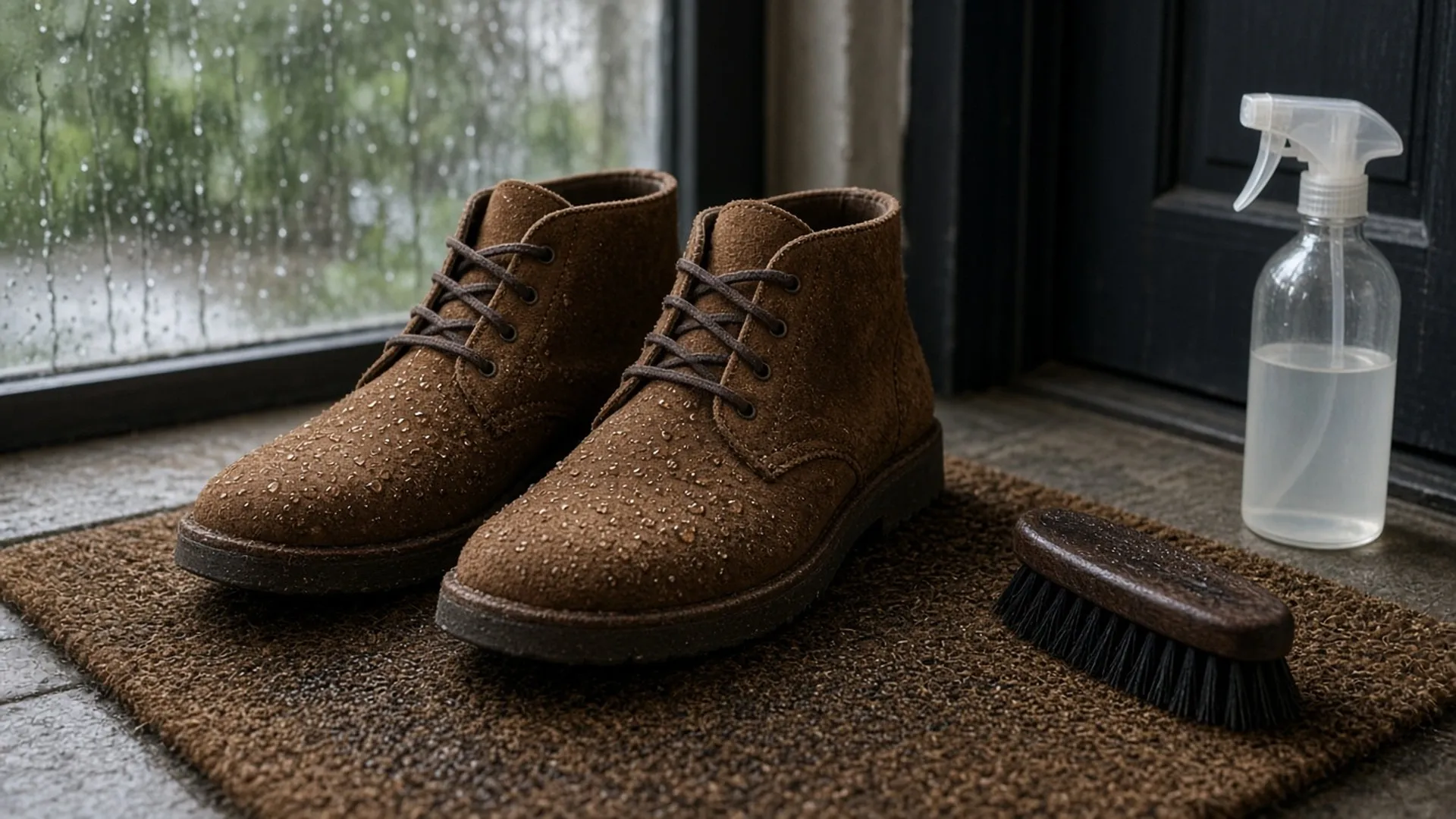
Everyone tells you to keep suede out of the rain. Everyone is wrong — if you do three things first.
How To: Fashion
JT
Suede Shoes, in actual rain.
Five years, three winters, more downpours than I can count. The Fashion Edition
The first thing anyone tells you about suede is not to get it wet.
It's advice that sounds like caution and works like fear. Don't wear it in the rain. Don't wear it in winter. Save it for dry days, dry rooms, dry years. Follow that far enough and you've bought a pair of shoes you're afraid of, which is a strange thing to do with shoes.
I've worn the same suede chukkas for five years. Through Atlanta summers that open up without warning, through three winters, through more honest downpours than I can count. They've been soaked through twice. They're fine — better than fine. They've got a depth a careful pair never earns.
The trick isn't avoiding water. It's three things you do before the rain shows up, and one thing you do after.
Before the rain, and after
- Protect it before it ever rains. — Spray them with a proper suede and nubuck protector — the stuff made for napped leather, not the all-purpose can — before the first wear, and again every couple of months. It does not waterproof them. It buys you time: water beads instead of soaking in, and you get home before it matters. Two light coats, dry overnight, done.
- Keep a brush by the door. — A suede brush, nothing fancy. Water and grit flatten the nap; the brush lifts it back up. Thirty seconds when the shoes are dry. This is most of the difference between the man whose suede looks dead and the man whose suede looks alive — and it costs about eight dollars.
- Dry them slow, never hot. — Off the radiator. Wet suede plus heat is how you get stiff, cracked, shrunken leather. Room temperature, away from any heat source, with cedar trees or crumpled paper inside to hold the shape and pull the moisture out. Give it a full day. Then brush. They come back.
A brush and a slow dry. That's the whole maintenance program.
Here's what's actually happening when suede gets wet: water darkens it while it's damp and lightens back as it dries. The mark that scares people is almost always just moisture, and moisture leaves. The things that genuinely kill suede are heat, salt, and being ignored.
Winter is the real test, not rain. Road salt is the one thing that leaves a permanent white tide line. If you walk through salted slush, don't let it sit — wipe it the moment you're inside with a damp cloth and a drop of white vinegar, then dry it slow.
Suede isn't delicate. It's honest.
Same pair, dry by morning.
There is a line, to be fair. A true all-day downpour, or a formal night spent crossing salted streets — wear the rubber-soled leather and leave the suede home. But a normal rainy Tuesday? Wear the suede. That's the entire point of owning it.
Treat suede like something you use instead of something you're protecting, and it will outlast every piece of advice that ever told you to keep it inside.
It shows you exactly what you do to it.
The slow-dry advice is the same reason Nelly argues for rotating three pairs: leather that never gets a day to dry fails at the flex point. Where suede fits in a working shoe lineup is covered in the men's footwear build, and more of JT's columns sit on his contributor page.
JT — Men's Lane Editor · The Fashion Edition