Three tools do nearly everything. The rest is a hobby.
Three power tools cover nearly everything a house asks of you: a cordless drill/driver, a circular saw and an oscillating multi-tool. Sam on what each one is really for, why the big combo kit is a trap, and when the fourth tool has earned its place.
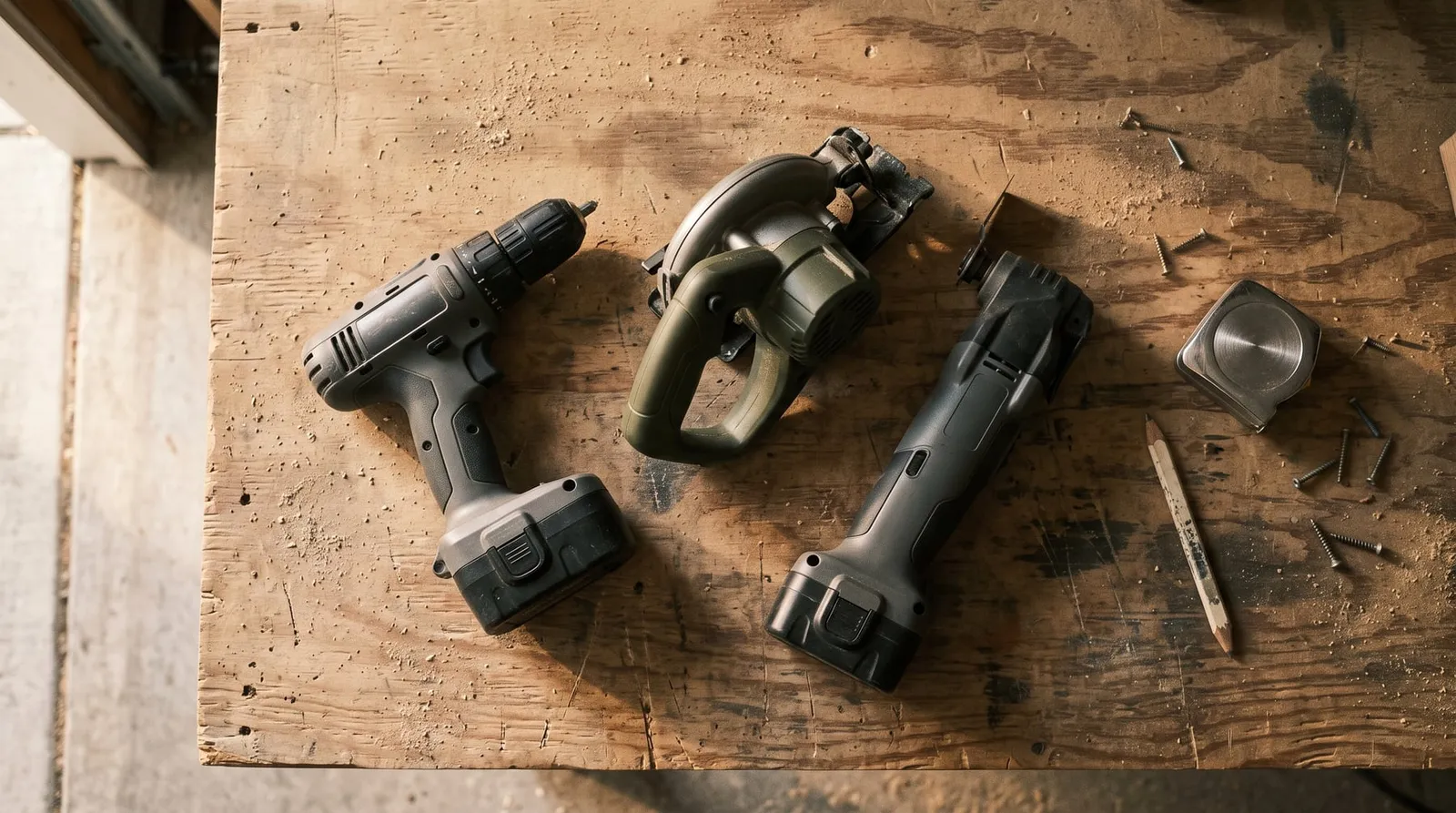
nobody's first problem is not owning enough tools. it's owning nine and only knowing two.
- tools that cover most of what a house will ever ask of you: 3
- battery platform — the decision you're actually making: 1
- the one that should be earned by a project, not a sale: 4th
- Updated: Sep '26
the first real tool purchase is almost always a kit, because a kit looks like a decision you've already made. five tools, one bag, one price, and a feeling that you are now a person who owns tools. i bought the bag version of that feeling. a year later two of them had done every job in the house and the rest were living in the bag like luggage that never got unpacked.
a kit isn't a discount. it's six tools you'll never open subsidizing the two you actually wanted.
so here's the honest version. three tools. a drill/driver, a circular saw, an oscillating multi-tool. between them they cover hanging, assembling, mounting, building, cutting to size, and getting yourself out of the thing you did last weekend. everything past those three is a specialist you hire when a specific job turns up — not before.
Before you spend anything
The aisle is selling you the person you'd be.
every tool on that wall is aimed at someone building something specific, and the display is arranged so you picture yourself being that someone. the trouble is that a house doesn't ask you for range. it asks you for the same four things over and over — hold something to a wall, take something apart, cut something down to fit, undo something that's already installed.
so buy against the jobs, not against the fantasy. and give the fourth tool a project to justify itself with before you let it in the door.
- The giant combo kit — two tools you'll use monthly, and the rest keeping them company in the bag. (Count it)
- Miter saw — glorious for trim and baseboard, and does nothing at all until the day you're doing trim and baseboard. (Year three)
- Table saw — for one sheet of plywood, a straight-edge and a circular saw get there. slower, and you keep the garage floor. (Rent the cut)
- Jigsaw — the honest near-miss. it's the right answer for curves and cutouts and the wrong one for long straight cuts. (Tool four)
- Random orbit sander — the other near-miss, and the one to buy the week you start refinishing something rather than the week before. (Tool five)
Three tools. Three different problems.
03 TOOLS | FASTEN, CUT TO SIZE, CUT WHAT'S INSTALLED
Step 01 · Tool one | every single week
The drill/driver, and it isn't close.
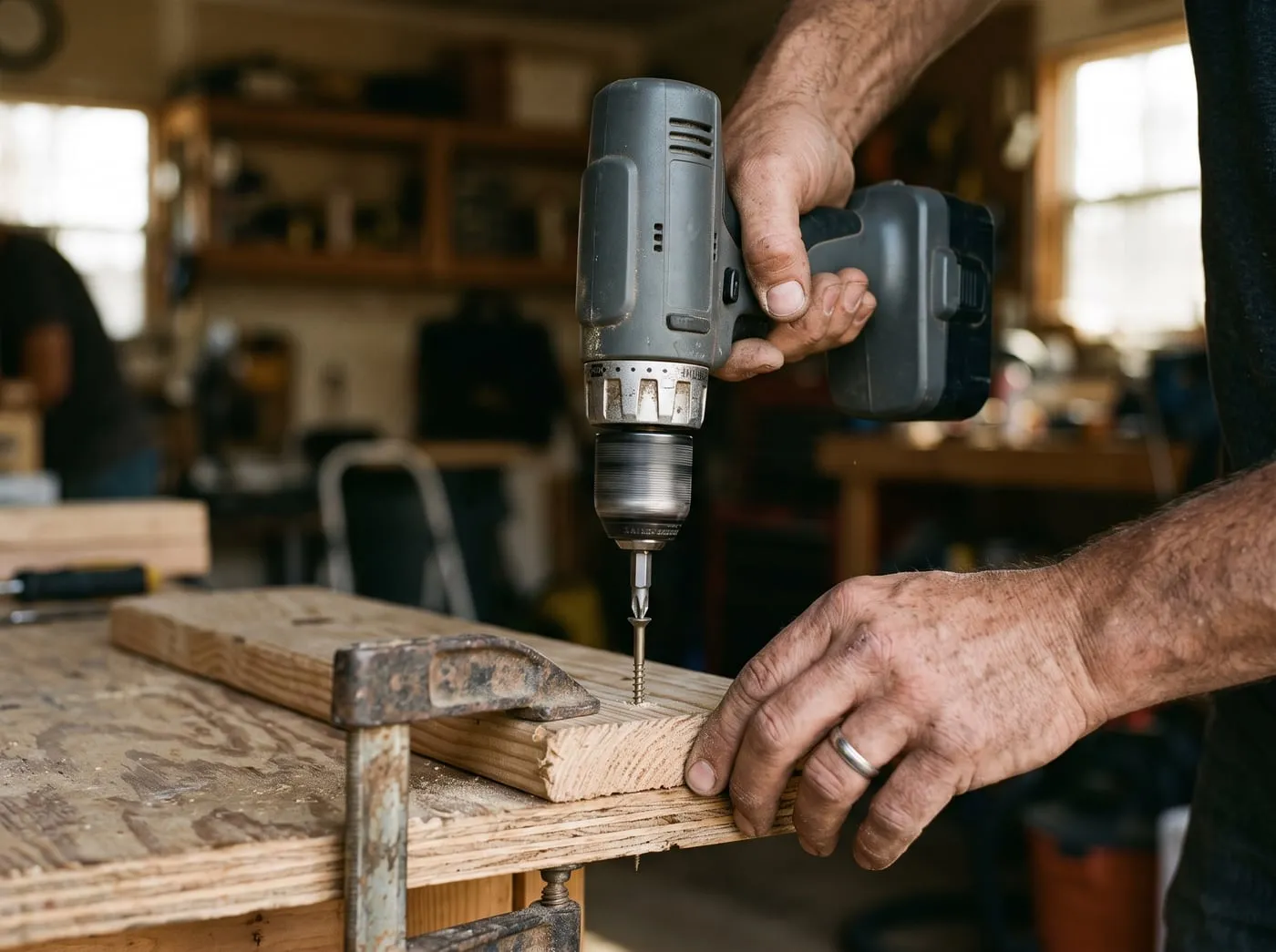
the name is misleading — you will spend far more of its life driving screws than drilling holes. shelves, brackets, flat-pack, hinges, a curtain rod, a mailbox, the thing that came with a hex key and a prayer. it's the tool that turns a two-hour job into twenty minutes, and it's the one you'd miss first.
the collar behind the chuck is the part nobody learns and everybody needs. that's the clutch, and the numbers are a torque limit: at a low setting the driver slips and clicks before it can sink a screw through the face of a cabinet door or shear the head off. start low, work up until it drives the screw flush and stops. the drill icon at the end of the ring is the clutch switched off — full torque, no mercy, for drilling only.
brushless is worth the difference here if it's worth it anywhere: longer runtime from the same battery, less heat, less to wear out. and a keyless chuck is standard now, but check it takes a quarter-inch hex bit directly as well as round shanks, because that's most of what will ever go in it.
Step 02 · Tool two | when it's too big to carry
The circular saw is a table saw you can lift.
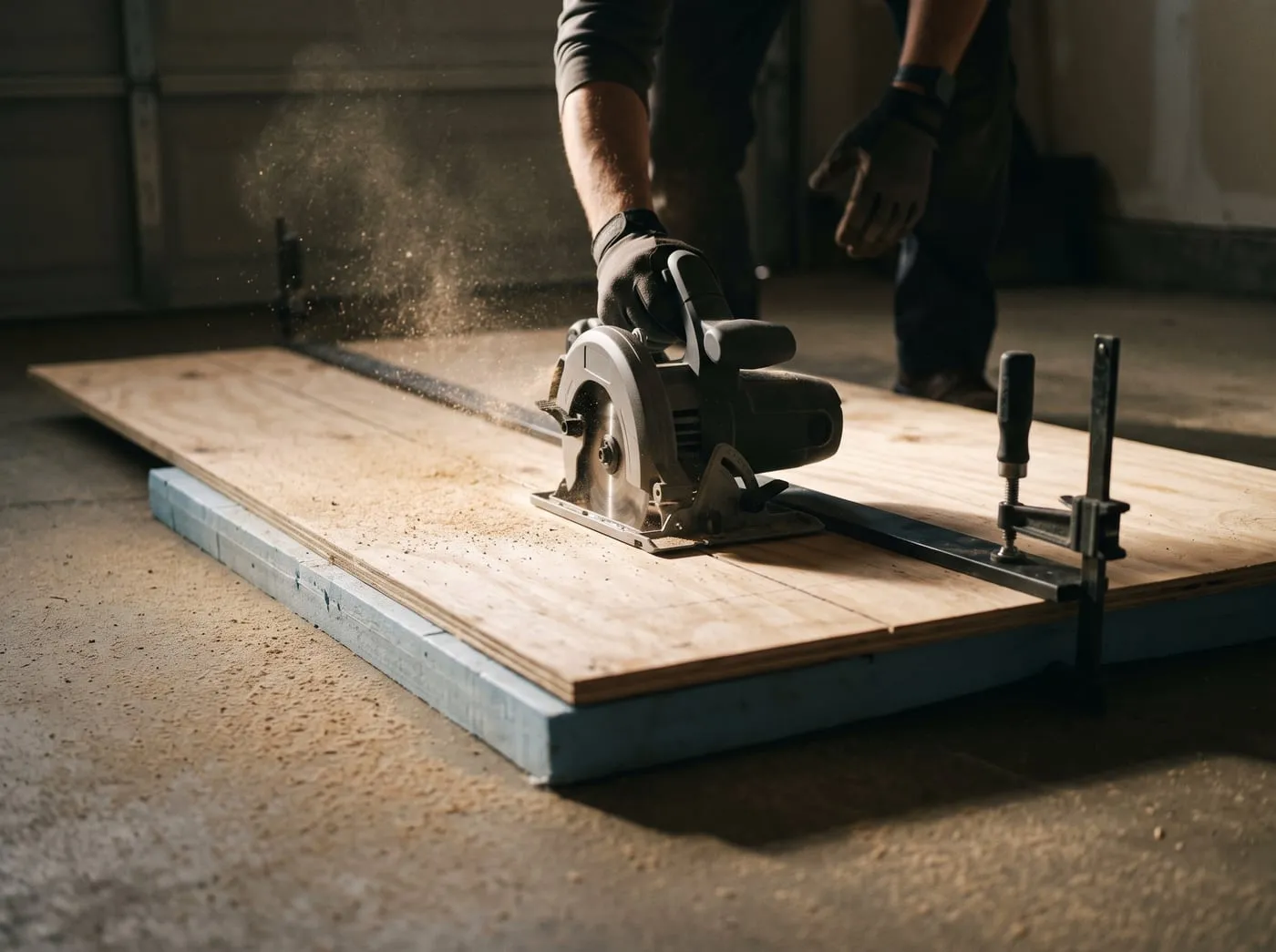
the second tool exists for one situation: the thing you need to cut is bigger than you are. a sheet of plywood, a deck board, a shelf that came two inches too long, a door that won't clear new flooring. you don't carry those to a saw. you carry the saw to them.
clamp a straight-edge to the work, run the saw's shoe along it, and you have a long dead-straight cut that's honestly hard to tell from a table saw's. it's slower and it's noisier and you'll do more setup than cutting. it also costs a fraction of the price, stores on a shelf, and doesn't own a quarter of your garage.
two settings do all the safety work. set the blade depth so the teeth clear the underside by about the depth of one tooth and no more — a deeper blade is more blade exposed for no benefit. and support the whole sheet, both sides of the cut, on a slab of rigid foam on the floor. cutting a sheet spanning two sawhorses means the offcut sags, closes on the blade, and hands the saw back to you in a hurry.
Step 03 · Tool three | the trouble tool
The multi-tool cuts things that are already installed.
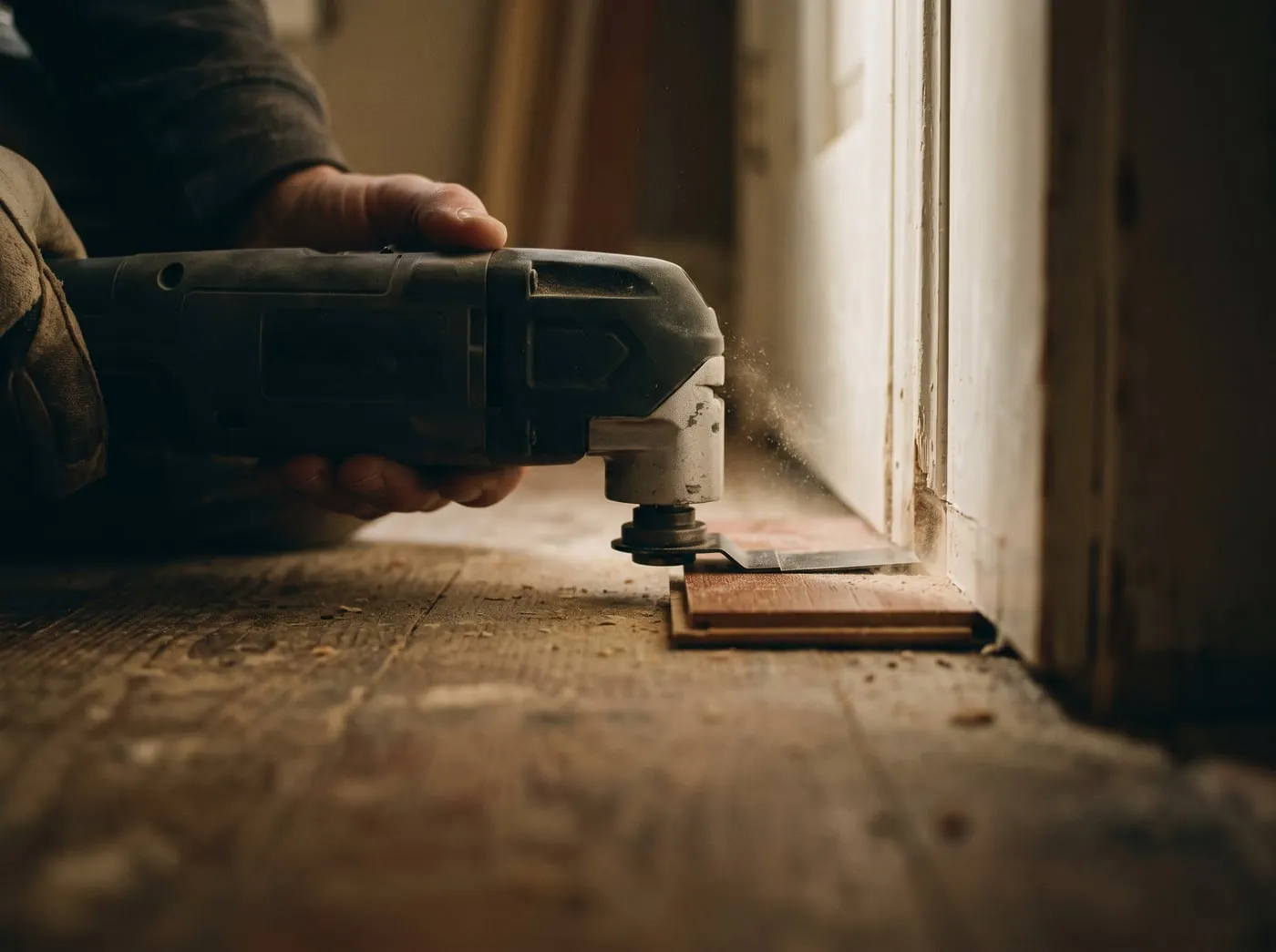
the third one is the tool people leave off the list and then buy in a panic. every other saw wants the work brought to it, on a bench, with room around it. the oscillating multi-tool goes to the work when the work is a door casing that's been nailed to a wall since 1974.
it undercuts trim so flooring can slide beneath instead of being scribed around it. it plunges into drywall for an outlet box. it trims a shim flush, cuts a stubborn nail, takes grout out of a joint, and reaches into the corner where nothing with a round blade fits. the blade rocks a degree or two very fast rather than spinning, which makes it slow, loud, and the least frightening cutting tool in the house.
the tool is the cheap part. blades are the consumable, they're specific — wood, wood-with-nails, grout, metal — and a dull one will burn and smoke and convince you the tool is bad. buy a small variety pack rather than the big assortment, find out which two you reach for, then buy those in multiples.
The fourth tool isn't a tool. It's a symptom.
here's the pattern, and it's so consistent it's almost funny. somebody finishes a project, enjoys it, and buys a tool. not for the next project — there isn't one yet — but to keep the feeling going. the tool arrives, sits on the shelf looking like intent, and slowly turns into furniture. six months later the same person tells you they're "not really a tools person," standing four feet from a router.
Let the project do the buying. when a job turns up that the three genuinely can't do, that job will tell you exactly what it needs, what size, and what it has to reach. that's a much better shopping list than a sale is. and the tool gets used the week it arrives, which is the only thing that stops it becoming a shelf ornament.
Borrow and rent before you buy. a tool you need once is not a purchase, it's a rental — and a day with a rented machine tells you more about whether you want your own than any amount of reading will. some libraries lend tools now. so do most neighbours, if you bring it back clean and charged.
The thing actually holding you back is never the fourth tool. it's clamps. and a real square, and a tape that doesn't lie, and a level long enough to matter, and a pencil that isn't a pen. the boring list is what makes the three good — a circular saw without a clamped straight-edge is just a fast way to make a wobbly line.
And if you buy one used, buy the tool, not the battery. batteries age whether they're used or not, and a secondhand pack is the part you can't inspect. a used bare tool from a platform you already own is one of the few genuinely good deals in this whole aisle.
Sam's verdicts
Worth it, and not.
Worth it: picking one battery platform and staying in it
every tool you add after the first is cheaper as a bare tool, and every charger and pack you already own gets more useful. this is the single decision in this article with a ten-year tail on it.
Worth it: brushless, on the drill at least
more work per charge, less heat, fewer parts that wear. if the budget only stretches to one brushless tool in the three, put it on the one you'll pick up every week.
Worth it: clamps, a square and a long level
unglamorous, cheap, and the actual difference between a straight cut and a nearly straight one. buy these before you even think about tool four.
Not worth it: the huge combo kit
count the tools you can name a job for. if it's two, you're paying for two tools and a bag, and the other six are there to make the sticker feel reasonable.
Not worth it: an impact driver as your first driver
it's a fantastic second tool — long screws, lag bolts, decking — and a clumsy first one. it has no clutch, it's loud, and it will happily bury a screw in something delicate before you've reacted.
Not worth it: bargain blades and bits
a dull blade burns the cut, a soft bit rounds the screw head, and both of them make you think the tool was the problem. the consumables are where the money quietly matters.
a two- or three-tool combo kit is usually the honest way in — same battery, one charger, one box, and less than the same tools bought separately. just read the box before the price: two tools you can name a job for is a good kit, eight you can't is a display case.
power tool combo kits →some links on this page are affiliate links — if you buy through one, we earn a commission at no extra cost to you.
Nobody needs the wall. They need the three that get used.
the point of owning tools isn't owning tools. it's that the shelf goes up on the saturday you thought of it, instead of the saturday in april when somebody with a van can finally come. three tools does that. the fourth one can wait until something in the house asks for it by name.
good first jobs for the drill: floating shelves and a heavy mirror hung solo are both stud-finder-and-driver afternoons. the circular saw's first sheet of plywood could be the lifting platform in a garage corner. and when the drill starts going into garage walls, the rail-not-hook argument is worth reading before you buy brackets.
— sam