How to Get Your Backyard Ready to Host a Wedding
Hosting a wedding in your own backyard? Sam's homeowner's guide: square feet per guest, neighbors and permits, power, the lawn, tents, restrooms, lighting, parking, real costs, and the 8-week yard checklist.
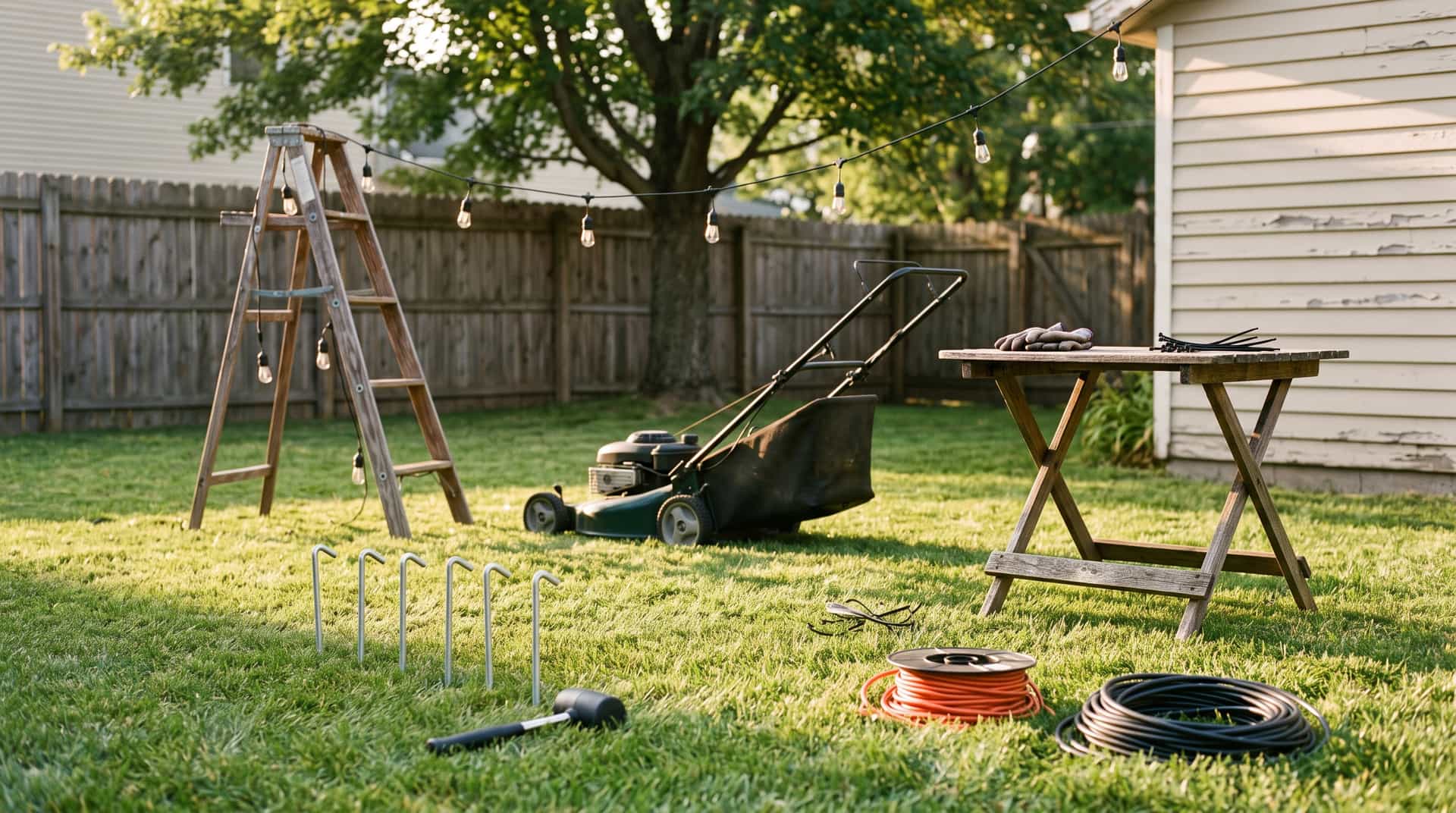
Someone you love wants to get married in your yard. Here's what the yard needs from you — and what it doesn't — in the order it actually comes up.
- Lead time: Eight weeks
- Sized for: 60 guests
- Seated dinner: 10–12 sq ft each
- Yard cost: $2,600–$6,300
- Read: ~11 min
- Updated: Late Summer '26
The first thing to know about a backyard wedding is that the backyard is the cheapest part and the hardest part. You already own it, so the venue line on the budget says zero. Then you find out that a venue is not a lawn. A venue is a lawn plus power, plus bathrooms, plus parking, plus somewhere to put sixty chairs when the sky changes its mind, plus a staff that knows where the breaker box is. When the venue is your house, the staff is you.
The lawn is the floor. Treat it like one.
That's not a reason to say no. It's the reason to start eight weeks out instead of eight days. I've set up this yard for watch parties that ran past midnight and for a graduation that turned into two. A wedding is the same muscle, held longer. Here's how I'd walk it.
In the order it actually comes up
09 SECTIONS | EIGHT WEEKS OUT
Step 01 · Walk | five o'clock
Walk it like a guest first
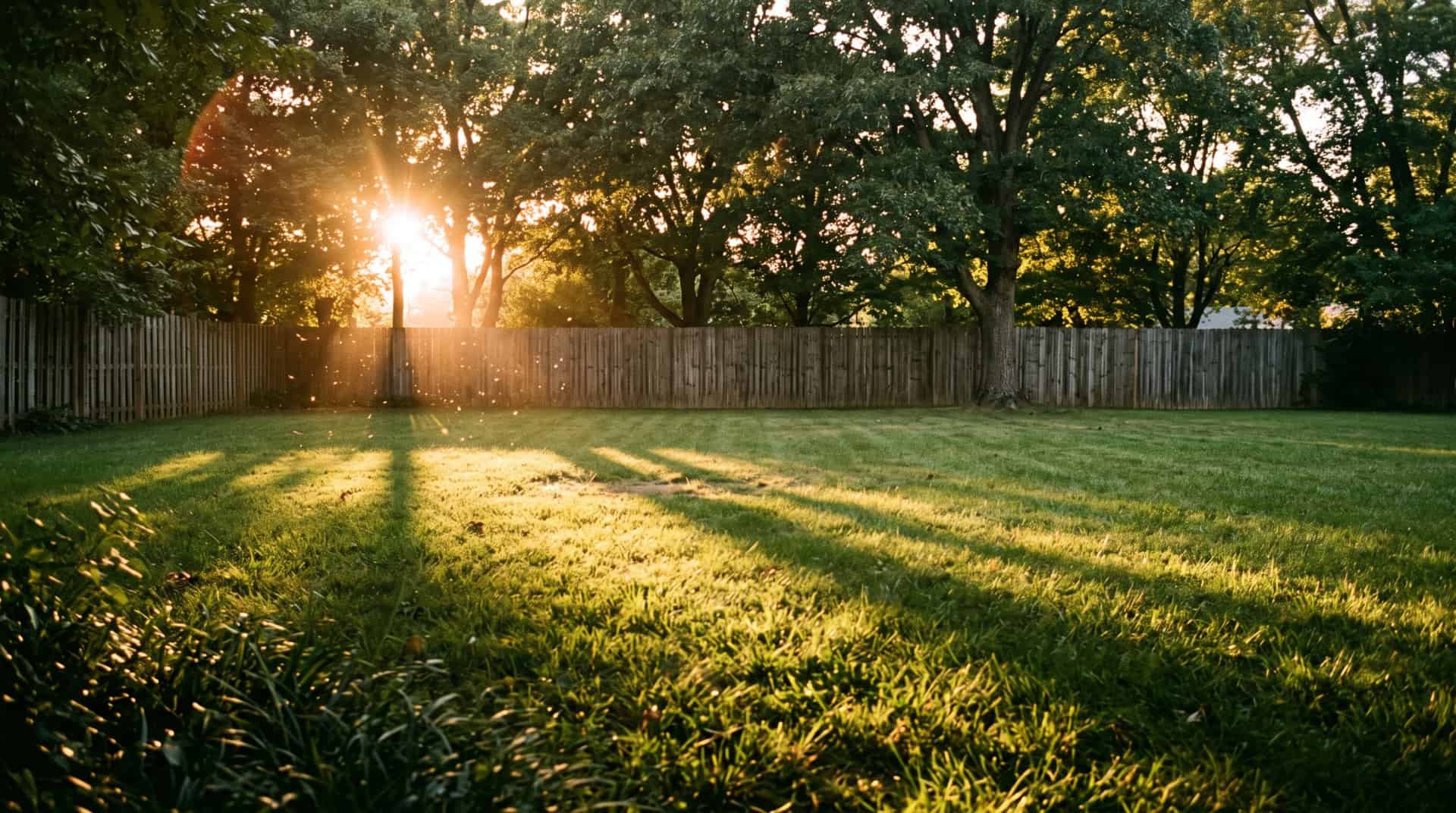
Before you measure anything, go stand in the yard at five o'clock on a weekday and look around the way a guest will. Where's the sun? Not where it is now — where it'll be when the vows happen, and again two hours later when people are eating. The west-facing corner that's lovely at noon is a squint at 5:30.
Then find the view. Every ceremony needs something behind the couple that isn't the neighbor's trampoline. A fence line with a tree. The back of the garage if you dress it. The far end of the lawn where the yard just stops. You're looking for the one angle where the photos will look like a place, not a backyard. There's usually exactly one.
Now the math. Pace off the flat, usable ground — not the beds, not the slope by the shed, not the strip under the dripline. A seated dinner wants 10 to 12 square feet per guest. A ceremony in rows wants about 6. Standing and mingling, 5. So sixty people at dinner is roughly 700 square feet of flat lawn, before the tent walls, the buffet, and the path people use to get to the bathroom. Is fifty too many for a backyard wedding? That's the honest answer: fifty is fine if you've got 600 flat square feet for them to sit in and somewhere else for them to stand. It's too many if they'd be eating dinner on the driveway.
Write the number down. Everything from here on gets sized off it.
Step 02 · Ask | before you buy
The three yeses before you buy anything
Neighbors first. Walk over, in person, this week. Tell them the date, tell them there will be music, and tell them the hour it stops. Give them a real hour — ten on a Saturday is what most towns allow anyway — and keep it. A neighbor who was told a month ahead is a neighbor who offers their driveway. A neighbor who finds out from the DJ calls the police at 9:15.
The town second. Three questions for the clerk's office or the website: What's the noise ordinance, and what are the hours? Do tents over a certain size need a permit (it's often 400 square feet, and a 20-by-30 tent is 600)? And what are the rules on street parking for an event? Some towns want a one-page form and twenty dollars. Some want nothing. Either way you want to know before the rental truck shows up.
The HOA third, if you have one. Read the section on events and on structures; a tent is a structure for a weekend. Ask in writing. Keep the reply.
None of this is fun. All of it is a Tuesday-evening chore you do in week eight, and it's the difference between a wedding and a story about a wedding.
Step 03 · Power | count it
Power is the thing everyone underestimates
One outdoor outlet is not a wedding. Here's what actually plugs in: the caterer (warming trays, a coffee urn, maybe a fridge on wheels), the DJ or the speaker and the laptop, the string lights, the photographer's battery chargers, the bathroom trailer if you rent one, and the fans or heaters you didn't plan on. A coffee urn alone pulls a thousand watts. Two chafing dishes on a shared 15-amp circuit with a speaker stack is a tripped breaker in the middle of the first dance.
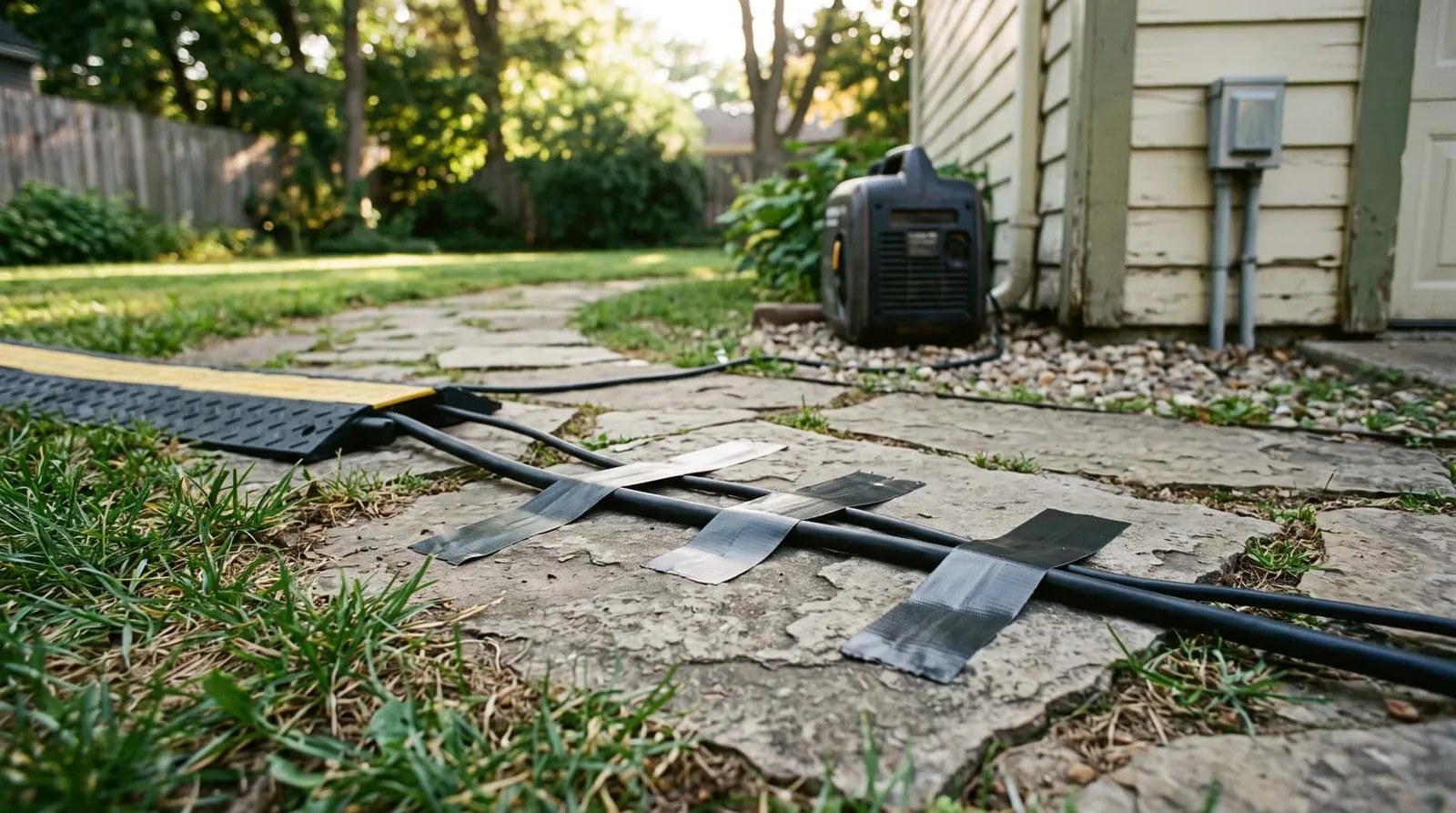
So: find your panel, figure out which outdoor outlets are on which circuits, and count. If you have a deck, the cleanest fix is adding a dedicated outdoor circuit — a weekend job if you're comfortable, a short visit if you're not, and you'll use it for the rest of your life. Then run heavy-gauge extension cords — 12-gauge, not the orange 16 from the garage — and tape or mat every run that crosses a path. Every outdoor outlet should be GFCI. If the caterer's list plus the DJ's list comes to more than your two or three circuits can carry, rent a quiet inverter generator and park it behind the garage. It's a hundred and fifty dollars. A dark reception is more.
Ask the caterer and the DJ for their power needs in writing. They have the sheet. They're used to being asked.
Step 04 · Lawn | the floor
The lawn is the floor
Treat it like one. Eight weeks out, aerate and overseed the bare patches; six weeks out, feed it. Stop fertilizing two weeks before so it's not growing an inch a day. Mow two days before the wedding, not the morning of — you want the grass to stand back up and you don't want clippings on the hems.
Walk the lawn looking down, not up. Mark every sprinkler head with a flag so nobody twists an ankle and nobody drives a tent stake through a line. Find the low spot that holds water after a storm; if that's where the dinner tent is going, either move the tent or fix the drainage now. Fill the holes. Shut the irrigation off for the three days before.
Then plan for mud anyway. Rain on Thursday means soft ground on Saturday. A few sheets of plywood or rented ground mats under the tent edge and along the path to the bathroom is the cheapest insurance on the whole list. If there's a route everyone will walk a hundred times — back door to tent, tent to bathroom — a gravel path laid the weekend before is both prettier and dryer than a trench in the grass.
If you've got pavers or a deck, pressure-wash them the week before and clean the outdoor furniture you're pressing into service. A wedding photographs every surface.
Step 05 · Zones | three events
Where people actually go
A wedding in a yard is three events in one space, in order: the ceremony, the dinner, the dancing. The mistake is putting them all on the same patch of grass and planning to "flip" it. You can flip a room with a crew. In your yard, the crew is your brother-in-law.
So give each its own zone if you can. Ceremony at the end with the view; dinner under the tent or the trees; dancing on the patio, the deck, or a rented dance floor on the driest ground you've got. If two of them have to share, make it ceremony and dancing — chairs are easy to move, tables are not — and plan a twenty-minute window between the vows and the dinner call when the chairs get stacked and the music moves. Give someone that job by name.
And think about the walk between zones. Guests will make it in dress shoes, in the dark, carrying a drink. It should be flat, lit, and obvious.
Step 06 · Tent | decide in week six
The tent question
Do you need one? Here's my rule: if the forecast on Wednesday says forty percent or more for Saturday, you need a tent, and by Wednesday it's too late to get one. So decide in week six and book it, rain or not. A tent you don't use is a few hundred dollars. A dinner for sixty in a downpour is the only thing anyone will remember.
Size it off your number. Rental companies size by guest count and they're conservative on purpose — a 20-by-40 seats about 80 at round tables, a 20-by-30 about 60. Ask for the site visit; it's free, and the person who shows up will tell you where the stakes can't go, where the ground slopes, and whether you need sidewalls. Take the sidewalls. They roll up if the weather's fine and they turn the tent into a room if it isn't.
A note for the people reading this who don't have a yard: renting one is a real thing now. Some rental houses and small farms list for weddings by the day. Everything in this article still applies — you're just doing the walk on somebody else's lawn, and the power and the bathroom questions get asked of the owner instead of the breaker box.
Step 07 · Bathrooms | past thirty-five
Bathrooms, honestly
One indoor bathroom handles about thirty-five guests for four hours if nobody lingers and the line has somewhere to stand. Past that, you're renting. The choice is the blue box or the trailer, and for a wedding it's the trailer — two or three stalls, running water, a mirror, a light, and nobody has to think about it. They run from a few hundred dollars for a day to over a thousand for the nice ones.
Three things it needs from you: a flat place to park it that a truck can back into, a run of power (some have their own, most want a circuit), and a lit path from the tent that doesn't go through the dinner. Put it where it can be found and not seen. Then stock the house bathroom like a hotel anyway, because somebody will use it.
Step 08 · Light | for nine o'clock
Light it for nine o'clock, not four
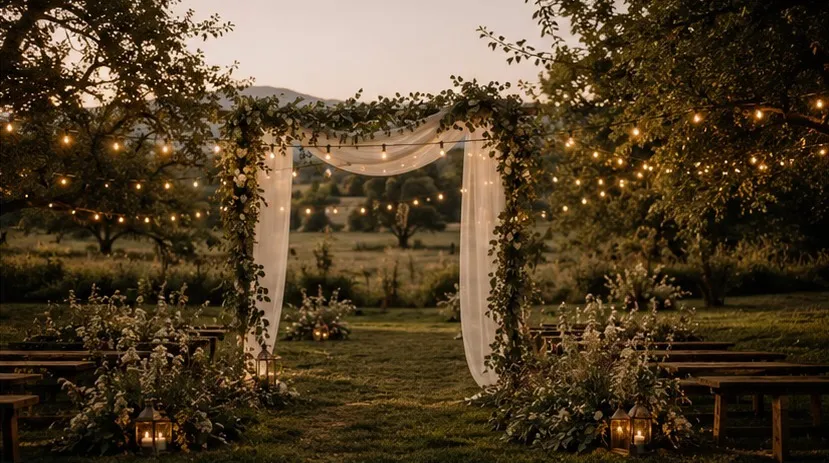
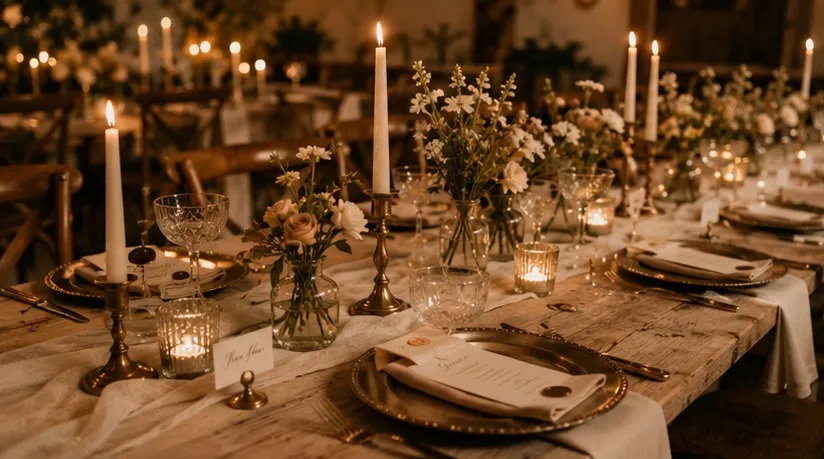
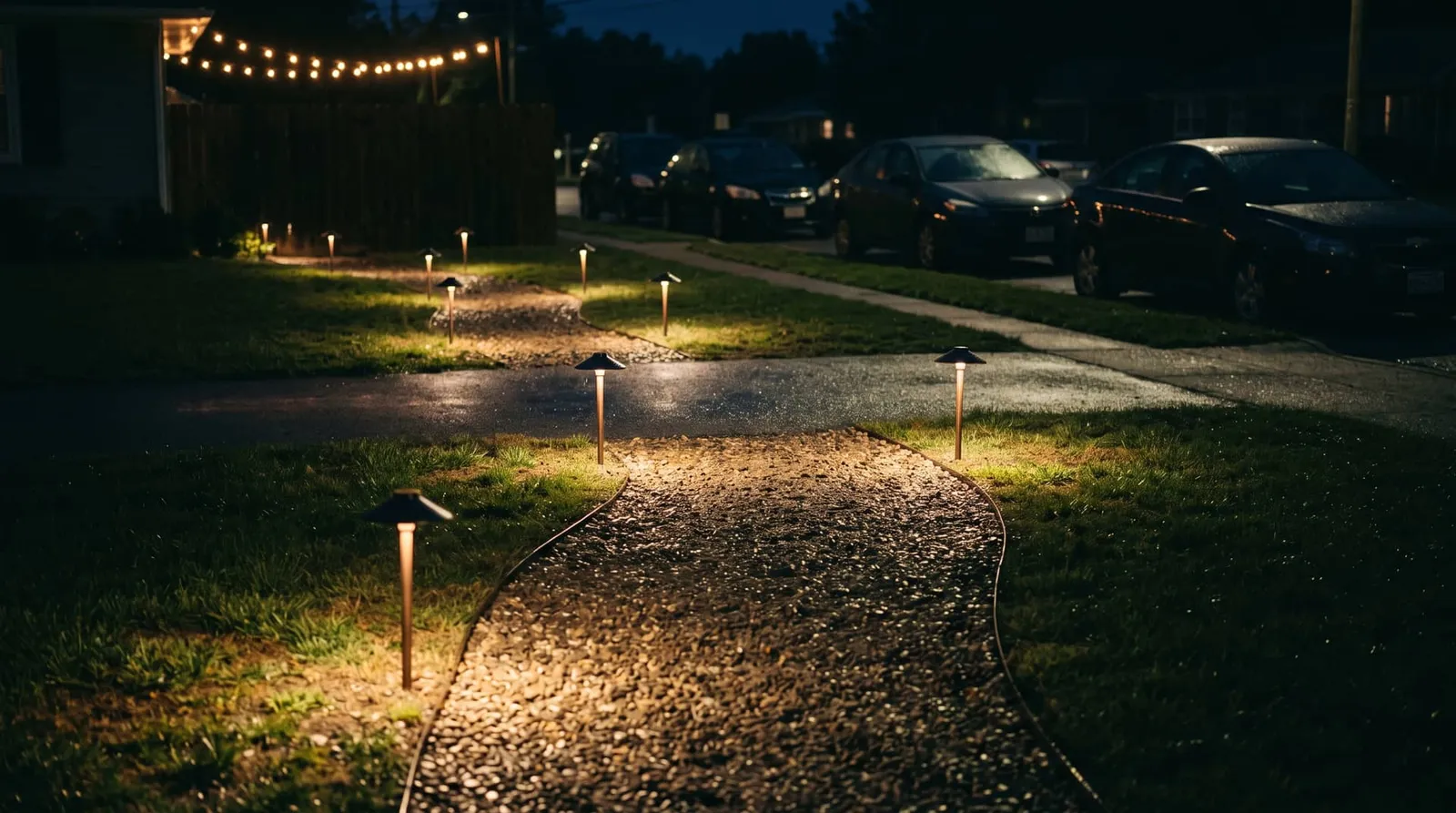
Every backyard looks fine at four in the afternoon. The wedding is at nine, and the yard you set up in daylight has to work in the dark. So light it in layers. String lights over the dinner zone and the dance floor — warm, café-style, on a dimmer if you can — are the difference between a yard and a place. Low path lights along the route to the bathroom and the route to the cars. Lanterns or candles on the tables, which photograph beautifully and do nothing for actually seeing. A floodlight you can switch on at the end of the night for cleanup and finding car keys.
Test it. Stand in the yard the night before at nine and walk every path. The one you didn't light is the one someone will trip on.
If you're thinking about a permanent structure — a pergola over the patio — a wedding is a decent excuse. Hung with lights it's the ceremony backdrop and it's still there next summer. A fire pit does the same job at the end of the night; the people who stay past eleven always end up around it.
Step 09 · Parking | the last stretch
Parking and the last two hundred feet
Count it: about one car for every two guests, fewer if there's a shuttle or a lot of couples. Sixty guests is thirty cars, and your street holds maybe eight. So this goes back to the neighbors — the driveway you asked for in week eight — and to the church lot, the school, or the field down the road where people can leave cars and walk or get driven. Put one person at the end of the driveway for the first half hour with a flashlight and a wave. They're the first face anyone sees and the only reason the cars end up where you wanted them.
Then light the last two hundred feet, from wherever they park to wherever they sit. Dress shoes, dark, carrying a gift. Make it obvious.
10 / The money
What it costs when the venue is free
This is the number everyone wants and nobody prints, so here's an honest range for a backyard wedding of sixty, pulled from what the rental companies in a normal American town actually charge. Your town will differ; the shape won't.
So the "free venue" runs about $2,600 on the lean end and about $6,300 if you take every rental. For comparison, a venue that gives you all of that included starts around $5,000 in most places and goes up fast. The backyard wins on money, but not by as much as people assume — it wins on the part where it's yours. And none of the above includes the caterer, the flowers, the photographer, or the dress, which are the same wherever you stand.
Everything the yard doesn't cover — the flowers, what goes on the table, the arch you stand under — lives with Ana over at Gathered & Vowed. Her florist ledger is sorted by what real customers said about wedding work, city by city; she's built the ceremony arch six ways and will tell you which one to build for about $170; and her rooms are set tables and dessert tables itemized down to the last taper. I do the yard. She does the day.
- Tent, 20-by-40 with sidewalls, delivered and set ($900–1,800)
- Tables and chairs for sixty, linens ($400–900)
- Restroom trailer, one day ($500–1,200)
- Lighting (string lights you keep, path lights you keep, rented uplights if you want them) ($200–600)
- Generator, if needed ($100–250)
- Dumpster or extra trash service ($100–300)
- Lawn prep (seed, feed, a pallet of sod for the bad corner, ground mats) ($150–500)
- Dance floor, rented ($300–700)
- Permit ($0–75)
Tick it off
The 8-week yard checklist
Eight weeks out
- Walk it at 5 p.m. Find the sun, the view, the flat ground. Write down the square footage.
- Talk to the neighbors. Ask about the driveway.
- Call the town: noise hours, tent permit, street parking. Email the HOA.
- Aerate and overseed the bare patches.
Six weeks out
- Book the tent, with sidewalls, whatever the forecast says. Book the restroom trailer.
- Map your circuits. Decide on the dedicated outdoor outlet or the generator.
- Feed the lawn.
- Order string lights and path lights; you'll keep them.
Four weeks out
- Take the tent company's site visit.
- Get the caterer's and DJ's power sheets.
- Fix the low spot. Lay the gravel path if you're laying one.
- Pressure-wash the patio, the pavers, the deck.
Two weeks out
- Stop fertilizing. Mark every sprinkler head.
- Hang the string lights and path lights. Test them at 9 p.m.
- Clean the outdoor furniture. Buy the 12-gauge cords and the gaffer tape.
- Confirm the parking field and the person with the flashlight.
The week of
- Mow two days before. Shut the irrigation off three days before.
- Tent goes up Thursday or Friday. Walk it when it does.
- Tape every cord. Mat the tent edge if it rained.
- Stock the house bathroom like a hotel.
- Put together the bag: spare bulbs, zip ties, gaffer tape, a lighter, extension cord, bug spray, a flashlight, trash bags, a sharpie.
The morning of, and the hour after
The morning is the same as any party in this yard, only more: work the thirty-minute window before the first guest — lights on, cords checked, bathroom path clear, ice on the drinks, one lap to find the thing you forgot. It's almost always the trash cans. Put them where the caterer wants them, not where they look tidy.
Then, during the dinner, do the halftime reset once: empty the cans, restock the bathroom, sweep the dance floor, turn the string lights down a notch as it gets dark. Nobody will notice you did it, which is the point.
And when it's over — when the music stops at the hour you promised the neighbors — you turn on the floodlight, you stack what you can, and you leave the rest for morning. The tent company comes Monday. The lawn will be flat where the dance floor was for about a week, then it won't. You'll find a fork in the flower bed in October.
That's a backyard wedding. The cheapest venue there is, and the only one where you already know where the breaker box is.
One call worth making before the invitations go out: ask your insurer how the liability part of your homeowners policy treats a large gathering at home, since that is the coverage that responds if a guest is hurt on your property, and ask whether a separate event policy makes sense for the day. Sam's other yard and house projects are on Sam's contributor page.
FAQ
Questions people ask
Is 50 people too many for a backyard wedding?
No, if you've got about 600 square feet of flat lawn for them to eat on and a separate place to stand, plus parking for 25 cars and a second bathroom. It's too many if any one of those is missing. Size the guest list off the yard, not the other way around.
Do I need a permit for a backyard wedding?
Usually not for the wedding itself, but often for the tent (many towns require one over roughly 400 square feet), sometimes for amplified music past a certain hour, and occasionally for street parking. One call to the town clerk in week eight answers all three.
How many bathrooms do I need?
One indoor bathroom covers about 35 guests for four hours. Past that, rent a restroom trailer — two or three stalls with running water — and give it a flat spot, a power run, and a lit path.
Can I skip the tent?
You can skip using it. You can't skip booking it. If the Wednesday forecast shows 40 percent or more for Saturday, you'll want one, and by then they're gone. Book in week six, with sidewalls, and cancel if the week is clear and the company allows it.
What does a backyard wedding actually cost?
For sixty guests, the yard side — tent, tables and chairs, restroom trailer, lighting, generator, dumpster, lawn prep, dance floor, permit — runs about $2,600 lean to about $6,300 with every rental. That's before the caterer, flowers, photographer, and clothes, which cost the same anywhere.
How do I handle the neighbors?
In person, eight weeks out, with the date, the fact of music, and the exact hour it ends. Keep that hour. Ask for the driveway. Send a thank-you and a slice of cake on Sunday.