How to Clean Outdoor Furniture Before Storage
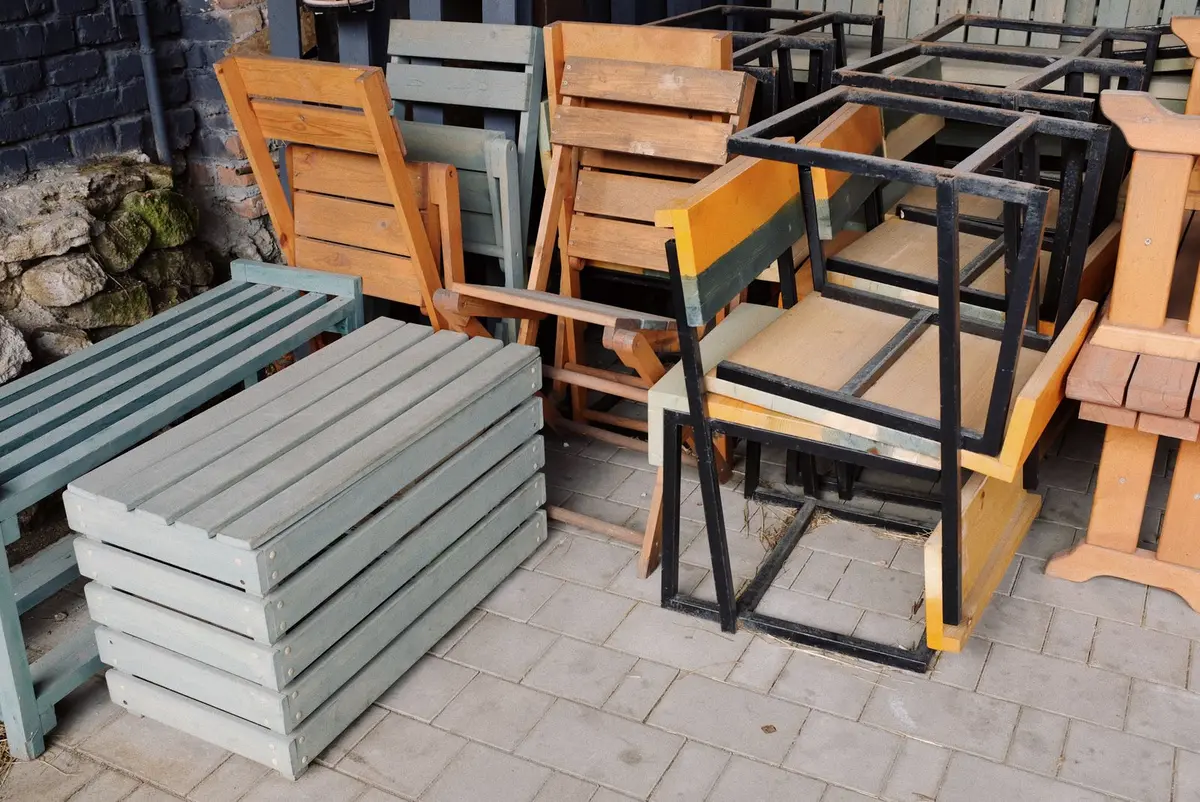
Clean outdoor furniture thoroughly with appropriate cleaners for each material, let everything dry completely, then store in a dry place protected from pests and moisture. This prevents mold, mildew, and material degradation over the off-season.
- Difficulty
- Beginner
- Time
- A full day (Saturday-Sunday)
- Cost
- $15 - $40
- Tools
- Garden hose, soft-bristle brush, plastic scraper, sponges, clean towels, wire brush, pressure sprayer or spray bottle, toothbrush, wooden blocks
- Permit required
- No
- Contractor recommended
- No
- You will need
- Oxygen-based deck cleaner or mild dish soap, Metal cleaner (aluminum or stainless steel), Mildew and mold remover, Soft-bristle brush and sponges, Plastic scraper and wire brush, Garden hose on low pressure, Clean towels, Desiccant packets (silica gel), Breathable tarps or cotton sheets, Wooden blocks for elevation
Materials
- 1 bottle Oxygen-based deck cleaner or mild dish soap (Oxygen-based cleaners are gentler on wood and finishes than bleach-based products. Look for brands labeled for composite decks.) — $8 - $12
- 1 bottle or can Metal cleaner (aluminum or stainless steel appropriate) (Choose based on your metal type. Aluminum cleaner prevents oxidation; stainless steel cleaner restores shine.) — $6 - $10
- 1 bottle Mildew and mold remover (dilutable concentrate or spray) (Oxygen-based is preferable to bleach for environmental safety and finish preservation.) — $8 - $14
- 1 quart Water-based sealant or teak oil (optional for wood) (Only needed if you want extra winter protection. Teak oil darkens wood permanently.) — $12 - $20
- 4-6 packets Desiccant packets (silica gel or calcium chloride) (Keep moisture out of cushion storage. Save these from supplement or electronics packaging.) — $0 - $5
- As needed Breathable tarps or old cotton sheets (Avoid plastic tarps, which trap moisture. Use what you have or pick up inexpensive drop cloths.) — $0 - $15
Step by step
Spot Problem Areas First
Walk each piece and identify problem areas—bird droppings, sticky sap, algae stains, rust spots. Pre-treat these with targeted solutions before full cleaning. Use a plastic scraper on dried deposits, a wire brush on rust, and a mildew remover on dark stains. Don't blast everything at once; targeted work now prevents aggressive scrubbing later that can damage finishes.
Tip: Pre-treat sap with rubbing alcohol and let it sit for five minutes—it lifts without aggressive scraping.Scrub With Gentle Soap
Mix warm water with a oxygen-based deck cleaner or mild dish soap. Use a soft-bristle brush or sponge to work the solution across all surfaces, paying attention to crevices, joints, and underframes where dirt accumulates. Rinse thoroughly with a garden hose on low pressure. Don't use a pressure washer on wood or composite—it strips finish and opens the grain.
Tip: Work in sections so the soap doesn't dry on the surface before you rinse it away.Restore Metal Shine
For painted metal, use the same warm soapy water and soft brush. For bare aluminum or stainless steel, use a cloth-based metal cleaner to restore shine and prevent oxidation. For rust spots on steel, apply a rust converter or light steel wool with mineral oil, then wipe clean. Don't let corrosive cleaners sit; apply, work, and rinse immediately.
Tip: A toothbrush gets into the tight spaces around bolt heads and welded joints where dirt hides.Revive Cushion Fabrics
Remove cushions and wash covers according to fabric label instructions—most can be hand-scrubbed with mild soap and water, then rinsed. For mildewed fabric, apply a diluted vinegar solution (one part vinegar to three parts water) and let sit for 15 minutes before scrubbing. Wring out excess water but don't machine-spin dry. Stand cushions upright and lean them against a wall in full sun to air dry completely.
Tip: Never compress wet cushions into storage—trapped moisture will create permanent mold damage.Sun-Dry Everything Completely
This step determines whether mold grows or not. After washing, wipe down all furniture with clean towels, then leave everything in direct sun for a full day. Air circulation is critical—don't stack pieces together. Check undersides, crevices, and seat bases where water pools. Run your hand over every surface; if it feels slightly damp, it's not ready to store. In humid climates, leave furniture out for two days.
Tip: Leave cushions standing upright, not flat, so air can reach both sides.Seal Wood and Metal
For wood furniture, consider a water-based sealant or teak oil to prevent drying and checking over the off-season. For metal that showed any rust, apply a thin coat of spray wax or automotive protectant to repel moisture. Don't overdo this—a light coat is all that's needed. Let any finish dry completely per product instructions before wrapping or storing.
Tip: Teak oil makes wood glow but darkens the tone permanently—test on an inconspicuous area first.Protect From Winter Moisture
Once everything is completely dry, wrap pieces in breathable tarps or old sheets—never plastic, which traps moisture. Store in a shed, garage, or basement with good air circulation. Keep cushions in a sealed plastic bin with a desiccant packet. Elevate furniture off the floor on wooden blocks or shelves to prevent ground moisture absorption. Check the storage space for roof leaks, gaps where pests can enter, and standing water before you commit furniture to it.
Tip: Silica gel packets from supplement bottles work as desiccants—toss a few into cushion storage.
Questions people ask
Can I use a pressure washer to speed up cleaning?
Not on wood, wicker, or composite materials. Pressure washers strip finishes, splinter wood, and crush the fibers of woven pieces. Use one only on hard surfaces like concrete patios, never on the furniture itself. Stick with a soft brush and soapy water—it takes 30 minutes longer but preserves the finish.
What's the best way to store cushions over winter?
Store them separately from furniture in a sealed plastic bin, not in a damp garage or basement exposed to air. Add desiccant packets inside the bin—silica gel packets work. Keep the bin in the warmest, driest place you have. Cushions stored loose in damp sheds almost always develop mold by January.
Do I need to cover furniture with a tarp while it's in storage?
Yes, but use breathable tarps or cotton drop cloths, not plastic sheeting. Plastic creates a moisture-trap environment that promotes mold. Breathable tarps keep dust and debris off while allowing air circulation underneath. Elevate the furniture slightly on wooden blocks so air can move beneath it too.
Troubleshooting
White chalky residue appears on metal after washing
This is mineral buildup from hard water. Wipe down with a cloth dampened in white vinegar, then dry immediately. Prevents this next time by rinsing with distilled water if possible.
Mold returns within weeks despite cleaning
Your storage space has a moisture problem. Check for roof leaks, standing water underneath furniture, or poor ventilation. Move furniture off the ground onto wooden blocks and add more desiccant packets. Consider a small battery-powered fan for air circulation.
Wood appears lighter or gray after cleaning and drying
This is sun-bleached wood, not damage. If you want to restore color, apply a wood stain or teak oil after the seasonal storage cycle.
Cushion covers won't fully dry despite two days in sun
Microfiber or dense fabrics trap water inside. Remove the cushion insert if possible and wash the cover separately. Stand the cover on edge in direct sun for another full day. Never store damp fabric in bins.
Rust spots reappear on steel furniture after treatment
You didn't fully convert the rust or didn't apply protective wax. Start over: use a wire brush to remove loose rust, apply a rust converter product thoroughly, let it cure per instructions, then apply a water-repellent automotive wax.
Related: deck and patio cleaning, refinish a thrifted chair and refresh hardwood floors.