What Your Dad Wore
Nelly on what your dad wore and why it still works — fit, occasion, quality over quantity, and dressing like yourself. A Father's Day essay from the Fashion Edition.
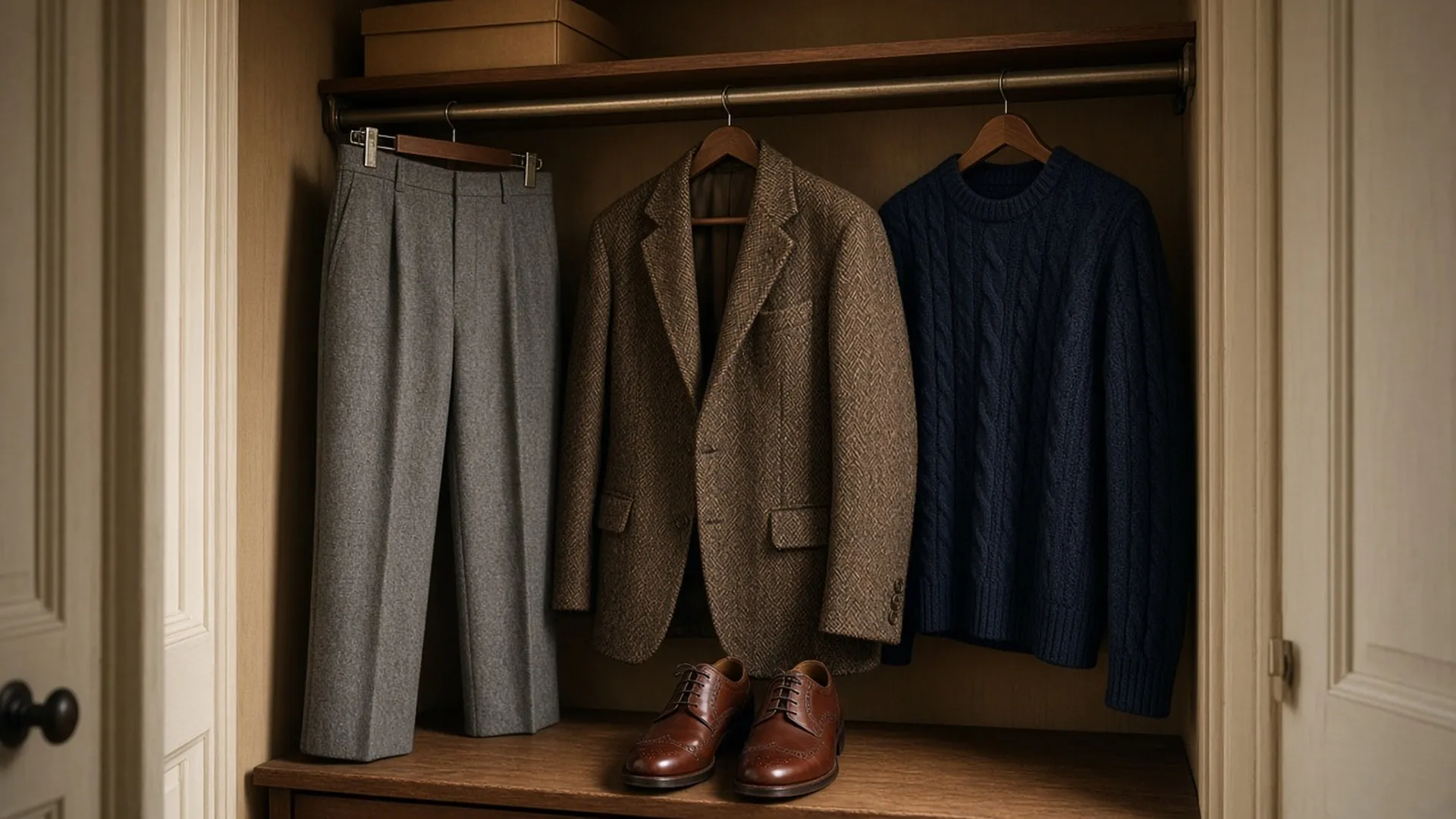
The generation that dressed without thinking about it had something figured out.
How To: Fashion / Nelly / What Your Dad Wore — The HowTo Network Father's Day 2026
Everything in his closet made sense together — and made sense with him. The Fashion Edition · Father's Day 2026
I have been thinking about my father's closet.
Not because it was remarkable — it wasn't, by any metric the current fashion conversation uses to evaluate a wardrobe. No carefully curated capsule. No investment pieces. No color theory applied consciously. Just clothes. The right clothes, worn the right way, for the right situations, without drama.
What he had was coherence. Everything in his closet made sense together and made sense with him, which is harder to achieve than it sounds and rarer than it should be.
Clothes that fit your body right now, today.
His generation — and I suspect your father's generation, whatever decade that lands in — dressed with a clarity that got lost somewhere in the conversation about personal style. They wore what the occasion required. They maintained what they owned. They bought things that lasted and wore them until they did. They did not agonize over whether something was on-trend.
The result, more often than not, was a man who looked right. Not fashionable in any particular season's definition. Right. Put-together. Appropriate. The kind of dressed that doesn't call attention to itself, which is the actual goal that most style advice misses entirely.
Here is what that generation understood about clothes that I think is worth recovering:
What the generation understood
- Fit is the whole conversation. — My father's clothes fit him. Not perfectly — he wasn't going to a tailor for his work trousers — but they fit. They were the right size for his body at the time he bought them, and when his body changed, he bought new ones. There was no holding onto things that didn't fit because they used to, no aspiring to fit into something. Clothes that fit your body right now, today. That's it. That's most of what people mean when they say someone looks well-dressed.
- The occasion is real information. — His church clothes were his church clothes. His work clothes were his work clothes. He wasn't importing one category into another. This is a rule that sounds old-fashioned until you watch someone show up underdressed to something that mattered and understand what it cost them in the room before they opened their mouth. Dressing for the occasion is not compliance. It is respect — for the event, for the people there, for your own presence in the room.
- Quality over quantity was not a concept he would have named. — It was just how he bought things. He bought fewer things and they lasted longer. He didn't chase newness. He wore things out and replaced them when they were worn out. The economic logic of this is clear. The aesthetic result — a wardrobe with no visual noise, no impulse buys that don't go with anything — is underrated.
- He dressed like himself. — This is the one I keep coming back to. He wasn't trying on identities with his clothes. He wasn't building a character. He knew who he was and he dressed accordingly, and that self-knowledge translated into a kind of ease that no amount of trend-following produces. You cannot buy the ease. You develop it by knowing yourself well enough to stop auditioning.
He knew who he was and he dressed accordingly.
The modern translation — Nine items, one week, no visual noise. The same principles, worn today. — See the full look on getmylook →
Father's Day is a good moment to look at your own wardrobe with his eyes for a minute. Not to dress like him — different eras, different contexts, different bodies. But to ask the questions he implicitly answered every morning without thinking about them.
- Does this fit?
- Does this suit the occasion?
- Does this actually go with the rest of what I own?
- Does this look like me, or like someone I was hoping to be?
The answers will tell you more than any guide I could write.
JT wrote his own Father's Day piece from the other side of the same closet: How Your Father Dressed, on clothes as presentation rather than self-expression.
Nelly — Style Director · The Fashion Edition