Using Raw Shea Butter for Body Hydration
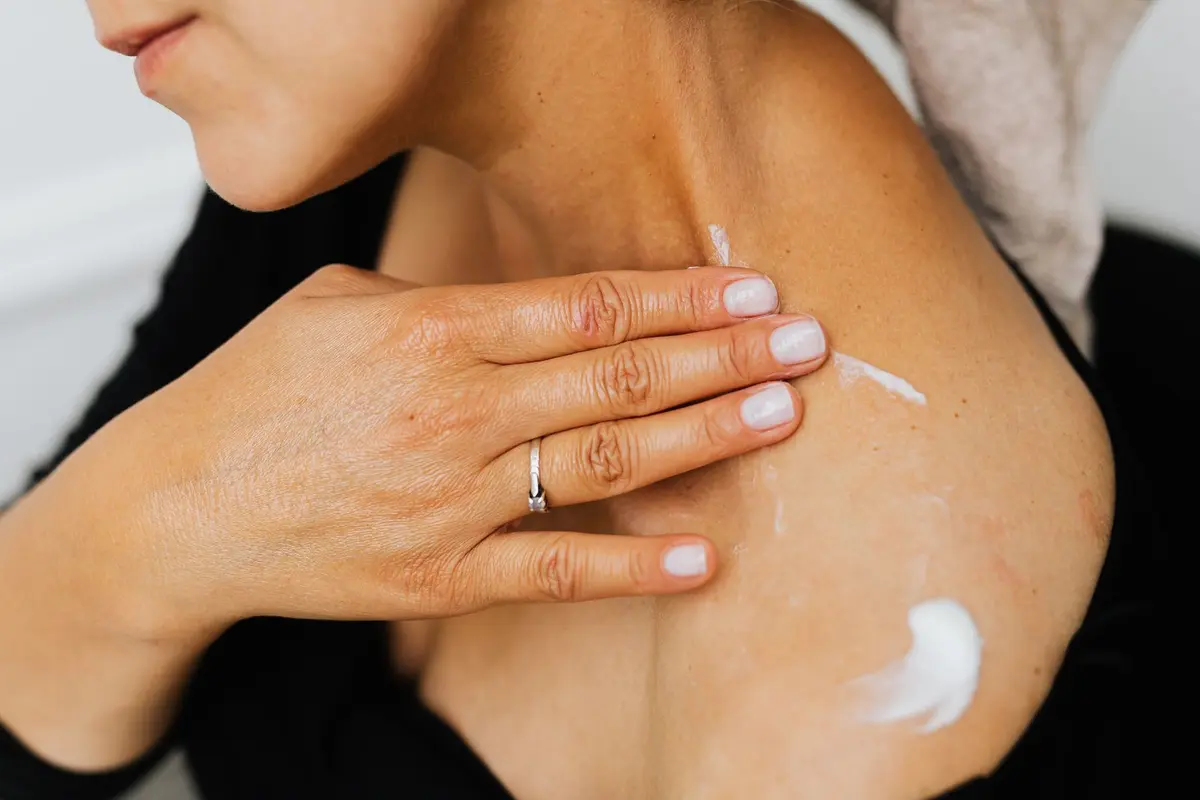
Shea butter functions primarily as an occlusive agent, creating a physical seal on the skin to prevent transepidermal water loss. Unlike lotions which contain high water content, raw shea butter is a lipid-dense substance that remains solid at room temperature and softens upon contact with body heat. It is effective for areas with naturally low oil production, such as elbows, heels, and knees.
Applying shea butter requires a specific sequence to be effective. Because it is occlusive rather than humectant, it must be applied over damp skin to capture moisture rather than locking in dryness. Following this method prevents the heavy, greasy residue often associated with improper application.
- Difficulty
- Beginner
- Total time
- 10 minutes
- Cost
- Low
- Cadence
- Weekly application
Ingredients
- Shea Butter: Fatty acid profile creates a protective occlusive barrier.
Tools List
- Raw, unrefined shea butter
- Clean, dry cloth
Step by step
Prepare the skin surface
Begin with damp skin immediately after a warm shower or bath. Pat the skin with a towel until it is slightly moist but not dripping. This moisture is the reservoir that the shea butter will trap against your skin.
Tip: Do not dry skin completely.Warm the butter
Scrape a small pea-sized amount of raw shea butter from the container using the back of your fingernail. Place the product in the center of your palm and rub your hands together briskly. The friction and heat will transition the butter from a semi-solid state to an oil-like consistency.
Tip: Work in small sections.Apply using pressure
Press your palms into the target area rather than swiping aggressively. This pressing motion ensures the butter is evenly distributed across the skin surface without stretching the tissue. Focus specifically on joints and dry extremities.
Tip: Use light pressure.Allow for absorption
Wait for the butter to stabilize on the skin before dressing. Even though it is an occlusive, it requires a brief period to settle into the grooves of the skin. Wearing loose, cotton clothing will prevent the product from transferring to fabrics.
Tip: Avoid tight synthetic fabrics.Final check
Inspect the skin for excess product. If the area feels overly tacky or wet, use a clean, dry cloth to blot away the remaining surface layer. A light, satin finish is the goal, not a slick surface.
Tip: Blot excess lightly.
Trouble
Why does my skin feel dry after applying shea butter?
You are likely applying it to bone-dry skin. Shea butter lacks the water content to hydrate; it only locks in existing water. Always apply on damp skin.
Can I use shea butter on my face?
Shea butter may clog pores for some skin types. It is generally recommended for body application on dry, non-acne-prone areas.
How long does it take for the greasiness to dissipate?
If applied correctly in a thin layer, it should absorb within ten minutes. If it remains greasy after fifteen minutes, you have applied too much product.
Is unrefined better than refined shea butter?
Unrefined shea butter retains more of its natural fats and nutrients. Refined versions are processed to remove the natural scent and color, which may also remove some of the desired fatty acids.
An occlusive is a sealant, not a source of hydration; apply it to damp skin only.
Consistency is the primary factor in seeing results with raw fats.
See also: lotion vs cream vs butter, which oils absorb fastest and body moisturising.