The Mechanics of Body Exfoliation
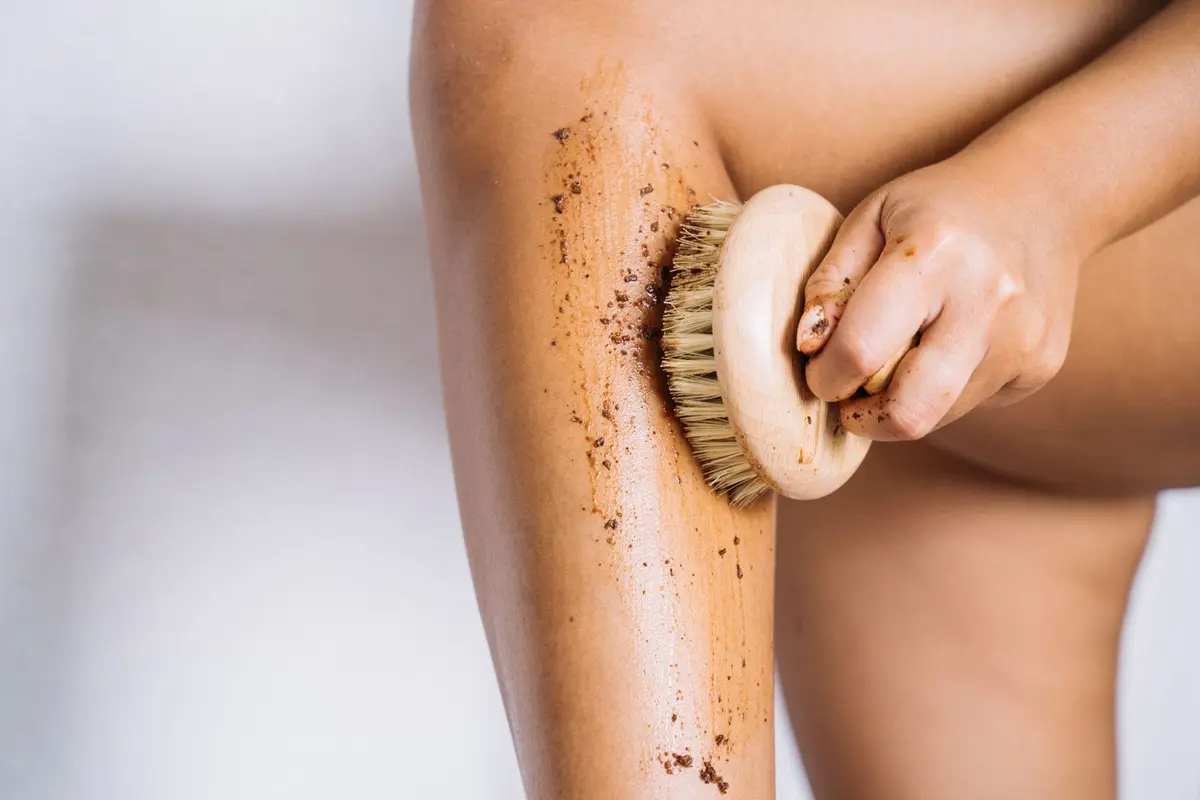
Manual exfoliation relies on friction to remove superficial debris from the skin. While the choice of scrub is often discussed, the mechanical execution—specifically the motion employed—remains overlooked. The geometry of your stroke dictates how evenly the abrasive particles distribute across the skin.
Circular motions and linear strokes serve different functions depending on the limb and the density of the exfoliant. Mastering both techniques ensures a consistent finish without over-processing specific zones.
- Difficulty
- Beginner
- Total time
- 15 minutes
- Cost
- Low
- Cadence
- Weekly
Ingredients
- Fine-grain salt or sugar: Provides the mechanical friction required for exfoliation.
- Emollient base: Allows the particles to glide without dragging the skin.
Tools List
- Manual body scrub with consistent particle size
- Soft cotton washcloth or microfiber mitt
Step by step
Prepare the surface
Dampen the skin thoroughly with warm water. Applying scrub to dry skin increases friction to an unnecessary degree. Ensure the area is clean of heavy lotions or oils that might cause the scrub particles to clump together.
Tip: Use lukewarm water to prevent stripping natural oils.Apply circles for density
Use small, circular motions on areas with thicker skin or complex topography, such as heels, elbows, and knees. The circular pattern forces the particles to track over the same area from multiple angles. This ensures no small patch remains untouched by the grit.
Tip: Keep pressure light; let the product do the work.Apply long strokes for surface area
Transition to long, firm, sweeping strokes for flatter areas like the thighs, calves, and arms. Long strokes allow for faster coverage and help maintain an even pressure distribution over large muscles. This motion is less repetitive than circles and minimizes the risk of friction-burn on softer skin.
Tip: Always stroke toward the heart.Rinse and neutralize
Rinse the area thoroughly with cool water to remove all remaining granules. Follow immediately with a lightweight moisturizer to restore the barrier function. Ensure no residue remains in the crevices of joints.
Tip: Pat dry with a soft towel rather than rubbing.
Trouble
Why is my skin red after scrubbing?
You are likely applying too much downward pressure or using a scrub that is too coarse. Reduce the force and switch to a gentler motion.
Do I need to scrub every day?
No. Daily scrubbing thins the barrier. Once a week is sufficient for most individuals.
What happens if I only use circular motions?
Circular motions are inefficient for large areas and may lead to over-exfoliation in localized spots due to the repetitive nature of the path.
Can I use the same motion everywhere?
No. The skin on your shins is thinner and more delicate than the skin on your heels; adjust your technique accordingly.
Circles for density, strokes for coverage; adapt the motion to the landscape of the limb.
Consistency in pressure is far more important than the speed of your motion.