Mastering the Back Scrub
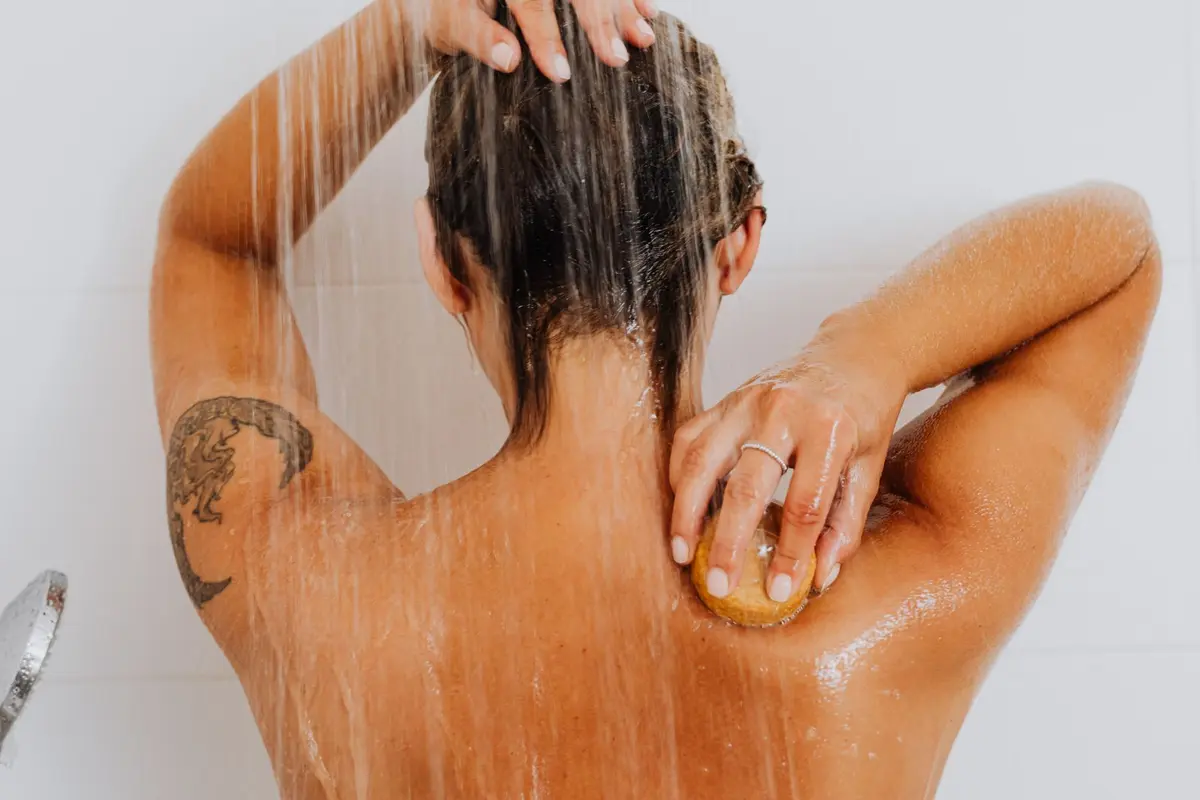
The back is often the most neglected area during a routine shower. Due to restricted range of motion, the center of the spine and the shoulder blades frequently remain untouched by standard cleansing methods.
Correct manual exfoliation requires the use of an extended-reach tool to ensure even pressure. This guide focuses on the mechanical movement necessary to achieve consistent results without straining your muscles.
- Difficulty
- Beginner
- Total time
- 10 minutes
- Cost
- Low
- Cadence
- Weekly
Ingredients
- Surfactant-based cleanser: Necessary for removing surface debris without excessive oil.
Tools List
- Long-handled natural or synthetic bristle brush
- Foaming body cleanser
- Hanging hook for storage
Step by step
Prepare the skin surface
Begin by wetting your skin under warm water for one minute. Avoid using hot water, as it can strip natural oils before you begin the exfoliation process. Damp skin provides the necessary slip for the brush or cloth to move without unnecessary friction.
Tip: Ensure the brush head is fully saturated before applying any product.Apply your cleanser
Dispense a nickel-sized amount of a gentle, non-abrasive body cleanser directly onto the center of the brush head. Avoid heavy, oil-based scrubs which can create an unnecessary mess in the shower. A simple, foaming formula is the most efficient choice for manual scrubbing.
Tip: Distribute the product evenly by rubbing the bristles against the palm of your hand.Employ the cross-body motion
Hold the handle with both hands to maintain maximum control over the pressure. Reach the brush behind you and move in long, diagonal strokes from the shoulder blade down toward the lower back. Repeat this motion across the opposite shoulder blade to cover the entire surface area. Use light, steady pressure rather than aggressive scrubbing to maintain surface integrity.
Tip: Keep your movements controlled and rhythmic to ensure no spots are missed.Rinse the back
Adjust your shower head to a lower pressure setting to rinse away all lather. Ensure you reach behind again to clear away any residual product from the brush movements. Leaving soap residue can lead to a film on the skin, so take your time to rinse thoroughly.
Tip: Use a handheld shower head if your main one is fixed.Clean the brush
After finishing, rinse the brush head thoroughly under warm water until no soap remains. Tap the handle against the side of the tub to remove excess moisture. Hang the tool in a well-ventilated area to dry, as trapped water can compromise the brush bristles over time.
Tip: Store the brush away from the immediate spray of the shower.
Trouble
How much pressure is too much?
You should apply only enough force to move the bristles across the skin. If your skin is red immediately after the shower, you are pressing too hard. Lighten your touch.
What if I cannot reach the middle of my back?
Invest in a brush with a curved, ergonomic handle. If that fails, a textured washcloth held at both ends in a sawing motion is a viable alternative.
How often should I replace my brush?
Replace your brush every three months. If the bristles begin to splay or lose their original shape, the exfoliation will become uneven.
Can I use a scrub with beads?
It is not recommended. Mechanical scrubbing with a brush is sufficient and more controllable than using a secondary product that may be difficult to rinse off.
Consistent, controlled movement is more effective than aggressive pressure.
The key is the tool, not the effort. Let the bristles do the work.
More body exfoliation: body scrubs, physical vs chemical and dry-brushing tools and cadence.