Smoothing Rough Knees and Elbows
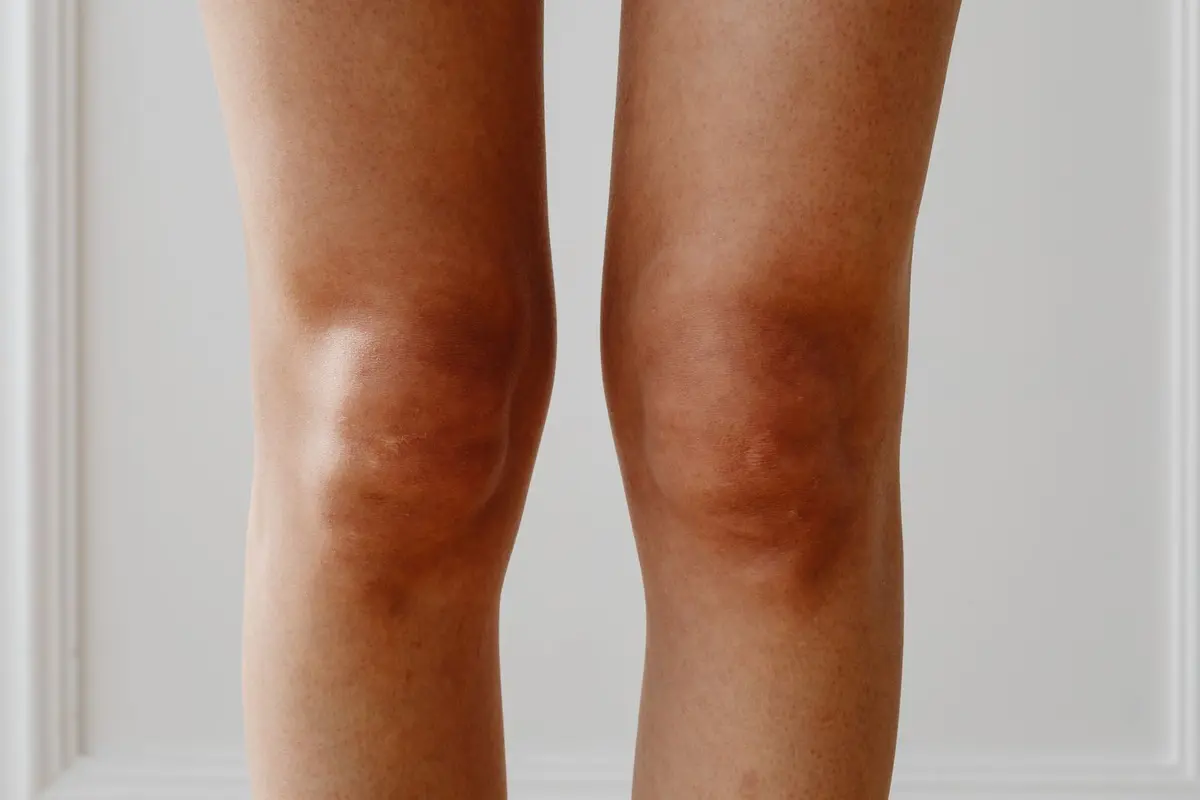
Skin on the elbows and knees is structurally thicker and lacks the oil-producing glands found elsewhere on the body. Because these areas are subject to constant friction and structural compression, they frequently develop a buildup of dead cells that appear gray, ashy, or rough to the touch. This condition is not a skin disease but a byproduct of daily mechanics.
A three-week cycle provides sufficient time to stabilize the moisture barrier and encourage the shedding of these stagnant cells. By replacing aggressive scrubbing with gentle, rhythmic mechanical exfoliation and heavy-duty occlusion, the texture of the joint will visibly soften and unify with the surrounding skin.
- Difficulty
- Beginner
- Total time
- 21 days
- Cost
- Low
- Cadence
- Daily maintenance
Ingredients
- Urea: Breaks down buildup in thick skin layers
- Glycerin: Acts as a humectant to pull water into the skin
Tools List
- Exfoliating mitt
- Urea-based moisturizer
- Petroleum-based occlusive
- Cotton sleeves
Step by step
Soften the keratinized layer
Before any mechanical action, expose the area to warm water for several minutes. A lukewarm bath or a long shower will hydrate the outer layer of skin cells, making them more pliable. Do not use extremely hot water, as this strips natural oils and exacerbates the dryness you are attempting to correct.
Tip: Apply a thick layer of plain petroleum jelly to the area five minutes before stepping into the shower.Perform mechanical exfoliation
Use a damp, fine-grade exfoliating cloth or a soft pumice sponge to apply light, circular pressure to the affected area. Avoid harsh salt or sugar scrubs, which can cause micro-tears in delicate skin. Focus on the center of the joint where the skin is thickest, moving toward the softer skin of the upper arm or thigh.
Tip: Use a light touch; let the tool do the work rather than your hand strength.Seal the barrier
Immediately after drying the skin, apply a humectant-rich cream containing urea or glycerin. These ingredients draw moisture into the skin while repairing the protective barrier. Do not wait for the skin to feel dry to the touch before applying this step.
Tip: Look for fragrance-free formulations to avoid potential irritation.Occlude the joint
For the first seven nights, apply a heavy occlusive balm over your cream and cover the area with a loose cotton sleeve or sock. This creates a closed environment that prevents transepidermal water loss while you sleep. By week two, this step can be reduced to every other night.
Tip: The cotton cover protects your bedding from residue.
Trouble
Why do my joints still look gray?
Grayish skin is often a sign of deep-seated dryness. Continue the occlusive nightly step and ensure you are using a cream that contains urea, as it excels at softening hardened patches.
Can I use a physical body scrub?
Most commercial body scrubs contain particles that are too sharp, which can irritate the skin barrier. A damp, soft cloth is more predictable and causes less damage to the surrounding healthy skin.
Should I exfoliate every day?
Exfoliate every other day during the first week. If your skin is not irritated, you may increase to daily use in the second week, but listen to your skin’s feedback.
What if my skin becomes sensitive?
Cease all physical exfoliation immediately. Increase the frequency of your barrier-repair cream and stick to plain, scent-free moisturizers until the sensitivity subsides.
Softening these joints is a matter of consistent hydration, not aggressive force.
Persistence is more effective than intensity when dealing with thickened skin areas.
Related: body scrubs, AHA and BHA for body and winter body care.