Mastering the Exfoliating Mitt
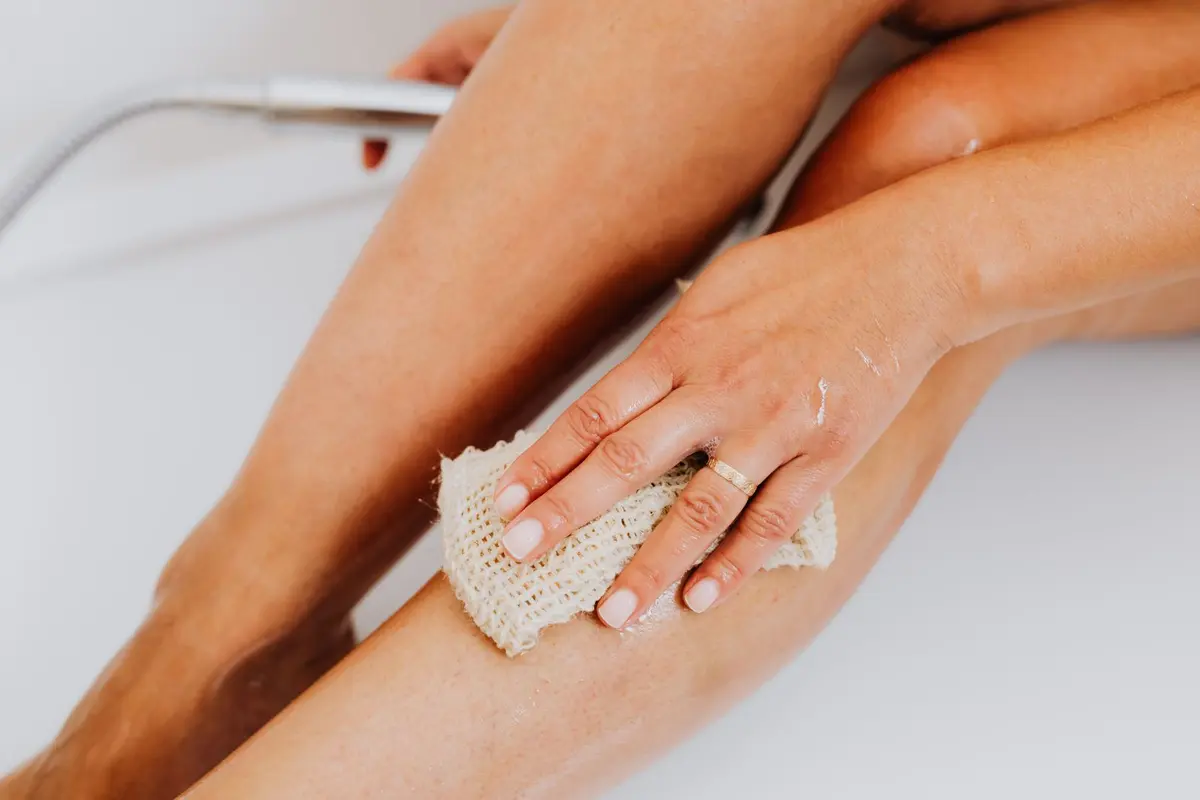
Mechanical exfoliation often swings between the extremes of harsh abrasive scrubs and ineffective synthetic loofahs. The viscose exfoliating mitt occupies the necessary middle ground, offering a controlled, tactile approach to manual cell turnover.
By relying on friction rather than chemical acids, this method allows for immediate feedback during use. It is a precise way to maintain the body's natural barrier while smoothing uneven texture.
- Difficulty
- Beginner
- Total time
- 15 minutes
- Cost
- Low
- Cadence
- Once weekly
Ingredients
- Viscose: Provides the specific fiber texture required for grip
Tools List
- Viscose or silk-blend exfoliating mitt
Step by step
Warm the skin
Submerge yourself in warm water for at least five minutes before reaching for the mitt. The steam softens the keratinized outer layer of the skin, making it more pliable for removal. Do not apply soap or oil yet, as these create a barrier that prevents the fibers from gripping effectively.
Tip: Steam your bathroom before beginning.Drain the excess water
Remove yourself from the direct stream of the water. Wring the mitt out until it is damp but not dripping wet. The friction is generated by the texture of the fabric against damp skin; if the mitt is too saturated, it will slide over the surface without performing the necessary work.
Tip: Use a dry hand to hold the mitt inside.Apply controlled friction
Place your hand inside the mitt and use steady, long strokes along your limbs. Move in the direction of your heart to encourage circulation and ensure even coverage. If the skin is adequately softened, you will notice small amounts of debris gathering under the mitt as you work.
Tip: Do not scrub in circles.Remove debris
Return to the water to rinse away the loosened skin cells. At this stage, you may use a gentle, low-pH cleanser if preferred, though warm water is often sufficient. Ensure every area you have worked on is thoroughly cleaned to prevent residue from settling back into the pores.
Tip: Use cool water for the final rinse.Seal the barrier
Pat your skin dry with a soft towel, leaving it slightly damp to the touch. Immediately apply a moisturizer containing humectants like glycerin to lock in hydration. The skin is at its most permeable immediately following physical exfoliation, making this the ideal time to apply restorative products.
Tip: Use fragrance-free lotions.
Trouble
How much pressure is too much?
You should apply enough pressure to feel the drag, but never enough to create heat or localized redness. If the skin begins to sting or look inflamed, you have bypassed the dead layer and begun interacting with live tissue.
Should I use a scrub with the mitt?
No. The mitt is designed to work via mechanical friction alone. Using a scrub alongside the mitt will negate the precision of the fabric and likely lead to micro-tears in the moisture barrier.
How often should I replace the mitt?
A viscose mitt should be replaced every three to four months, depending on frequency of use. If the fibers feel soft or lose their original grip, it is time to retire the tool.
My skin feels tight after use?
Tightness is a sign of dehydration or over-exfoliation. Decrease the frequency of your sessions and ensure you are applying a heavier moisturizer immediately after drying your skin.
The mitt acts as a scalpel for texture, providing precision that no chemical scrub can replicate.
Consistency with a tool is always more effective than chasing results with high-intensity products.
See also: physical vs chemical exfoliation, mastering the back scrub and body exfoliation.