The French team plays in New York. I watch.
France versus Senegal at MetLife Stadium, and the particular feeling of watching your country play in someone else's city.
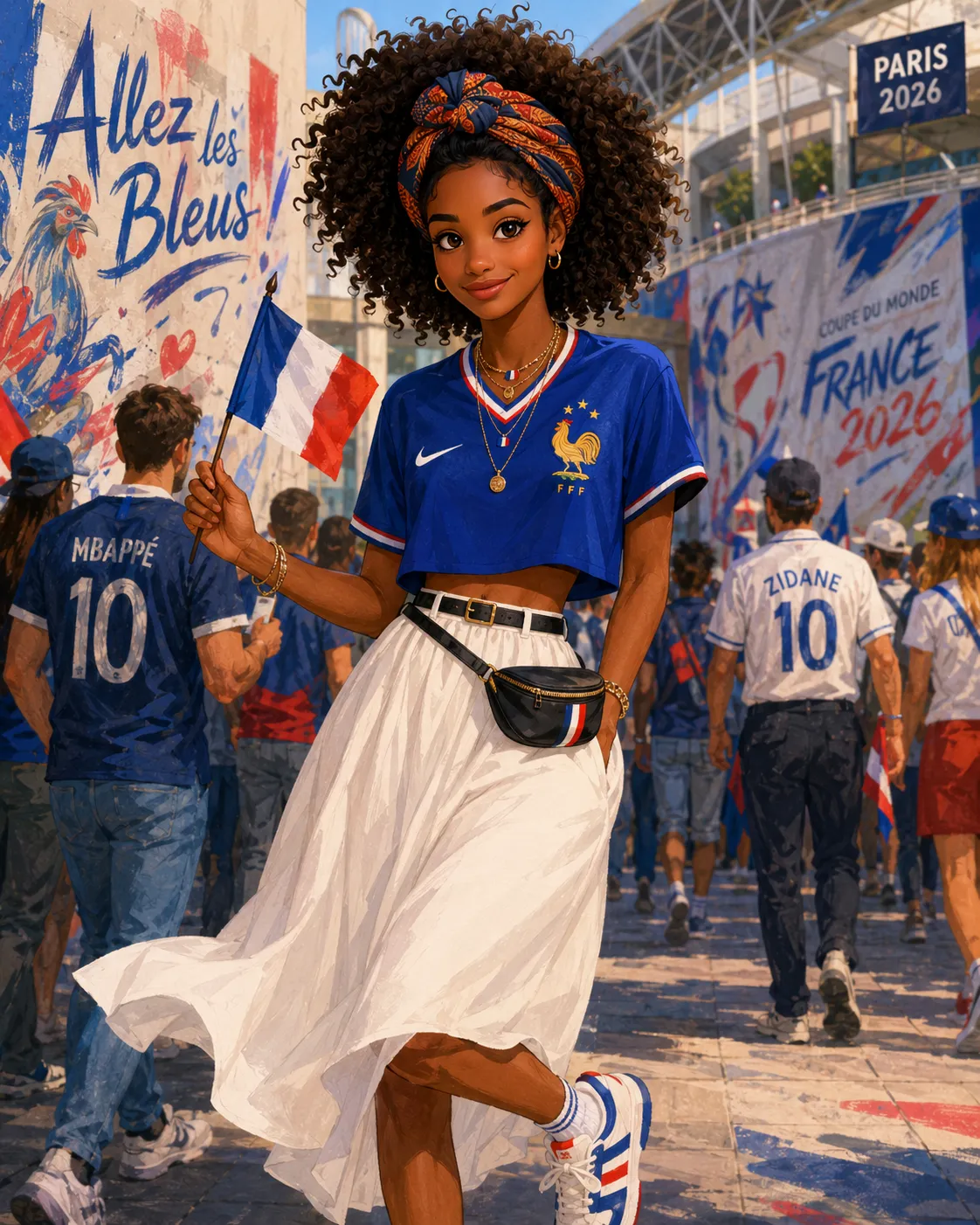
France versus Senegal at MetLife Stadium, and the particular feeling of watching your country play in someone else's city.
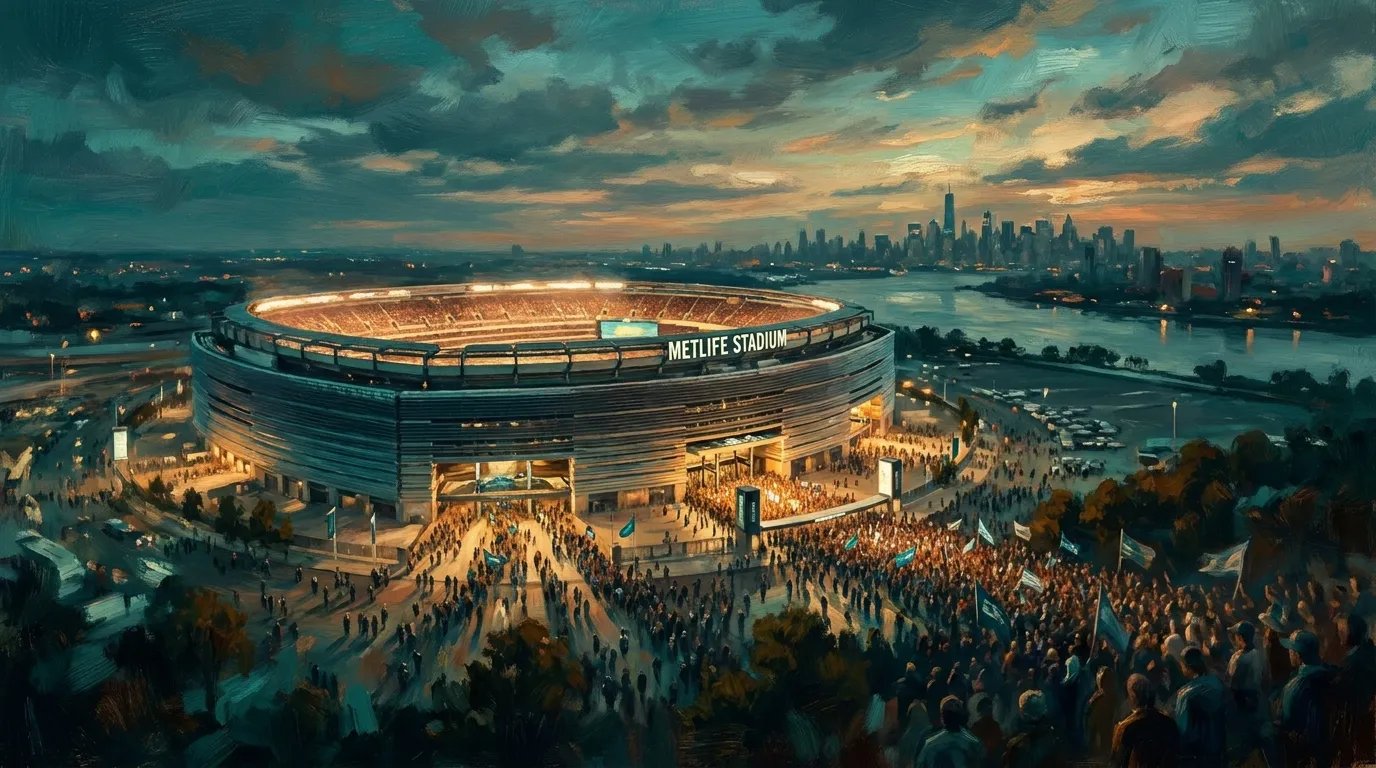
Here is something I did not expect: you can see the Empire State Building from the upper deck of MetLife Stadium.
It is not close. It is small and blue in the afternoon haze, sitting behind the scoreboard like it wanted to watch too. But it is there. And at some point during the first half — France going nowhere, Senegal looking sharp, the heat pressing down on 80,000 people who had been sitting in New Jersey since noon — I looked up at it and thought: this is an objectively strange place to hold a World Cup match.
Not wrong. Strange.
The stadium is in East Rutherford. The train from Penn Station takes twenty-two minutes on the NJ Transit Northeast Corridor line, and then there is a shuttle bus, and then there is a walk, and the whole thing is fine but it is not New York. The New York-New Jersey Stadium is what FIFA is calling it for the tournament, which is accurate and also tells you everything about the negotiation that must have happened to get there.
I had a ticket in Section 222. I took the 11:15 from Penn Station to be safe. I was not safe — I was one of the first people there, standing in the sun in a parking lot for forty minutes wondering where everyone was. They arrived eventually. All 80,545 of them.
I was in Midtown for three nights — a Marriott on 8th Avenue that I booked with Bonvoy points, which brought the rate down to something that did not make me feel physically ill. New York in June during the World Cup is not a budget situation. Either plan the points or plan the budget. There is no third option.
This dispatch contains an affiliate link. We may earn a commission on bookings — it costs you nothing.
The first half was not a great first half.
France looked like a team that had been told the match was at 4 and arrived at 3. Slow. Disconnected. Deschamps had them in a shape that made sense on paper and produced very little on the grass. Senegal were pressing, organized, and playing with a genuine belief that this was winnable — because it was. Nicolas Jackson hit the post. Ismaila Sarr had a chance at the stroke of halftime that he turned over from close range and the entire Senegalese section behind me made the noise of 10,000 people simultaneously swallowing something bad.
I'll be honest with you: I came in nervous. France versus Senegal is not a neutral fixture for me. My mother is Senegalese. I grew up in Lyon watching Les Bleus with my father, a French football purist who has opinions about the correct way to defend a set piece and will share them whether or not you have asked. I have watched this exact tension — France, Senegal, family dinner — since I was seven years old. It is not new. It does not get easier.
The 2002 World Cup — Senegal beats France 1-0, defending champions, group stage exit, never recovered — is something my mother brings up with a frequency that is not accidental.
I sat in Section 222 and tried to be a journalist about it.
I sat in Section 222 and tried to be a journalist about it.
Upper deck, second half
Then Mbappe decided to play football.
Deschamps shifted Olise centrally at halftime. Pushed Dembele wide. Made no substitutions, which the people around me were unhappy about, but the tactical adjustment was the move. Olise started threading passes through the Senegalese defensive line and Mbappe — who had been quiet, who had been clipped and ignored and generally handled — woke up.
66th minute. Olise finds him cutting across the penalty area, one touch to control, one touch to finish. The ball goes in. The French section goes up. I went up. I am a professional. I went up anyway.
The second came in the 90th, after Barcola had made it 2-0 from the bench and Ibrahim Mbaye had pulled one back for Senegal to make the last five minutes interesting in the way you do not want your last five minutes to be interesting. Mbappe received the ball outside the box and hit it. The kind of shot where you can tell from the contact that it's going in before it gets there. It went in.
58 goals for France. All-time record. His own, now.
What New York does to a match like this.
New York has one of the largest Senegalese diaspora communities in the United States. Little Senegal is on 116th Street in Harlem — three blocks of West African restaurants, hair braiding salons, and corner stores with Senegalese music coming out of them. On June 16th, those three blocks wore yellow and green and walked down to the subway together.
The result was a stadium that was split in a way I have not seen at many matches. Not 80/20 French. Maybe 55/45. The Senegalese section was loud throughout, organized, and furious in a way that felt earned — their team played well enough to win the first half. They didn't win the match. The noise they made in those last five minutes when Mbaye scored was the kind of noise that tells you something about what this match meant to that group of people.
I found that more interesting than the match, honestly.
Not because the match wasn't good — it was, once France remembered they were France. But because a World Cup played in New York is going to do this: it will pull in every diaspora community the city has, which is all of them, and the stadium will reflect the world in a way that a stadium in Doha or Sochi or Johannesburg does not. The crowd at MetLife on June 16th was a New York crowd. That is not a compliment or a criticism. That is just a fact that changed the texture of the afternoon.
Getting out.
The shuttle bus situation after the match is not good. I knew this going in — I had read the NJ Transit advisories and I had ignored them in the way you ignore warnings about things you cannot control. Forty minutes in a queue for a bus that takes seven minutes to the train station, and then the train platform is the kind of organized chaos that only works because everyone is too tired to fight about it.
I was on a train by 5:40. Back in Penn Station by 6:02. Ate a very mediocre dinner in Midtown that I do not regret because I was not looking for dinner, I was looking for something to do with my hands while I thought about the match.
France won. Mbappe is the record-holder. Deschamps stood on the sideline for his 20th World Cup match as head coach with the expression of a man who has long since stopped being surprised by his own players.
Next: Boston. France versus Norway. June 22nd.
I have already checked the NJ Transit equivalent out of South Station. I have already made my mistake once.
The three days before this match are in a long weekend in New York, and the tournament overview is the World Cup is here. For getting to a stadium by train and shuttle in any host city, the guide to navigating an unfamiliar transit system covers fares and direction signs.
This isn't about football. It's about what it means to watch your country from somewhere complicated.
I grew up French. I travel with a French passport. I also grew up Senegalese — my mother's family, the food in our kitchen on Sundays, the language she switched to when she was on the phone with her sisters. These two things have coexisted in me my whole life without needing to be resolved.
Football makes it complicated in a way that nothing else quite does.
I was glad France won. I was also watching the Senegalese fans in the section to my right for a lot of the second half, and I know what that loss cost them — not in a tournament sense, but in a particular feeling you have when you travel a long way to watch something and it doesn't go the way you needed it to go.
Sixty-eight countries. I have watched a lot of matches from a lot of different angles. I do not always know which direction I am watching from.
I am figuring it out. One match at a time.
ZoeNew York, June 2026 — Boston next. I'm bringing a better plan for getting out.