How to Pick Your Next Destination. And Why It's Madrid.
Some cities are interesting. Madrid is alive.
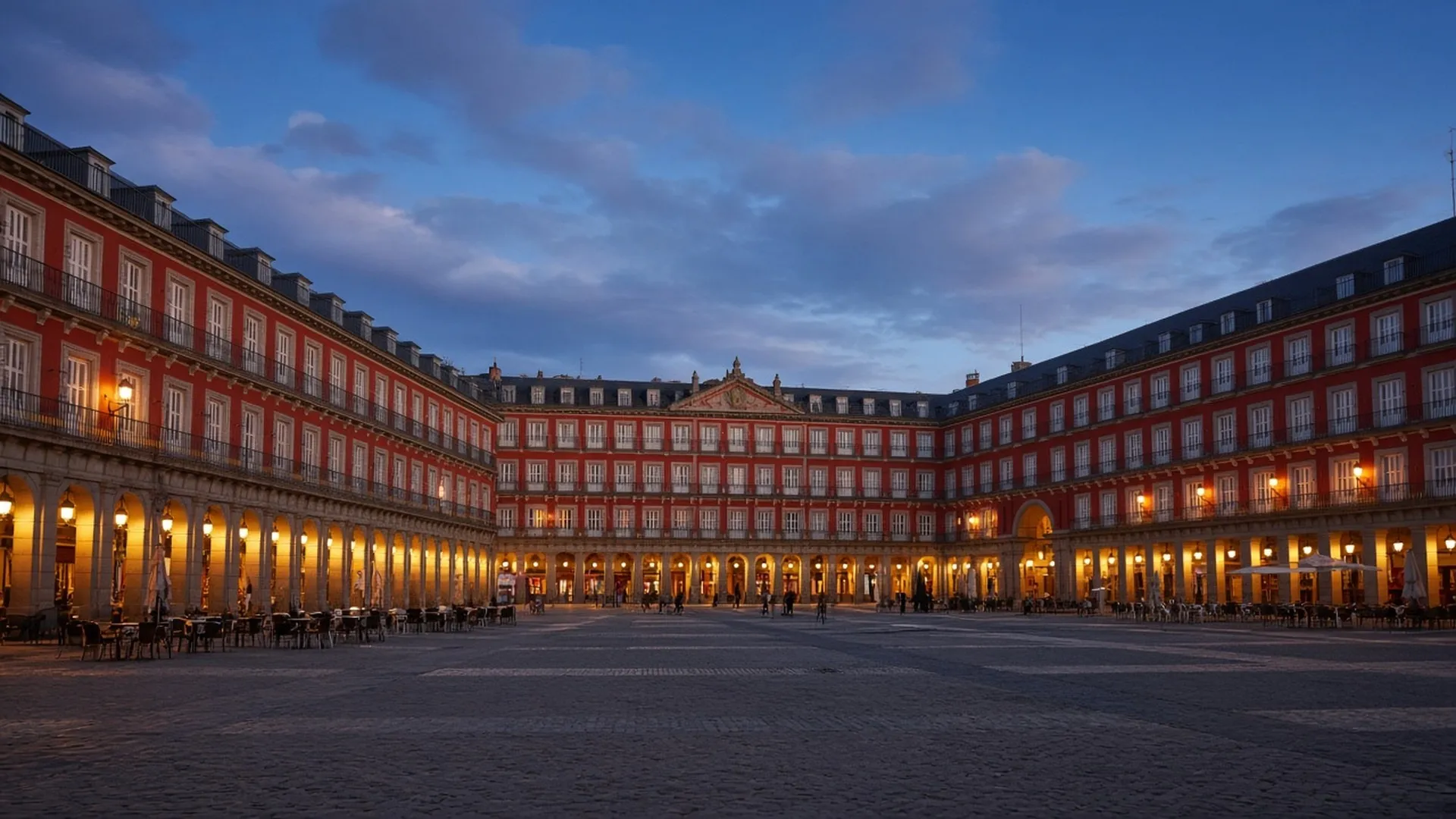
Some cities are interesting. Madrid is alive.

I have been to Madrid seven times.
The first time I went, I stayed four days and thought I understood it. That was a mistake Madrid let me make in peace. By the third visit I had stopped trying to understand it and started just showing up. That’s when it opened.
Here’s what I know after seven trips: Madrid is not a city you visit. It’s a city you keep returning to, and each time it gives you something the last trip didn’t. That’s not something I can explain in an itinerary. But I can tell you what I’ve found.
The city starts late and means it.
Madrid does not perform its nightlife for tourists. It actually runs on a different clock.
Lunch is at two or three in the afternoon. Dinner does not start before nine, and if you sit down at eight you will be alone in the restaurant with the waitstaff, who will be kind about it but will know. The streets fill up around ten. Terrazas — the outdoor bar terraces that appear on every corner in summer — are still full at midnight on a Tuesday. Not because people are trying to stay out late. Because that’s when the night is.
I spent my first visit fighting this. I was hungry at six. I was tired by eleven. By my third visit I had stopped and the city became something else entirely — a place where the evening was not winding down but just starting to settle into itself.
The trade-off is real: if you have an early flight or small children or a body that operates on northern European time, Madrid will wear you out. That’s not a complaint. That’s just the terms.

The people.
I have traveled a lot. I have met warm people in most of them and difficult people in a few and indifferent people in more than I expected. Madrid is in a category of its own.
Madrileños are not performing friendliness. That’s the first thing you notice. In cities built around tourism, warmth is often a transaction — it lives in the exchange and stops when the exchange ends. In Madrid, people are warm because that is simply the register they operate in. They are interested in you. They want to know where you are from and how long you are staying and whether you have eaten yet, and they ask all of this with the kind of directness that would feel intrusive in a northern city and feels like a gift here.
I was sitting alone at a bar in Lavapiés on my fourth visit, eating patatas bravas and reading, and the man at the next table — mid-sixties, newspaper, glass of wine — leaned over and asked in careful English whether I liked Madrid. I told him I loved it. He spent the next twenty minutes explaining the neighborhood to me: what it used to be, what it was becoming, what he thought about that, which bar on which street made the best vermú in the city, why I should go on a Sunday and not a Saturday. He was not hitting on me. He was not selling anything. He was just a Madrileño who had opinions about his city and wanted to share them with someone who seemed interested.
That happens in Madrid. More than once, more than twice — it happens as a pattern.
There is a passion in the way people here engage with everything. Food is argued about with genuine intensity. Football is a religion and also a joke and also the most serious thing in the room depending on who you ask. Politics is loud and present and nobody apologizes for having a position. Art is not something that lives in museums — it lives in the conversation, in the way someone describes a painting they saw or a film they hated or a song that was playing when something important happened.
I watched two women in their seventies have what appeared to be a heated argument outside a bakery on Calle Fuencarral. Arms gesturing, voices rising, the full performance. I braced for it to turn. Then one of them started laughing and they embraced and walked in together. That was not a fight. That was just how they were talking.
Madrid is a city where people feel things out loud. After a while you stop being surprised by it and start being grateful for it. The alternative — the careful, managed, don’t-show-too-much version of human interaction — starts to feel like what it is. A choice. And not always the right one.
Madrid is a city where people feel things out loud.
The food is not what you think it is.
Most people arrive expecting tapas and paella and leave having eaten both without understanding either.
Tapas in Madrid are not a meal format. They are a social ritual. You go to one bar for the croquetas. Another bar for the vermú and the boquerones. You don’t stay at one place and order a round of small plates. You move. The food is the excuse. The moving is the point.
I have eaten jamón ibérico standing at a marble counter on Calle Cuchilleros at noon with a glass of something cold and nowhere to be and I will tell you plainly: it is one of the best things I have ever done. Not because the jamón was exceptional, though it was. Because of the specific quality of that noon, in that room, with no agenda.
Paella is a different conversation. Paella is from Valencia. Madrid knows this and serves it anyway. The Madrileño version is fine. If you want paella and you’re in Madrid, you will find it and you will enjoy it. Just know that you’re eating Valencia’s dish in another city’s kitchen.
What Madrid actually does: cocido madrileño, a slow-cooked chickpea and meat stew that arrives in stages and takes an entire afternoon. Calamares sandwich on the Plaza Mayor, which sounds wrong and isn’t. Churros with chocolate at Chocolatería San Ginés at two in the morning after everything else. That last one is not a tourist trap. It is a functioning institution that happens to be full of tourists because tourists have correctly identified it as worth going to.


The museums will take more than you planned.
The Prado, the Reina Sofía, the Thyssen-Bornemisza. Three world-class museums within walking distance of each other. Most people try to do all three in a day. None of them should be done in a day.
The Prado alone deserves a full morning and a slow afternoon. Velázquez, Goya, El Greco — not as names to check off but as rooms to stand in. Las Meninas will make you stop walking. Not because you’ve been told it will but because it actually will. There is something happening in that painting that reproductions do not capture.
I give the Reina Sofía its own day. Guernica is the reason, but the Dalí and Miró rooms are the reason you stay. The Thyssen I usually do on my last afternoon, when I have already decided I’ll come back and can afford to not see everything.
The honest version: pick one. Do it properly. The other two will be there next time.
Timed entry and queues at big museums are covered in skip the line, explained. For the neighbourhood-first approach to where you stay, see how to book accommodation that isn't a tourist trap, and for eating the way this essay describes, how to spend less and eat better.
Pick one. Do it properly. The other two will be there next time.
The neighborhoods are not interchangeable.
Madrid has a center that is easy to navigate and a surrounding set of neighborhoods that each have their own personality. Most first-time visitors stay in Sol or Gran Vía and spend the whole trip within a radius of about one kilometer. That’s fine. There’s enough there. But it’s not Madrid.
Malasaña
CreativeWhere the city’s creative energy sits. Independent bookshops, record stores, small bars with no tourist menus.
Lavapiés
LayeredOlder, more layered. The kind of neighborhood where a halal butcher, a natural wine bar, and a flamenco school share the same block.
Chueca
TerracesThe city’s LGBTQ+ community lives here, plus some of the best restaurant terraces in the summer.
La Latina
SundaysSunday morning the Rastro flea market fills the streets, then clears out by two for long lunches that go until five.
Every neighborhood is walkable from the center. None of them are far. Most visitors never go.
Where to stay, and the one rule that matters.
The one rule: stay where you plan to spend your time.
I have made the mistake of staying in a nice hotel in the wrong neighborhood and spending twenty minutes in transit every time I wanted to go somewhere. I have stayed in a small apartment in Malasaña for the same money and walked everywhere I needed to be. The second option was not better because it was charming. It was better because the neighborhood was the point.
What most people miss.
Retiro Park on a weekday morning. Not the weekend, when it fills. A Tuesday in October when the light comes through the trees sideways and the boaters are still out on the lake and the city feels like it is taking a quiet breath.
The Mercado de San Miguel, which is slightly touristy and worth going to anyway, once, for the gambas al ajillo and a glass of something cold at eleven in the morning, because Madrid has decided that is acceptable and I have come around to agreeing.
Flamenco, but done correctly: not the tourist show, the real tablao, where the performers are professionals and the room is small and by the end you understand why people describe it the way they do. I sat in a tablao in La Latina on my fifth visit and watched a woman perform for forty minutes and the room was completely silent the entire time except for the sound of her feet and her breath and whatever that thing is that happens in your chest when you are watching someone give everything they have to something. That’s Madrid too. That’s the same passion that argues outside a bakery and explains a neighborhood to a stranger and stays at the bar until one in the morning because the conversation isn’t finished yet.
And the evenings. Specifically: the way the light falls on the buildings on the Gran Vía at seven in the evening in June when the sun is still high and the terraces are filling up and the city is about forty-five minutes from starting its actual night. I have sat at a table outside a bar on that street at that hour more than once and felt, plainly and without drama, like I was in exactly the right place.
That’s what Madrid does. Not every city does that.

Seven visits. I’ll be back.
Zoe · Atlanta, April 2026