The World Cup is here. Here's how to actually experience it.
Forty-eight teams. Sixteen cities. One summer. A few things worth knowing before you book anything.
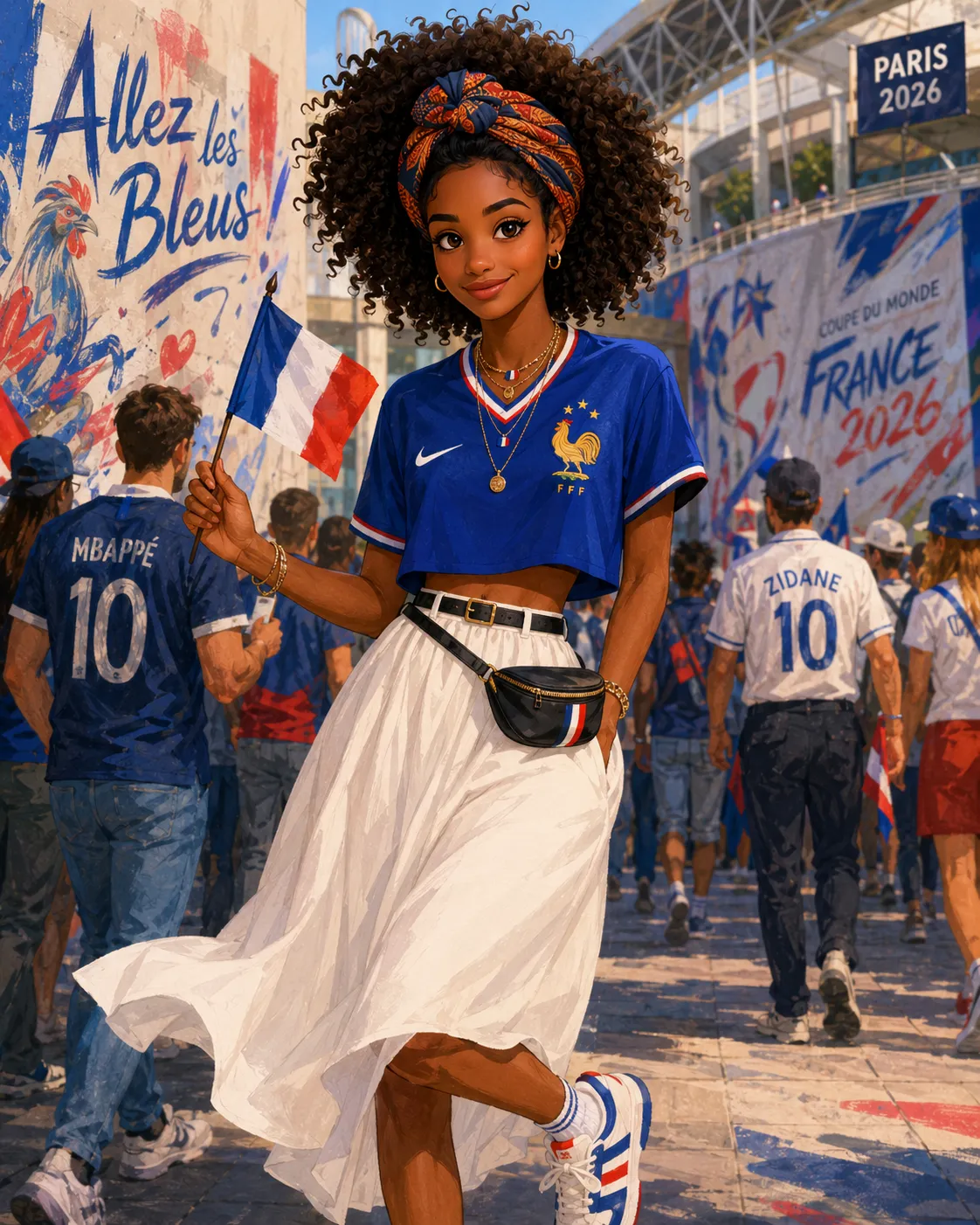
Forty-eight teams. Sixteen cities. One summer. A few things worth knowing before you book anything.
I have watched football in twelve countries. I have stood in pubs in Dublin for Champions League finals, sat in open-air stadiums in Buenos Aires where the entire city seemed to be vibrating at the same frequency, watched a group stage match in Johannesburg in 2010 surrounded by people who had waited sixteen years for this. I know what it feels like when a city is alive because of a tournament.
I have never seen anything like what North America is about to become for the next six weeks.
Forty-eight teams. One hundred and four matches. Sixteen cities across three countries, from Guadalajara to Vancouver, from Kansas City to Miami. The 2026 FIFA World Cup is the biggest tournament in the history of the sport. And most people planning to attend it are doing it wrong.
Not because they don't care. Because nobody has told them what they actually need to know.
Here's what I know.
How this tournament works — and why it matters for planning.
The 2026 World Cup is not the same tournament as 2022. FIFA expanded the field from 32 teams to 48, which means 12 groups instead of 8, and a brand new round — the Round of 32 — that did not exist before. Here is what the schedule looks like from start to finish:
The group stage runs June 11 through June 27. Every team plays three matches. The top two from each group advance automatically. The eight best third-place teams across all 12 groups also advance, which means 32 teams make it to the knockout rounds — not 16 like it used to be.
After the group stage: Round of 32 (June 28 – July 3). Round of 16 (July 4 – 7). Quarterfinals (July 9 – 11). Semifinals (July 14 – 15). The final is July 19 at MetLife Stadium in New Jersey.
That's 39 days of football. The group stage alone is 17 days. This is not a weekend event. This is a summer.
Why does the format matter for planning? Because the Round of 32 is a new round, which means knockout stage tickets exist at a round that has never existed before. If you missed out on group stage tickets, the Round of 32 is your entry point. And because 32 teams survive the group stage instead of 16, there are more marquee matchups in the early knockout rounds than ever before.
Got days between matches? Book a city tour between matches and use them.
The sixteen cities — what you're actually choosing between.
The matches are spread across three countries. Eleven cities in the United States, three in Mexico, two in Canada. They are not interchangeable. Picking a city is picking an experience, and the experience of watching a match in Kansas City is not the experience of watching one in Mexico City.
I will be writing a full guide to each of the sixteen cities. Each one gets its own piece — where to be, what to eat, what the city actually feels like during the tournament. Consider this the map before the map.
United States: Atlanta, Boston, Dallas, Houston, Kansas City, Los Angeles, Miami, New York/New Jersey, Philadelphia, San Francisco Bay Area, Seattle.
Mexico: Guadalajara, Mexico City, Monterrey.
Canada: Toronto, Vancouver.
A few things worth knowing before I go deep on each one. Dallas hosts more matches than any other venue — nine total, including one semifinal. Atlanta hosts eight, including the other semifinal. The final is in New Jersey. If you want to be at the end of the tournament, those are your three cities.
Guadalajara is the only host city that will not see a single knockout stage match. Every game there is group stage. That is not a reason to avoid it — it is a reason to go if you want the pure group stage atmosphere without the pressure of elimination football. But know what you're signing up for.
Picking a city is picking an experience. The match is the occasion. The city is the trip.
The city is the point, not the match.
I'll be honest with you. Most of the people who attend a World Cup match do not have tickets to a match they specifically chose. They have tickets to a match that was available, in a city they could get to, at a price that didn't make them feel ill. That is how World Cup tickets work. You take what you can get and you build the trip around it.
This is actually fine. Better than fine, sometimes. I have watched group stage matches between teams I knew nothing about and left the stadium two hours later with a completely different understanding of what football means to certain parts of the world. The match you were assigned can still be the best match of your summer.
What matters is what you do with the city around it.
Every host city in this tournament has neighborhoods where the real atmosphere is. Street festivals, fan zones, bars that have been waiting four years for this. The stadium is two hours of your trip. The city is everything else. Know the difference between the two before you book anything.
For one host city in detail, read a long weekend in New York and the match report France vs. Senegal at MetLife. Hotel prices in a host city on match days follow the logic in what actually moves a hotel price: a full city is a book-early city.
The Marriott properties in most of these cities are good. Several are directly on the transport corridors you need. I will be specific in each city guide about which ones are worth booking and which ones will put you in the wrong neighborhood. Find a Marriott near the stadium if logistics are your priority — but read the city guide first.
How to watch if you don't have tickets.
Most people at this World Cup will not be inside a stadium. They will be watching in fan zones, in bars, in parks, on screens projected onto the sides of buildings. This is not a lesser experience. In some cities it is arguably the better one.
FIFA and each host city are running official fan zones with big screens, food, live entertainment, and a crowd that came specifically to watch. The atmosphere inside those zones during a big match — France vs. Senegal, Argentina vs. Algeria, the US against anyone — is its own thing entirely.
Each city guide will cover the best fan zones and the bars that are actually worth being in. The difference between the right bar and the wrong bar during a knockout match is significant. I have been in both. The right bar is full of people who know why they're there. The wrong bar is full of people who wandered in.
The opening round — what's happening and where.
The tournament opens June 11 in Mexico City — Mexico vs. South Africa at the historic Estadio Azteca. The same stadium that hosted the 1970 and 1986 World Cup opens. If you can be anywhere for the opening day of this tournament, it is there.
June 12 — the USA opens in Los Angeles against Paraguay. Canada opens in Toronto against Bosnia and Herzegovina. Two host nations on the same day. Both cities will be in a specific kind of frenzy that only happens when the home team plays.
The first two weeks of group stage give you football every single day. Atlanta gets its first match June 15 — Spain vs. Cape Verde. France plays in New York June 16 against Senegal, which is its own story. Argentina opens in Kansas City the same night against Algeria.
A few matchups worth building a trip around in the opening round: USA vs. Paraguay (Los Angeles, June 12). France vs. Senegal (New York/New Jersey, June 16). Argentina vs. Algeria (Kansas City, June 16). Brazil vs. Morocco (New York/New Jersey, June 13). Spain vs. Cape Verde (Atlanta, June 15).
The group stage runs through June 27. After that, the knockout rounds begin and the tournament concentrates. Cities that hosted group stage matches may or may not host knockout games — check the city guides for which rounds each venue carries.
This isn't about football. It's about being somewhere when it matters.
I have been asked a version of the same question by people planning trips to this tournament: do I need to care about football to have a good time?
No. You do not.
You need to care about being in a city when the entire city has decided it is alive. You need to care about sitting in a bar in a country you have never visited next to a stranger who has traveled four thousand miles and is about to watch their team play a match that determines whether they go home or stay. You need to care about the particular feeling of being somewhere specific for something that will not happen again in the same place for at least another twenty years.
That is what a World Cup is. Football is just how it starts.
The sixteen city guides are coming. Each one will tell you what the city is actually like during the tournament — where to be, where to eat, what to skip, what to know that the official guides will not tell you. Start with whichever city you are considering. Then read a few more, because the best trips I have ever taken started with a ticket to one city and ended somewhere else entirely.
ZoeAtlanta, June 2026