A Long Weekend in New York, Before the World Arrives
The city is always at full volume. Here's how to actually be in it — neighborhoods, food, where to stay, and what changes when the World Cup lands.

The city is always at full volume. Here’s how to actually be in it.
I have been to New York more times than I can count and I have never once felt like I had it figured out. That is not a complaint. That is what makes it worth coming back to.
I am here now, a few days early, because France plays on Monday and I am not missing it. But I have three days before that and New York in June with nowhere specific to be is one of the better situations a traveler can find themselves in.
Here is what I know about a long weekend here. Not the highlights reel. The actual logic of the city — how it’s organized, where the energy is, what you do with seventy-two hours when you want to be in New York and not just passing through it.
New York does not ease you in. You either know how to use it or you spend four days watching it from the outside. Most people watch it from the outside.
The first thing to understand about New York.
It is not one city. It is five boroughs pretending to be one city, and within each borough there are twenty neighborhoods that have almost nothing in common with each other. This is not a complication. It is the entire point.
The mistake most people make on a short trip is treating Manhattan as the destination. Manhattan is the scaffold. The neighborhoods are what you actually came for. The West Village and Midtown are both in Manhattan and they have nothing to do with each other. Tribeca and Washington Heights are both in Manhattan and they might as well be different countries.
Pick two or three neighborhoods and go deep. Do not try to see all of Manhattan in a weekend. You will cover distance and experience nothing.
My three for a long weekend: the West Village, because it is still the most walkable and livable neighborhood in the city and I will not apologize for the obvious answer. Harlem, because the food is better than anywhere south of 110th Street and most visitors never make it there. And Brooklyn — specifically Carroll Gardens or Cobble Hill — because it is what Manhattan was trying to be before the money changed everything.
Pick two or three neighborhoods and go deep. Do not try to see all of Manhattan in a weekend. You will cover distance and experience nothing.
How to eat in New York.
New York has more restaurants per square mile than any city I have ever been in except possibly Tokyo, and the quality variance is extreme in both directions. The best meal I have ever had in this city cost me fourteen dollars at a counter in Flushing. The worst cost me eighty dollars at a restaurant someone had recommended three times.
The rule I use: eat where the line is not made of tourists. The line outside the famous brunch place in the West Village at 10am on a Saturday is tourists waiting for a story. The counter at a Yemeni coffee shop in Bay Ridge at 8am is the city. Both are available to you. One of them is New York.
For the West Village: the bakeries open early and they are genuinely worth the trip. Get there before 9am. The croissants at the better ones are not apologizing for being croissants. After that, walk. The streets in that neighborhood are not on the grid — they predate the grid — and you will get slightly lost, which is the correct outcome.
For Harlem: go for dinner. Marcus Samuelsson’s Red Rooster is the obvious answer and it is obvious because it is correct — the fried yard bird is one of the better things I have eaten in this city. But walk the neighborhood first. 125th Street is the main artery and it tells you what the neighborhood is. The side streets tell you what it was.
For Brooklyn: the food in Carroll Gardens skews Italian in the best way — old Italian, not Instagram Italian. There are red sauce places on Court Street that have been there for forty years and they have no reason to change. I eat at them every time I am here.
Where to stay and why it matters more here than anywhere else.
In most cities, your hotel is where you sleep. In New York, your hotel determines which city you are actually in.
A hotel in Midtown puts you in tourist Manhattan. The Times Square hotels, the theater district hotels, the ones that advertise themselves as “steps from everything” — they are steps from the things that were built for people who are visiting New York for the first time and want to see the version they already know from television. That version exists. It is not my version.
A hotel in the West Village or Tribeca puts you in a different city entirely. You walk out the door in the morning and there are people walking dogs and buying coffee and going to work. The city is not performing for you. You are just in it.
I’ll be honest with you: in New York, a boutique in the right neighborhood is almost always the better call than a chain in the wrong one. The room will be smaller. The shower will have opinions. It’s worth it.
The three days, roughly.
Day one is for arriving and orienting. Take the subway from the airport — do not take a cab, do not take a rideshare, take the subway. It is the fastest introduction to the city available and it costs three dollars. Get to your neighborhood, drop your bag, and walk for two hours with no destination. This is not optional. You need to know where you are before you can use it.
Eat dinner in your neighborhood. Not a reservation, not a plan — find the place that has people in it who look like they live there. Order whatever they are ordering. This is how you start a trip in New York.
Day two is for distance. Pick the neighborhood that is furthest from where you are staying and spend the whole day there. If you are in the Village, go to Harlem. If you are in Brooklyn, go deep into Queens — Flushing, specifically, which has a food court situation in the Golden Mall basement that is one of the more remarkable eating experiences available in this city for under twenty dollars. Do not rush back. The subway runs late.
Day three — for me, at least this weekend — is slower. The match is Monday. I want the city to settle before it gets loud. The High Line in the morning before the crowds arrive is still worth doing despite everything that has been said and written about it. Get there at 8am. You will have sections of it to yourself. By 10am it belongs to everyone else.
What changes when the World Cup is here.
I arrived two days ago and the city is already different. Not transformed — New York does not transform for anything, including a World Cup — but layered. There are flags in windows that were not there last week. The sports bars have schedules printed in their windows with matches listed in six languages. On the subway this morning I counted supporters kits from four different countries before I reached my stop.
This is what New York does with an event like this. It absorbs it. The city does not become the World Cup — the World Cup becomes part of New York, which is a different thing entirely.
The fan zones are running along the waterfront in Manhattan and in Prospect Park in Brooklyn. Both are free. The Brooklyn one will be better — it will feel more like a neighborhood and less like an event. Go to both and decide for yourself.
The match on Monday is France versus Senegal at MetLife Stadium in New Jersey. I will be there. I have been thinking about it since I booked the trip.
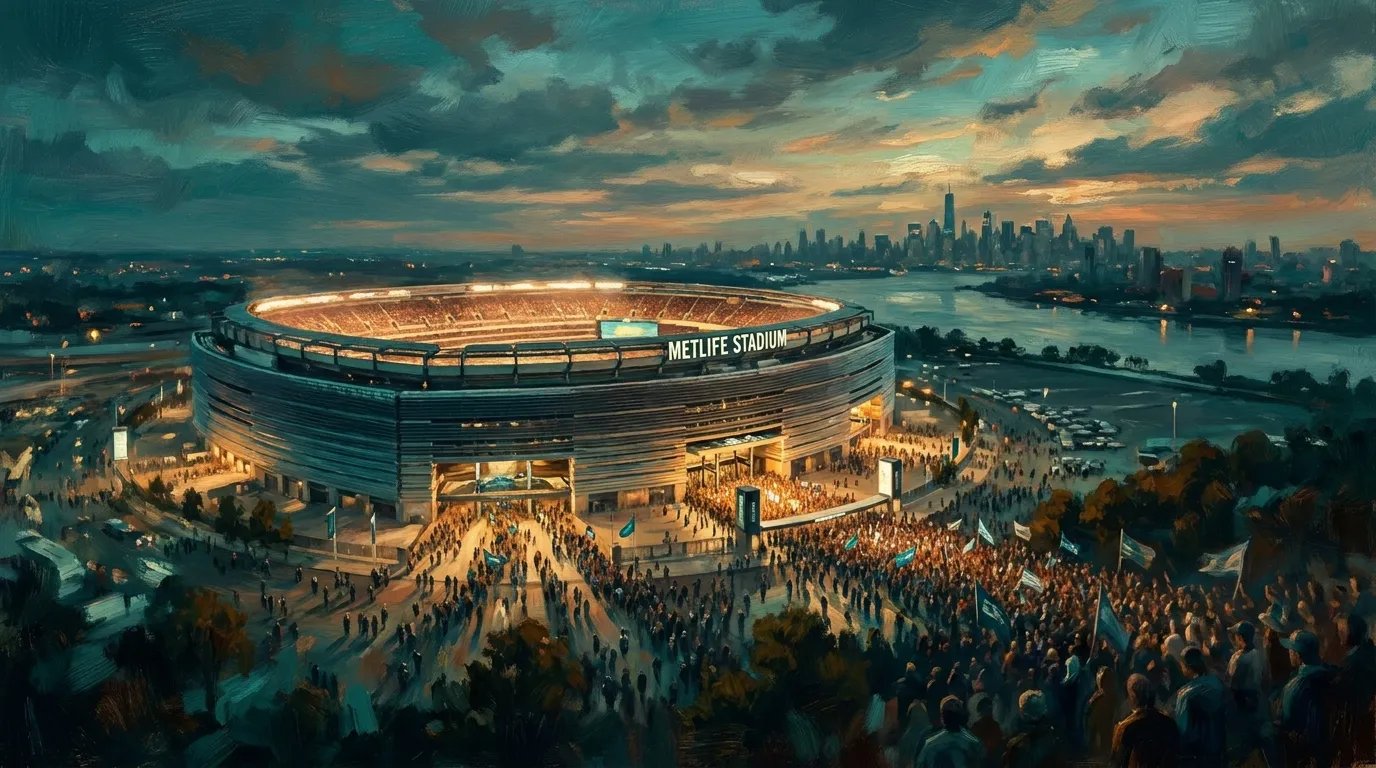
That is a different article. This one is about the three days before it.
That match has its own dispatch: the French team plays in New York. For the wider tournament, start with how to actually experience the World Cup, and for the first afternoon in any city, the neighborhood arrival walk explains the two hours with no destination suggested above.
France plays Monday. I am ready.
Zoe · New York, June 2026