The first hour decides what this costs you.
Found water where it shouldn't be? The first hour decides the bill. Stop the source, extract the standing water, dry aggressively, and document before you clean up — with the one gap that ruins people. By Sam.
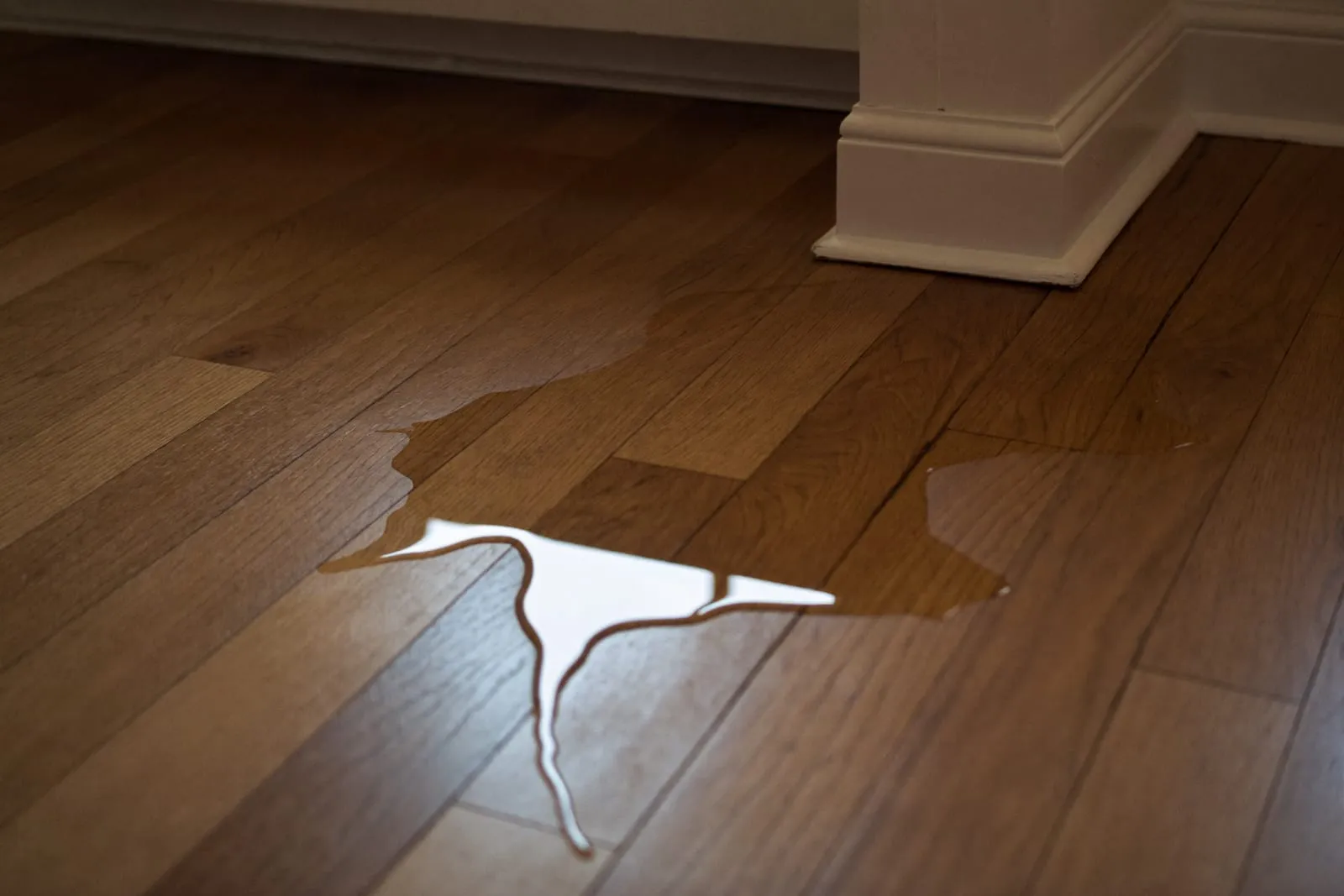
Water doesn't wait, and neither should you. What to do in the sixty minutes after you find it — in the order that actually matters — before a small leak turns into a mold job and a very different bill.
- Read: 7 minutes
- You have: About an hour
- Skill: Stay calm, move fast
- Stakes: Mold in 24–48 hours
- Updated: July '26
The first time I found water where water should not be, I stood there holding a bath towel like it was going to do something. It did not do something. It got heavy.
Here's the thing nobody tells you about a leak, a burst supply line, an overflow, a bad storm finding a gap: the damage is not really about the water. It's about the clock. Clean water is a manageable problem for roughly the first day. After that, it stops being water and starts being mold, warped floors, and a smell you cannot bleach out of a memory. The whole game is the first hour, and the first hour is mostly about not wasting it.
Water is a manageable problem for about a day. What turns a leak into a renovation is the hours you spend deciding whether it's really that bad.
So put the towel down. None of this is hard — it's just an order of operations, and doing it in the wrong order is how a fixable afternoon becomes a claim. Let's go.
00 / Before you touch anything
What actually helps in the first hour
You don't need a restoration van in your driveway. You need to stop the water, get the standing water up, move a lot of air, and take pictures before you change anything. That's it. The tools are boring and the boring tools are the ones that save the floor.
- A wet/dry vacuum — The one tool that turns "buckets and despair" into a floor you can actually dry. Owned before the emergency, not rented during it. (Core)
- Fans, and a dehumidifier if you have one — Moving air is what actually dries a room. Box fans pointed low across the floor, windows open if the air outside is drier than in. (Core)
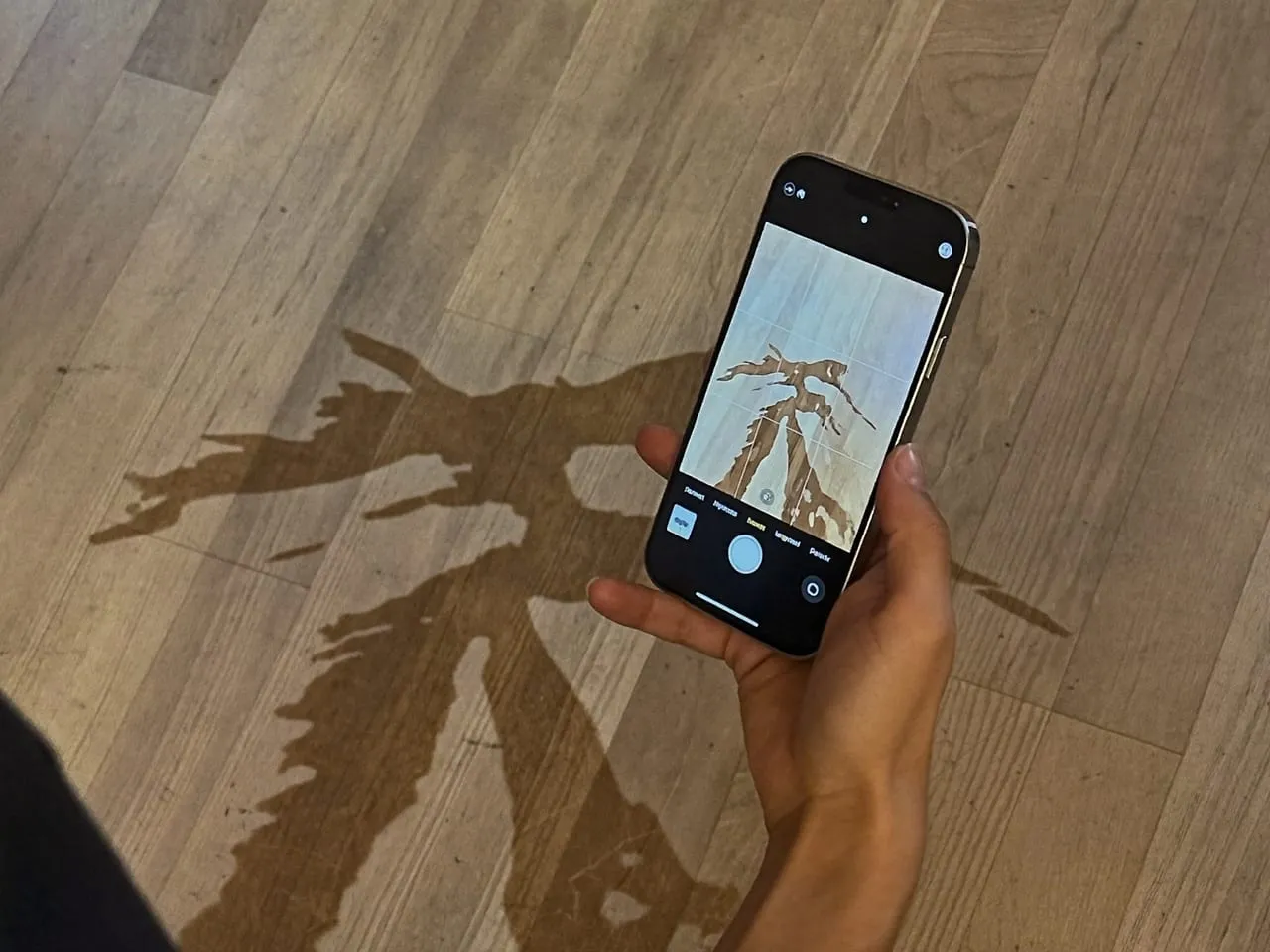
- Your phone — Photos and a slow video of everything wet, before you move or toss a single thing. This is the cheapest insurance you'll ever not-buy. (Core)
- Rubber gloves and old towels — Towels aren't the plan — they're for the last thin film after the vac. Gloves because you don't always know what's in the water. (Core)
- A moisture meter — Optional but smart. It tells you a wall is still wet when the surface feels dry — which is exactly when mold is quietly getting comfortable. (Nice)
- Your insurer's number — If it's more than a small clean-water spill, the call happens in the first hour, not after you've "handled it" and changed the evidence. (If big)
The first hour
04 MOVES | STOP, EXTRACT, DRY, DOCUMENT
Step 01 · Stop | source + power
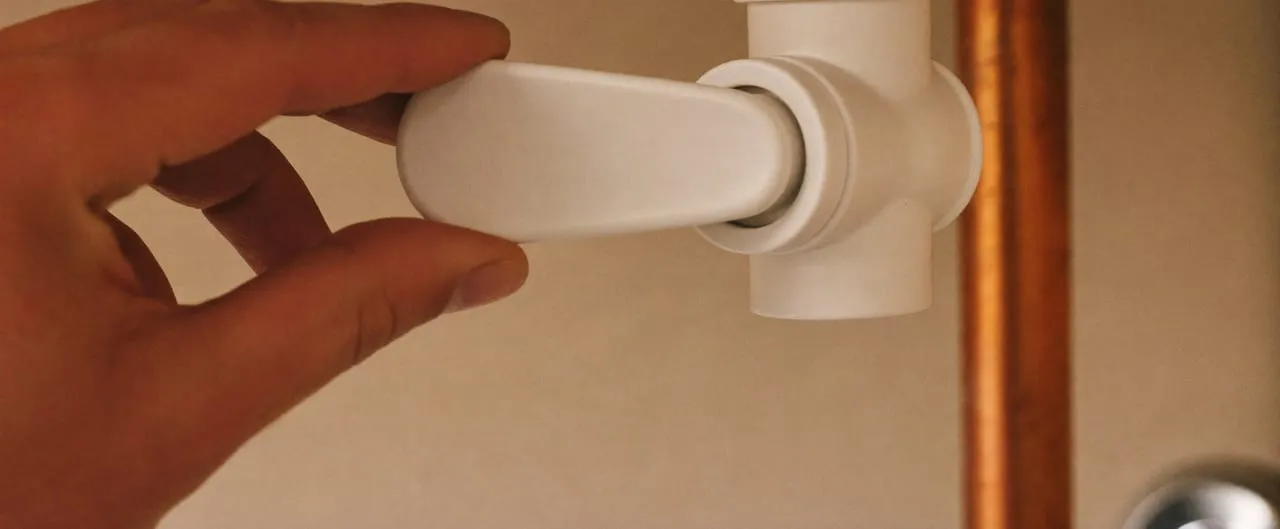
Kill the source. Then kill the power.
First move, always: stop more water from arriving. Find the shutoff — the little valve behind the toilet or under the sink for a fixture, the main valve where the line enters the house for anything bigger. If you don't know where your main shutoff is, go find it right now, on a dry calm day, so you're not learning during a flood. Turn it clockwise, righty-tighty, until it stops.
Then, before you go wading in: if the water is anywhere near outlets, cords, or the breaker panel, cut the power to that area at the breaker first. Water and electricity is the one place on this whole list where the deadpan stops. You do not walk into standing water that might be live to save a rug.
Step 02 · Extract | get it up
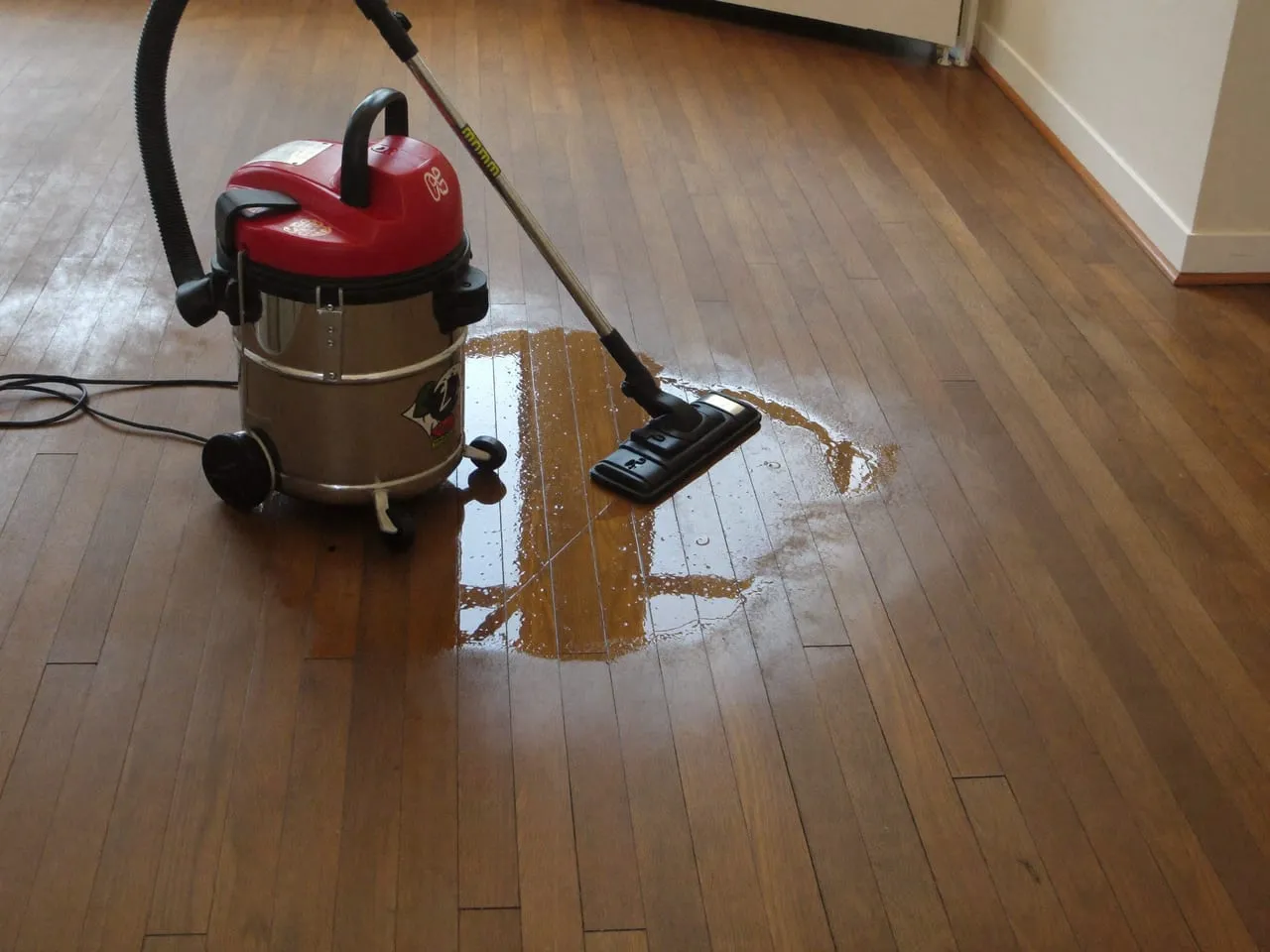
Get the standing water out. Fast.
Standing water is the part of the clock you can actually beat, so beat it. A wet/dry vacuum pulls up in ten minutes what an hour of towels won't touch, and it gets it out of the low spots and grout lines where the water is happiest. Work from the edges of the room inward so you're not chasing it around, and empty the tank outside or into a drain, not back onto the floor you're trying to save.
This is the single highest-leverage thing you own for a flooded floor, which is exactly why you buy one before the emergency. Renting one at 11pm when the aisle's closed is not a plan. If all you do in the first hour is stop the source and vacuum the standing water, you've already changed the ending.
Step 03 · Dry | move the air
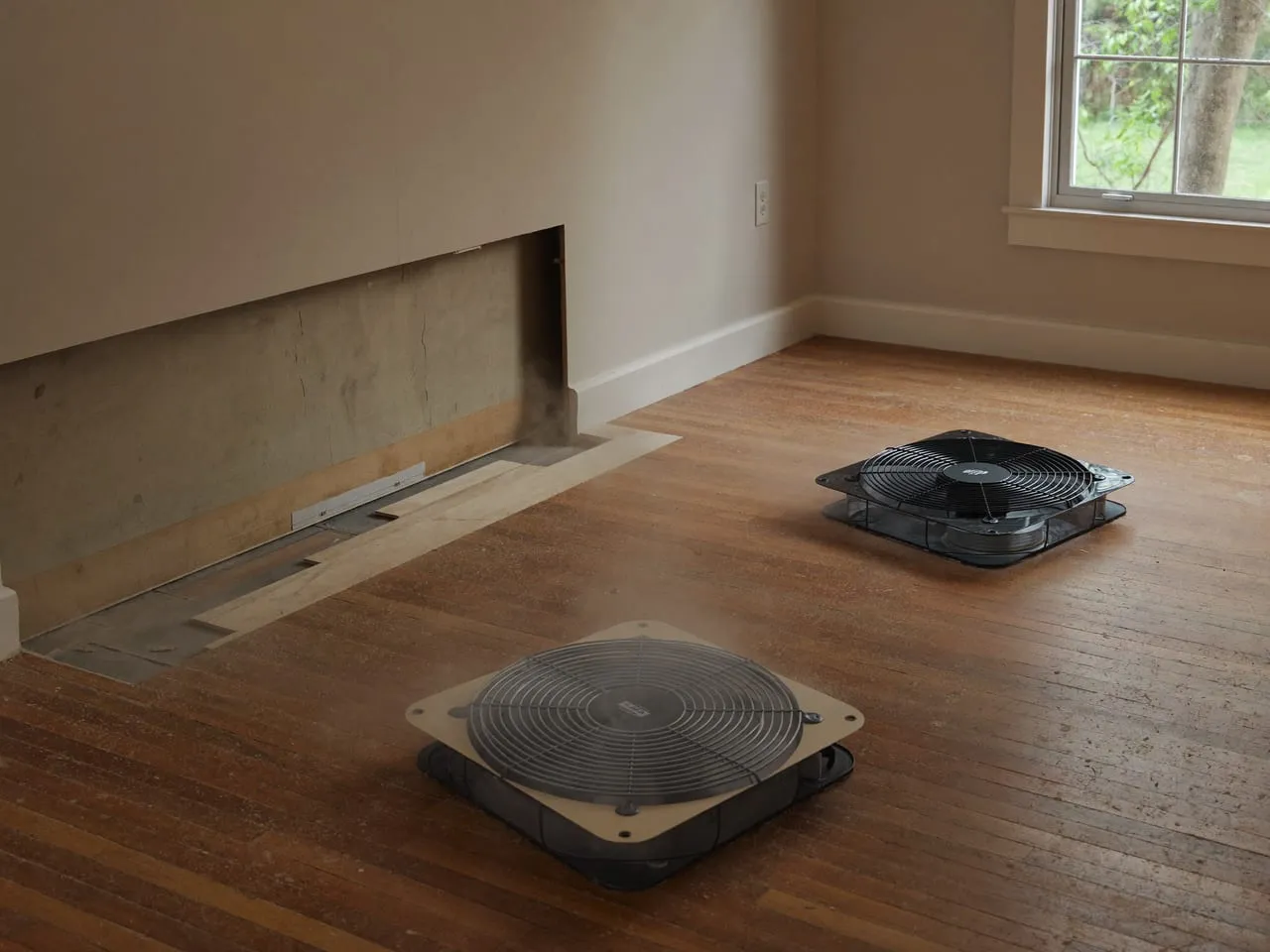
Dry it like you actually mean it.
Water you can see is only half of it. The rest has wicked up into baseboards, under the flooring, into the bottom of the drywall, and it will sit there being a mold farm unless you force it out. Point fans low and across the floor, not down at it — you want air moving over the wet surfaces. Open windows if it's drier outside than in. Run a dehumidifier if you've got one, closed up in the room, and empty it often.
If baseboards or drywall are soaked, pulling the baseboard off and cutting a few inches of soaked drywall isn't overkill — it's the difference between drying the cavity and sealing the damp inside a wall to ferment. Keep the air moving for days, not hours. A moisture meter tells you when a wall that feels dry actually is.
Step 04 · Document | before cleanup
Photograph everything before you fix a thing.
Somewhere in the first hour — ideally before you've hauled the wet rug out — take pictures. A lot of them. Wide shots of the room, close-ups of the damage, a slow video narrating what happened and when. Get the source, the standing water, the soaked furniture, the water line on the wall. Then, and only then, start hauling things out.
If this is going to be an insurance claim, the documentation you take in the first hour is worth more than anything you'll do later, because an adjuster can only pay for damage they can see, and you're about to erase most of the visible evidence by cleaning it up. This is also the moment to check what your policy actually covers — sudden burst pipe, usually yes; flood from outside, usually a separate policy entirely.
A wet/dry vacuum is the whole difference between the first hour going well and going badly. It's a boring, cheap thing to buy on a calm day — and the only thing you'll wish you already had when the floor's underwater.
See wet/dry vacuums →Disclosure: that's an affiliate link — if you buy through it, HowTo may earn a commission, at no extra cost to you. Any decent one does the job; you're buying "owned before you need it," not a brand.
Sam's verdicts
Worth it, and not.
Worth it: a wet/dry vac you already own
The single tool that changes the ending of a water story, and useless if it's still in a store at the moment you need it. Buy it bored, not desperate. It also handles a hundred non-emergency messes in the meantime.
Worth it: documenting before you clean up
Ten minutes of photos and video in the first hour is worth more than anything you'll do all week if a claim happens. You cannot un-throw-away the evidence, so shoot it before it leaves the room.
Not worth it: a restoration crew for a small clean spill
A cup-to-a-few-gallons of clean water you can stop, vac, and dry inside the first hour does not need a van and an invoice. Know the difference between "I've got this" and the next one, which you don't.
Not worth it: bleaching everything in a panic
Clean water caught early isn't a mold problem yet — it's a drying problem. Dousing a wet room in bleach mostly makes you feel busy. Move the air instead; that's what actually keeps the mold from starting.
When it's not a DIY job.
Everything above is for clean water you can stop and reach — a burst supply line, an overflow, a leak you found early. The moment it's dirty water — sewage backing up, floodwater from outside, anything that came through the ground — the rules change completely. That water can be a genuine health hazard, and it's a gloves-mask-and-professionals situation, not a wet/dry-vac one. Same if it's more water than you can clear in that first hour, or it's into more than one room. Call your insurer and a restoration pro, and let the first-hour photos you took do the talking. Knowing which situation you're in is the actual skill. The rest is just moving fast.
Two jobs for a calm week afterwards. A leak sensor under the sink and behind the washing machine turns the next leak into a notification instead of a discovery, and the smart home guide without subscriptions covers sensors with no monthly fee. If the water came from the air conditioner's drain line, the condensate-line flush in the August AC prep is the maintenance that stops it happening again.
- Sam