Stop a Running Toilet
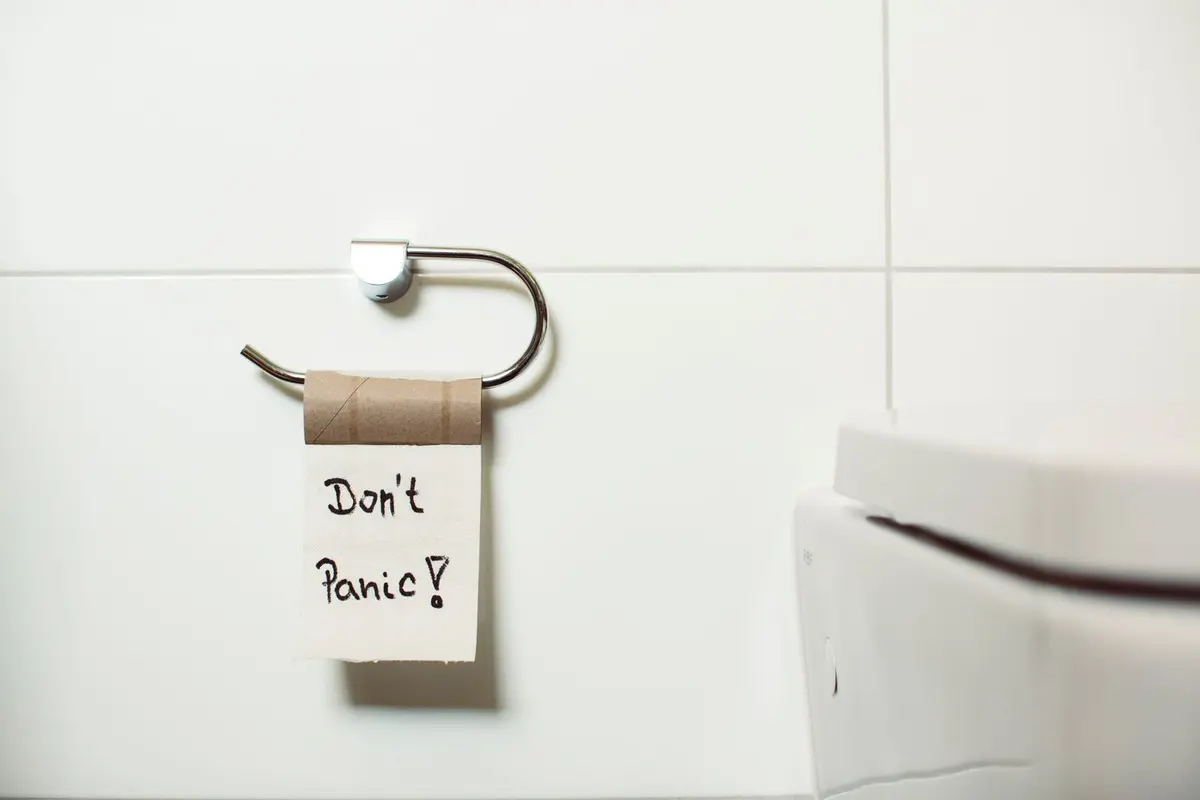
A running toilet is almost always caused by a faulty flapper, misaligned fill valve, or chain that's too long or short. Most fixes take ten minutes and cost less than $15.
- Difficulty
- Beginner
- Time
- 10-30 minutes
- Cost
- $5-$25
- Tools
- Adjustable wrench, Scissors, Sponge, Bucket
- Permit required
- No
- Contractor recommended
- No
- You will need
- Universal flapper kit or exact replacement match, Adjustable wrench (for supply line and locknut), Scissors (to trim excess chain), Sponge or rag (for cleaning valve internals), Bucket (to catch residual water), Food coloring (optional, for diagnosis), Fill valve assembly (if needed), Supply line, braided stainless (backup)
Materials
- 1 Universal flapper, fits most 2-inch flush valves (Take the old flapper to the store if you want an exact match instead of universal) — $5-$8
- 1 Fill valve assembly, adjustable height (Only needed if cleaning doesn't fix a stuck-open valve—buy Fluidmaster 400A or equivalent) — $12-$20
- 1 Supply line, braided stainless 12-inch (Replace if the old one is kinked or corroded—measure from shut-off valve to tank inlet) — $6-$10
Step by step
Watch the Leak Reveal Itself
Lift the tank lid and set it somewhere safe—porcelain breaks easily. Flush once and watch what happens. The flapper should drop and seal completely. The water should refill to about an inch below the overflow tube. The fill valve should shut off with a definite click. If water keeps running into the overflow tube, the fill valve isn't stopping. If the flapper doesn't seal, you'll see ripples in the bowl.
Tip: Add two drops of food coloring to the tank and wait ten minutes without flushing—if color appears in the bowl, the flapper is leaking.Replace the Worn Seal
The flapper is the rubber seal at the bottom of the tank. Feel it—if it's slimy, pitted, or warped, it's done. Unhook it from the posts on either side of the flush valve and take it to the hardware store for a match. Universal flappers fit most toilets, but exact replacements seal better. Snap the new one in place and reconnect the chain with about half an inch of slack when the flapper is closed.
Tip: Chlorine tablets in the tank destroy flappers in six months—use in-bowl cleaners instead.Get the Slack Right
Too much slack and the flapper closes before the tank empties, causing weak flushes and constant topping off. Too tight and the flapper can't seal. The chain should have just enough slack to let the flapper rest flat but lift immediately when you press the handle. Move the chain clip up or down on the lift arm until you get it right. Cut off excess chain so it doesn't catch under the flapper.
Tip: If the chain keeps tangling, twist it a few times before attaching—it hangs straighter.Lower the Water Line
If water runs into the overflow tube, the fill valve is set too high. Look for the adjustment mechanism—usually a screw on top or a clip on the side. Turn the screw counterclockwise or pinch the clip and slide the float down. The water line should stop about an inch below the top of the overflow tube. Flush and verify the fill valve shuts off cleanly.
Tip: Some fill valves have a thin refill tube clipped to the overflow—make sure it's positioned inside the tube, not outside.Clear the Jammed Valve
Sediment can jam the fill valve open. Turn off the water at the shut-off valve behind the toilet and flush to empty the tank. Unscrew the cap on top of the fill valve and lift out the float assembly. You'll see a small rubber seal or diaphragm—rinse it under the sink and wipe out any grit from the valve body. Reassemble, turn the water back on, and test.
Tip: If you see black rubber crumbs, the valve internals are degrading and the whole unit needs replacement.Swap Out the Bad Valve
Fill valves cost $12 to $20 and install in fifteen minutes. Turn off the water and flush. Disconnect the supply line under the tank with an adjustable wrench. Unscrew the locknut holding the old valve and lift it out. Drop in the new valve, tighten the locknut hand-tight plus a quarter turn, and reconnect the supply line. Adjust the height, turn the water on, and set the fill level.
Tip: Fluidmaster and Korky valves are quiet and reliable—avoid the cheapest option, which uses louder mechanisms.Confirm the Fix Holds
Flush three times in a row and watch the entire cycle each time. The flapper should seal immediately, the fill should stop at the right level, and there should be no hissing after the tank refills. Check again in an hour. If everything stays quiet, the job is done. If the problem returns, you missed something—go back to step one.
Tip: Put a piece of tape on the water line in the tank—if it moves overnight, you still have a slow leak.
Questions people ask
How much water does a running toilet actually waste?
A steady trickle wastes about 30 gallons a day. A slow leak at the flapper wastes 200 gallons. A fully stuck-open valve can dump 500 gallons in 24 hours. At typical water rates, that's $2 to $15 per day.
Can I just turn down the water valve behind the toilet instead of fixing it?
No. The shut-off valve controls flow speed, not automatic shutoff. A running toilet will keep running at any valve setting. That valve is for shutting off water completely during repairs, not throttling flow.
Do I need to replace the whole toilet if the flush valve is cracked?
No. Flush valve replacement kits exist, but they require removing the tank from the bowl and resealing it. Unless the porcelain itself is cracked, replacement parts are available for everything. That said, if the toilet is 25 years old and multiple parts are failing, replacement starts to make sense.
Troubleshooting
Flapper closes too fast and flush is weak
Shorten the chain by one or two links so the flapper stays open longer during the flush.
Fill valve screams or vibrates when refilling
The valve is bad or the water pressure is too high—replace the valve or install a pressure regulator at the main.
Water keeps running even with new flapper
The flush valve seat under the flapper is corroded or rough—sand it smooth with 400-grit sandpaper or replace the entire flush valve.
Tank refills then starts running again after 20 minutes
The flapper is sealing initially but lifting slightly as water pressure changes—replace it with a heavier-duty model.
Can't get the locknut off the old fill valve
Spray penetrating oil and wait ten minutes, or cut the plastic locknut with a hacksaw from underneath—just don't scratch the porcelain.
More plumbing: plumbing, the first hour of water damage and three tools do nearly everything.