The Fabric Cheat Sheet: What Survives Your Dryer
Nelly's fabric cheat sheet for the dryer — fibre by fibre, what survives a tumble dry, what shrinks, and why elastane decides for the whole garment.
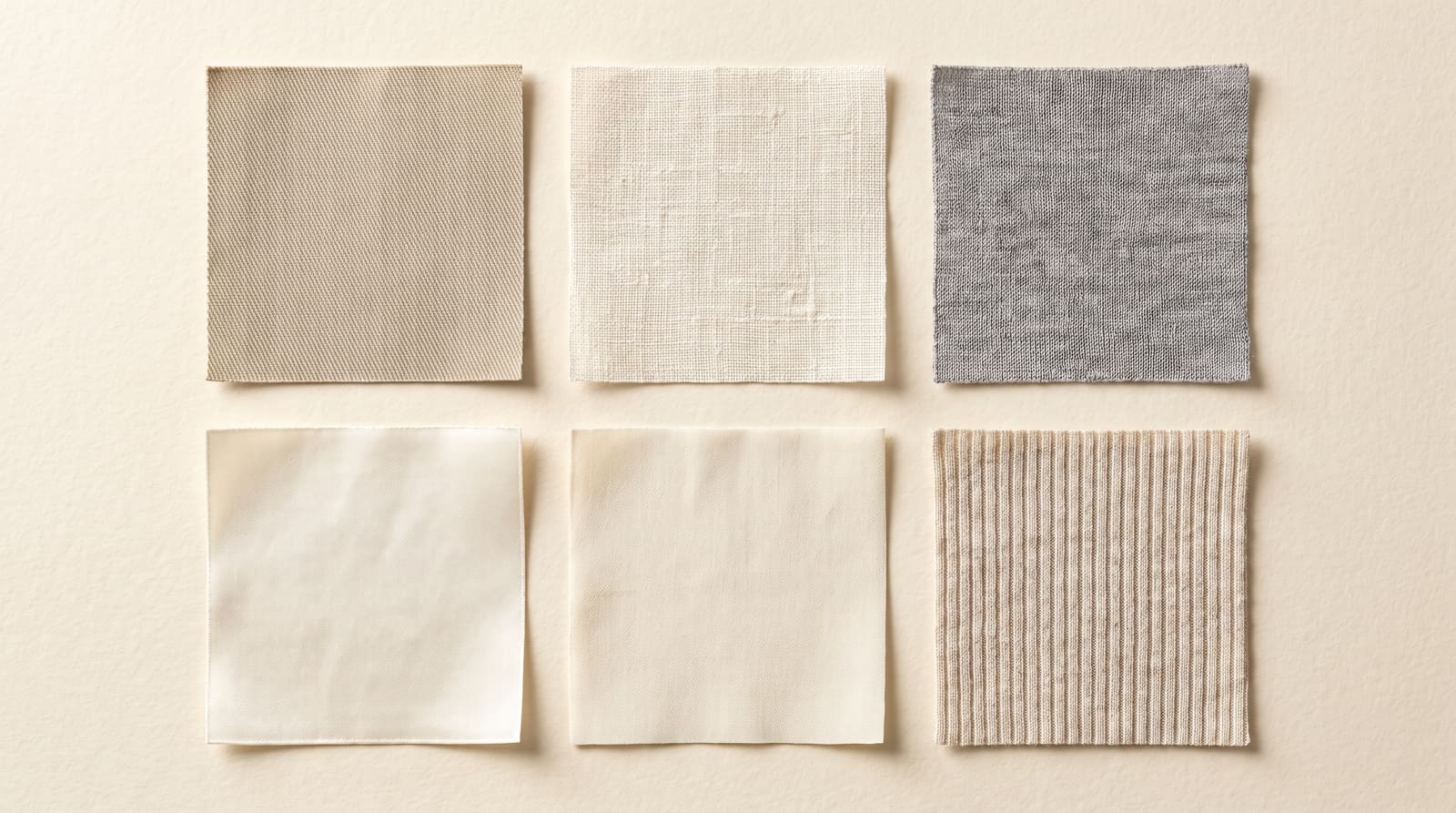
A cheat sheet for what survives a tumble dry, what comes out smaller, and the one fibre that decides for the whole garment.
How To: Fashion / Nelly / The Fabric Cheat Sheet — Care Fabric
Cotton twill, linen, merino, silk, viscose, ribbed stretch knit. Six fibres, five different answers. The Fashion Edition · Materials
I have shrunk more clothes than I have stained.
Not in a dramatic way. No doll-sized sweaters, no famous laundry disasters. What I did over about a decade was quietly reduce a lot of perfectly good clothing by an inch or two here and there, and then decide the brands had changed their sizing.
They had not. I was drying everything on the same setting, which is the laundry equivalent of cooking everything on high.
So I stopped guessing and made myself a list. Not a philosophy about air drying — a list, because at eleven at night with a full basket, what you need is a list.
It sits on the inside of the cupboard door. This is that list, and then the three rules that make it make sense, in case you would rather understand it than memorise it.
The sheet
| Fibre | Dryer | What actually happens |
|---|---|---|
| Cotton, woven (shirts, chinos) | Low — remove damp | Shrinks most on its first hot cycle and the shrink is permanent. Pulled out damp and hung, it also presses far more easily. |
| Cotton jersey (t-shirts) | Low | Shrinks in length before width, so the body gets short before it gets tight. High heat also kills the recovery in a ribbed neckline, which is why old tees gape. |
| Denim, all cotton | Low, inside out | Hot air shrinks it and abrades the surface. That fluff in the lint trap is indigo cotton off the face of your jeans, and it does not grow back. |
| Linen | Low — remove damp | A hot cycle bakes creases in hard. Taken out damp and hung on the shoulders, linen dries most of its own wrinkles out. |
| Wool and merino | No | Heat plus moisture plus tumbling makes the scales on the fibre interlock. That is felting, it is permanent, and it is what turned your jumper into a coaster. |
| Cashmere | No | The same failure as wool, sooner, on a fibre that cost more. Wash cool, dry flat, and reshape it while it is damp. |
| Silk | No | Heat dulls the surface it is bought for, and water marks set as they dry. If it is in there by accident, get it out damp. |
| Viscose, rayon, modal, lyocell | No, or lowest | These fibres are weak when wet, so tumbling stretches and distorts them, and heat shrinks them noticeably. The garment often comes out both longer in one direction and shorter in the other. |
| Anything with elastane or spandex | No heat | Heat is what actually kills elastane. The fibre degrades, stops recovering, and the garment goes baggy at the knee and loose at the waist while looking perfectly fine. |
| Polyester | Low | Barely shrinks, which is why it is everywhere. Heat does set creases into it semi-permanently and encourages pilling where it rubs. |
| Nylon | Low | Melts and glazes at real heat, which shows as a shiny patch that never comes out. Also the main source of static. |
| Fleece | Low | High heat mats the pile flat and it never fluffs back. A matted fleece is warm, but it is finished as a nice thing. |
| Down jackets and duvets | Yes, low, with balls | The one category that genuinely needs the machine. Down dries in clumps and has to be broken up by tumbling to loft again. Dryer balls or clean tennis balls, and longer than you think. |
| Bras and shapewear | No | Elastane, moulded foam and bonded seams, all of which heat ruins. This is the single most expensive thing people put in a dryer. |
| Leather and suede | No | Heat shrinks and hardens skin. There is no recovery step. |
The three rules underneath it
Heat is the variable, not the machine.
Almost everything people blame on tumble drying is a heat effect. The low setting on a modern dryer is a genuinely different appliance from the high one, and most of this list becomes survivable the moment you stop using the hot cycle for convenience.
Elastane decides for the whole garment.
Two per cent elastane in a pair of cotton trousers puts those trousers in the no-heat column, because the weakest fibre in a blend sets the rules. This is why stretch jeans go baggy years before rigid ones do.
Damp is the target, not dry.
The damage happens in the last stretch, once the water is gone and the fibres are being heated dry. Pulling things out slightly damp is where the shrink protection, the reduced creasing and the smaller lint trap all come from at once.
The lint trap is not dust. It is your clothes, in the form of fibre, leaving.— Nelly
When the label and the fabric disagree
Read the composition tag, not the care icons. The icons are a manufacturer's most cautious position, written to protect them from a returns claim, and half of them say the same thing about everything. The composition is the actual information: it tells you what the garment is, and the fibre determines the physics no matter what the little tub symbol claims.
Where the two disagree, the composition tends to be right and the icons tend to be conservative. Where the composition includes elastane, believe the icons.
The other half of this — Once half the wardrobe is coming out of the machine damp or not going in at all, the thing you actually need is a way to finish it. Hanging handles most of it. A steamer handles the rest faster than an iron and without the heat plate, which matters on exactly the fibres in the no column above. Handheld ones are convenient and run out of water constantly; the standing ones are ugly and work. — Garment steamers — Some links here are affiliate links — if you buy through one, HowTo: Fashion Edition earns a commission at no extra cost to you.
Questions
My cupboard door list has been up for a couple of years now. Things fit for longer. Some of that is drying, and some of it is simply that having a list made me pay attention at all, which may be most of the effect.
I still shrink something occasionally. Usually a t-shirt, usually because I was in a hurry, always the one I liked.
Two garments from the sheet get their own pieces: the merino in JT's navy crewneck is hand-washed cold and laid flat for exactly the felting reason above, and a cotton suit worn through a heatwave goes in cold water and onto a line rather than into the drum.
Nelly — Style Director · The Fashion Edition