Cotton Suiting in Deep Heat
Notes from a hundred-degree afternoon, on the only suit a woman should consider in July, and what wearing one teaches you about everything else.
Notes from a hundred-degree afternoon, on the only suit a woman should consider in July, and what wearing one teaches you about everything else.
Conditions — 39°C · still air
Garment — One cotton suit
Worn — Six days running
Photographed — Daily, on film
On Lisbon
The city is a long argument between stone and shade. In July, the stone wins.
Notebook · 14 July, 14:20
The first thing the heat does is dismantle your assumptions about clothes. On a normal day in May you can wear almost anything and call it a uniform — a wool trouser, a knit, a jacket if the room is cold. By the second hour of a real heatwave none of that holds. The wool is a pelt. The knit is a punishment. The jacket has become an argument with your own body. What is left, when the sun has burned off your wardrobe, is the question of what to do now.
I am writing this in a small room above a tiled courtyard in the Bairro Alto, with the shutters half-closed and a glass of warm water on the table, and the answer I keep coming back to is the same answer I have come back to for ten summers: one good cotton suit. Not linen — we will get to linen. Not seersucker, not silk, not the technical-fabric "summer-weight" wool that the menswear blogs swear by. A cotton suit. Cut for a woman, in a fabric that has been beaten on a stone in some other century, and wears like it.
The Italians and the Portuguese figured this out a long time ago. The English never did, which is why English summer dressing is, with a few honourable exceptions, a sad performance. The Americans built air conditioning instead, which is a kind of answer but not the right one. The right answer is cloth that knows what to do when the body underneath it begins to fail.
Note "Summer-weight" wool is wool. In a heatwave, this matters more than the brochure suggests.
Cloth that knows what to do when the body underneath it begins to fail.
— N · Lisbon · July
ii. Field test Six days. Two cleanings. The trouser still has the shape of my knee in it.
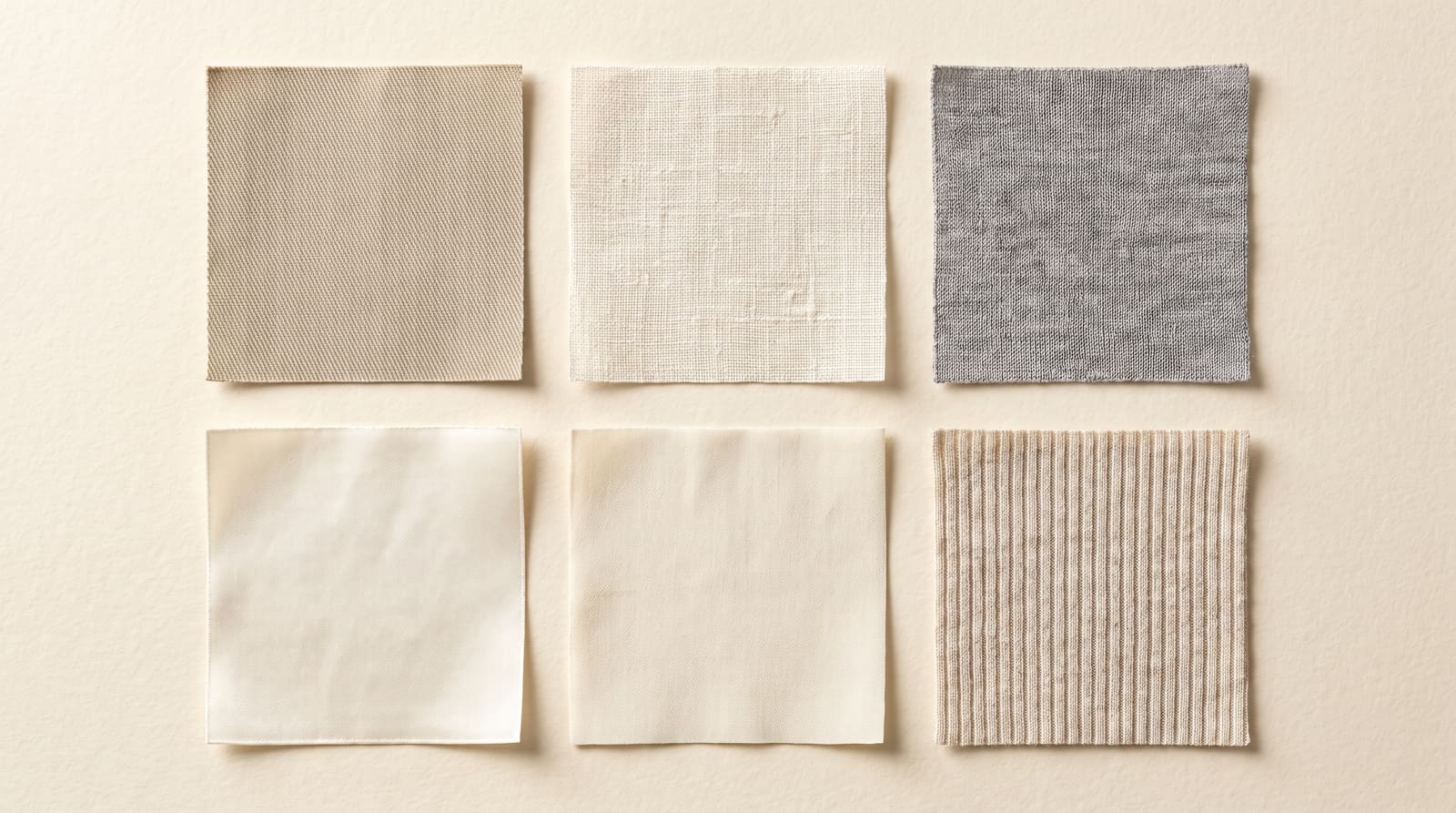
Why cotton, and not the other things.
The case for cotton is structural. Cotton is the only common suiting fabric that absorbs moisture without holding it; the fibres pull sweat off the skin, the weave breathes, and a half-decent cut hangs away from the body the way a curtain hangs from a window — letting air do the work. Linen does the same in theory and crumples on contact in practice; you spend the day either ironing or apologising. Silk-blends are a compromise that compromises the wrong way. And wool, even the lightest tropical wool, traps heat against the body the second you stop moving — which, in a heatwave, is most of what you do.
What you want is a cotton suiting woven for the heat. The Italians call it cotone leggero, a thirty-percent canvas, eight or nine ounces, with enough body to take a crease but enough give to stop holding one. Look for a slightly slubby surface; perfectly smooth cotton suiting is almost always mercerised, which destroys the very thing you came for. The fabric should feel faintly papery in your fingers. It should rumple when you sit and recover when you stand. It should, after a day, smell faintly of itself.
What a good cotton suit looks like.
Begin with the jacket and end with the trouser. The jacket should be unstructured — no canvas, no pads, only fabric and lining and a little intelligence at the shoulder. Half-lined at most; an unlined back is better still. The lapel should be a notch, the buttons should be horn or covered, and the body should be cut to fall an inch away from the waist when you stand still. If it grips you when you stand, it will strangle you when you walk.
The trouser is the harder of the two. A wide leg is unflattering on a hot day in a way it is not on a cool one — the fabric has to fall, and falling fabric in humidity reads as draped, which reads as tired. A clean tapered leg with a slight break, taken in by half an inch at the calf, photographs and walks better than any trouser I own. Pleats are optional. Cuffs are not — a cuff holds the shape of the trouser the way the right shoe holds the shape of a foot.
Mercerised
A finishing process that gives cotton a synthetic sheen — and undoes most of what cotton was for.
See footnote 02
Plate II · Largo do Carmo, 15:40 Roll 11 · Frame 18
Plate II — The square at the hottest hour. The shadows are doing the work the clothes can't. 39°C · still air
The suit, clean and lived-in.
Day one and day six
— same garment, different argument
Plate III · Day one
Pressed. The cuff sharp, the lapel sitting flat, the trouser falling clean from the hip. This is the suit at its most flattering and least useful — it has not yet proved anything.
A pressed cotton suit is a promise. A worn one is a record.
Plate IV · Day six
Lived-in. The trouser remembers the knee. The jacket has loosened across the back. The cuff has a soft mark where the watch sits. Nothing has been ironed in four days.
This is the suit doing the thing it was bought for. The day-one version is a costume; the day-six version is a wardrobe.
A pressed cotton suit is a promise. A worn one is a record.
— Field notes, day six
Field notes · No. 04
Six small observations.
What you wear with the suit is, in the end, more important than the suit. The suit is the table. These are the things you set on it.
01 On colour
Cream first, then everything else.
A cream cotton suit reads cool from across a room and warm up close, which is the right way around in summer. Navy is the second answer. Grey is a winter argument that has wandered into the wrong season.
02 On the shirt underneath
A man's shirt, oversized.
Worn open over a sleeveless cotton shell, never tucked. The shirt does the second half of the work the suit started — keeping the cloth off the skin without adding a layer.
03 On the bag
Leather, on purpose.
Canvas in heat reads as beach. Straw reads as costume. A small worn leather bag — one that has seen enough summers to know the rules — does the job. Brown over black. Patina over polish.
04 On shoes
The suit decides this.
An unstructured cream cotton suit demands a sandal — flat, leather, ankle-strapped if you are walking. Anything closed reads heavy on a hot day, no matter how light it actually is.
05 On the jewellery
One thing, in gold.
Silver oxidises in heat, on the skin, in interesting ways — but the wrong ways. Gold sits cool against a damp wrist. Pearls are a separate category and welcome on any occasion.
06 On laundering
Cold water, no dryer, line.
A real cotton suit is washable; this is half its argument. Cold water, mild detergent, no spin. Hang it damp on a wide wooden hanger and let the weight of the water pull the wrinkles out. Press only if you must.
Five cotton suits worth knowing.
Not "the best." Not even the prettiest. The five I have either bought, borrowed, or argued with closely enough to recommend in the heat.
- The Atelier cream. Margaret Howell · cotton-canvas suit · cream The reference garment. Half-lined, horn buttons, a cuff sharp enough to take notes against. The first one to consider; the last one you'll replace. Margaret Howell London / online
- The honest navy. Studio Nicholson · cotton-twill blazer + Daria trouser Cooler in tone, easier with sandals, more forgiving on the day you didn't sleep. A mid-summer workhorse with a cleaner line than the cream version. Studio Nicholson Online · NYC · LDN
- The Italian ghost. Aspesi · cotone leggero · stone — Unstructured to the point of disappearing — almost a shirt, almost a trouser. The one you pack for a city you don't yet know the temperature of. Aspesi Milan · select stockists
- The vintage argument. 1970s Yves Saint Laurent · le smoking, in cotton Worth the hunt. The shoulders are wrong by a decade, which is exactly what makes the rest of the silhouette work in 2026. A jacket that is interesting before you've put it on. Resee · Marie-Hélène Paris · Tokyo · online
- The local answer. Toogood · The Photographer, in cotton drill British, oddly cut, the closest thing on this list to wearing a building. Counts because it solves the heat problem with a structural argument rather than a fabric one. Toogood London · Dover Street Market
In closing
The cotton suit is the answer to a question I keep asking the closet, which is: what do I wear when there is no good answer? A heatwave asks the question every day for a week. The suit answers the same way every time — quietly, and slightly differently, and a little better than yesterday. By Friday the wrinkles have arranged themselves into something like a signature. By Saturday I am sad to wash it.
Buy one good one. Wear it for the rest of your life. Send a postcard from somewhere warm.
N.
Nelly · Lisbon · July, 2026
Footnotes
- The figure of "thirty-percent canvas" is a rough one — Italian mill terminology varies, and what you are really looking for is a cotton with a small percentage of stiffer fibre (often a hard-twisted yarn in the warp) that gives the cloth body without weight. A good tailor will be able to point at it.
- Mercerisation is not always a bad thing — for shirting, it can be a fine choice. For suiting, in heat, it kills the breathability you came for and adds a sheen the eye reads as synthetic. Avoid.
- Yes, I know about fresco. Fresco is wool, however lightly woven, and the rule about wool in a heatwave still applies.
- The Lisbon photographs throughout this piece were taken on a Contax T2 between 14:00 and 16:30 on the fourth day of a six-day heatwave that broke local records. The film stock is Portra 400, slightly overexposed to flatter the cream.
- On the question of whether a cotton suit can be worn to a wedding: it depends on the wedding. If the wedding is the kind of wedding at which someone is wearing morning dress, no. Otherwise, yes — and you will be the most comfortable person in the room.
- A note on price. A good cotton suit, off the rack, sits between $1,200 and $2,400. A great one, made-to-measure, will run twice that. A vintage one, found patiently, can be had for less than half. The made-to-measure version is — for any woman who plans to wear a suit at all — the one I would point at first.
For heat without a suit, the women's summer guide and the warm-weather outfit formulas work through linen, flat sandals and breathable polish. Why cotton and linen behave so differently in the wash is laid out in the fabric cheat sheet.
— Nelly