Mastering Section Tension
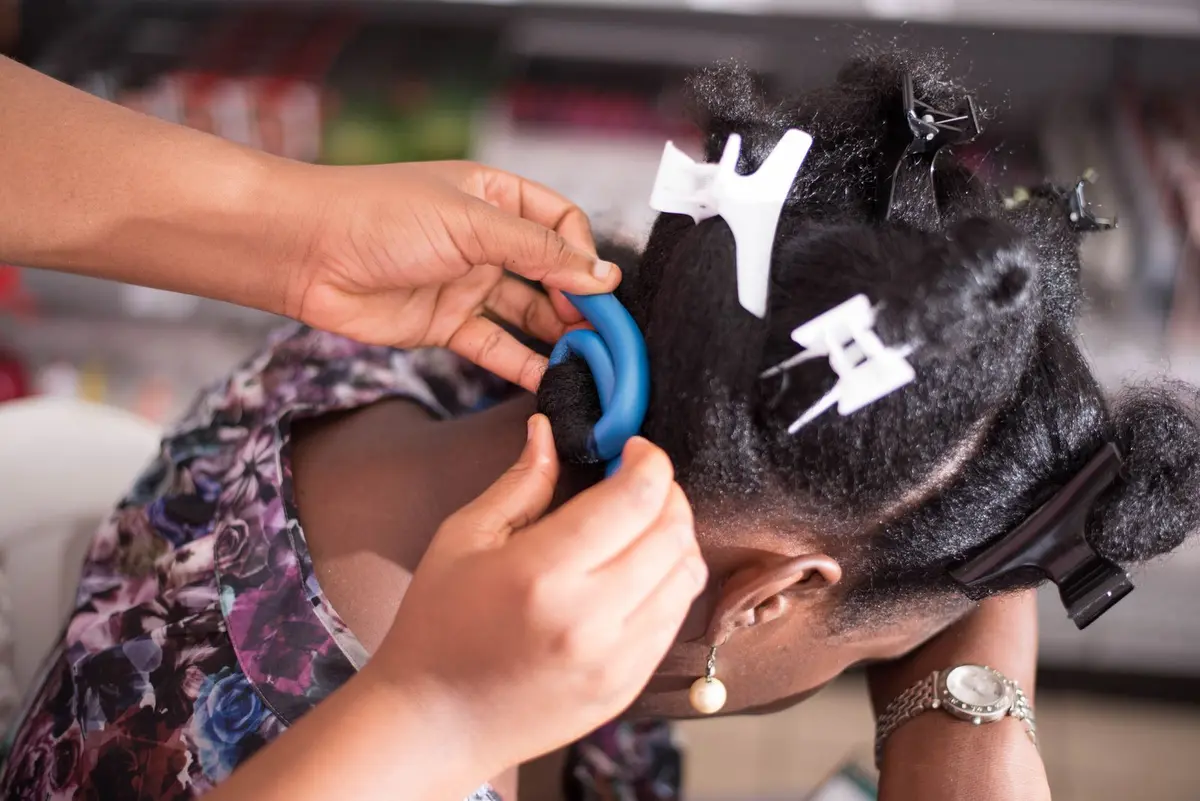
Most at-home hair complications arise not from the tools used, but from poor control over the hair section itself. When a section is loose or unevenly pulled, brushes catch, products distribute poorly, and clean parting becomes impossible. Proper hand placement transforms the hair from a loose mass into a structured, manageable surface.
Learning to anchor your hair sections with your non-dominant hand is a fundamental skill. This guide outlines the mechanics of tension and how to keep sections isolated without damaging the hair fiber.
- Difficulty
- Beginner
- Total time
- 15 minutes
- Cost
- Minimal
- Cadence
- Weekly maintenance
Ingredients
- Water: Lightly dampening hair increases fiber flexibility and simplifies sectioning.
Tools List
- Sectioning clips
- Wide-tooth comb
Step by step
Establish the anchor point
Place your non-dominant hand at the base of the hair section, just above the root. Use your index and middle finger to pinch the hair against your palm. Keep your wrist straight to ensure the tension remains parallel to the scalp. Avoid pulling upward, which can create unnecessary discomfort at the follicle.
Tip: Use a light grip to start; you can increase pressure if the section begins to slip.Apply even lateral tension
Pull the section horizontally away from the head to create a taut line. Your fingers should slide down the hair shaft slowly until you reach the midpoint of the section. This maintains the structure required for uniform product application or thorough detangling. Ensure the section width is no wider than the tool you are using.
Tip: Keep the section perpendicular to the scalp for the most even distribution.Isolate with clips
Once the section is taut, use your dominant hand to secure the base with a clip. Do not twist the hair excessively before clipping, as this creates knotting. The clip should rest flat against the head to maintain the separation. Move your anchor hand only after the clip is fully engaged.
Tip: Section clips with silicone grips prevent slipping on fine hair textures.Execute the movement
Work through the section from the ends upward toward the roots using your chosen tool. Keep the anchor hand steady, adjusting the grip slightly downward as you clear tangles. By keeping the hair between the anchor and the tool taut, you prevent the brush from dragging or skipping. Move slowly to avoid breakage.
Tip: Focus on the ends first to remove existing knots before moving to the roots.Release
Unclip the section carefully rather than pulling it loose. Use your fingers to smooth the section downward one last time to ensure uniformity. If there is remaining tension at the root, massage the area lightly to relax the hair fiber. Inspect the section for cleanliness of the part before moving to the next area.
Tip: Always unclip in the direction of natural hair growth.
Trouble
My hair keeps slipping out of my fingers.
Ensure your hands are completely dry. If you have applied product to your hands, wash them thoroughly before handling the sections to regain your grip.
The section feels too tight at the root.
You are applying tension too close to the scalp. Shift your anchor point two inches lower on the hair shaft to alleviate pressure while maintaining control.
The brush is still snagging.
Your sections are likely too thick. Reduce the amount of hair in each section by half, which allows for better visibility and easier passage of the tool.
My arm gets tired after three sections.
You are likely holding your arms too high. Bring the hair sections toward your chest or chin level to keep your elbows tucked near your body for better leverage.
Tension is the difference between a smooth finish and uneven, frayed results.
Focus on your posture; if your shoulders are hunched, your tension will be inconsistent.
Related: detangling done right, how to blow dry without it looking blow-dried and hair technique.