A Guide to Dry Detangling for Fine Hair
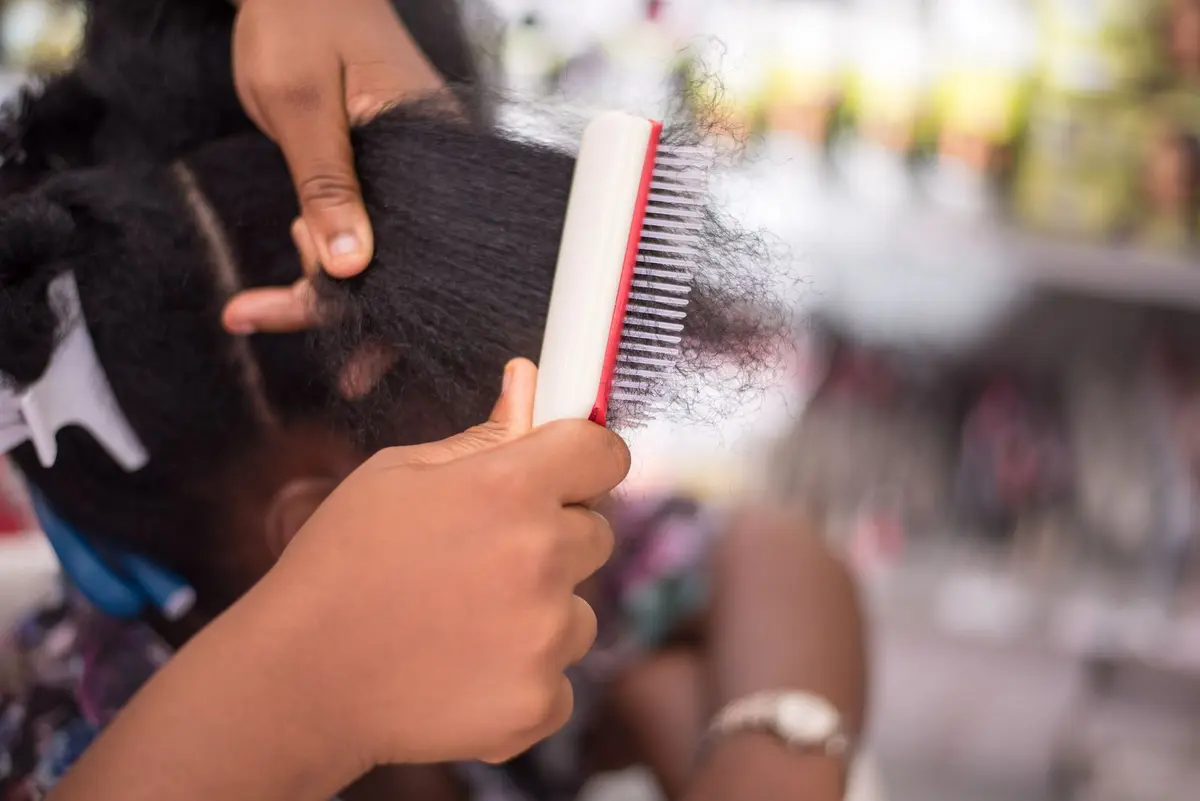
Fine hair possesses a smaller diameter than other hair types, making it prone to mechanical damage during standard washing routines. Introducing water to tangled hair causes the strand to swell, which can exacerbate existing knots and increase the likelihood of snapping.
Dry detangling is a preparatory measure designed to smooth the cuticle and release tension before the hair becomes vulnerable in the shower. By focusing on manual separation rather than aggressive brushing, you preserve the structural integrity of your hair.
- Difficulty
- Beginner
- Total time
- 10 minutes
- Cost
- Low
- Cadence
- Weekly
Ingredients
- None: This technique relies entirely on mechanical action.
Tools List
- Wide-tooth comb with seamless, rounded teeth
- Sectioning clips
Step by step
Section the hair
Divide your dry hair into four distinct quadrants using sectioning clips. Fine hair is easily overwhelmed, so isolating small areas prevents you from pulling through tight knots. Work from the bottom up to ensure you do not create new tension at the roots.
Tip: Secure the top sections loosely to avoid creating a new dent in the hair fiber.Manual strand separation
Before utilizing a tool, use your fingers to gently pull apart any visible loops or mats. Fine hair fibers often catch on one another due to static or natural oils. This tactile approach allows you to feel the resistance and stop before the knot tightens further.
Tip: Use a mirror to see the back sections clearly.Utilize a wide-tooth comb
Begin combing at the very ends of the hair. Use slow, rhythmic strokes to move upward only once the previous section is completely clear. A wide-tooth comb provides the necessary space for the hair to move without being stretched or scraped.
Tip: Hold the hair bundle firmly above the comb to prevent tension at the scalp.Address mid-lengths
Once the ends are clear, move the comb to the mid-length area. Maintain a gentle grip on the hair shaft to act as a buffer. Ensure you are moving the tool in a fluid motion rather than a hacking motion, which can fray the delicate cuticle.
Tip: If you hit resistance, stop immediately and use your fingers to undo the knot.Final vertical sweep
Perform a final sweep starting from the nape of the neck toward the ends. This ensures that any shed hair, which is natural to lose daily, is removed. Remove the shed hair from the comb immediately so it does not re-tangle with the remaining fibers.
Tip: Clean your comb after each session.
Trouble
My hair feels static-prone after this. How do I fix it?
Static is often caused by low humidity or the wrong comb material. Ensure you are using a seamless, wide-tooth comb made of wood or cellulose acetate rather than cheap plastic.
Should I apply product before detangling?
No, dry detangling is a mechanical process. Adding oils or styling agents to dry hair can sometimes coat the knot and make it harder to feel the tension, leading to accidental breakage.
Is it normal to lose hair during this process?
Yes, it is normal to shed between 50 to 100 hairs per day. Dry detangling simply catches the hair that has naturally released from the follicle so it does not tangle with the rest of your hair in the shower.
Can I use a paddle brush instead?
Paddle brushes generally have too many points of contact for fine hair, which can lead to snagging. A wide-tooth comb is the most precise tool for minimizing friction.
Mechanical damage is cumulative; prioritize the health of the fiber over the speed of the routine.
Dry detangling is an act of maintenance, not styling. Keep your focus on the tension at the ends.
More: detangling done right, fine hair and mitigating ponytail breakage.