Taper vs. Fade: Choosing Your Best Cut
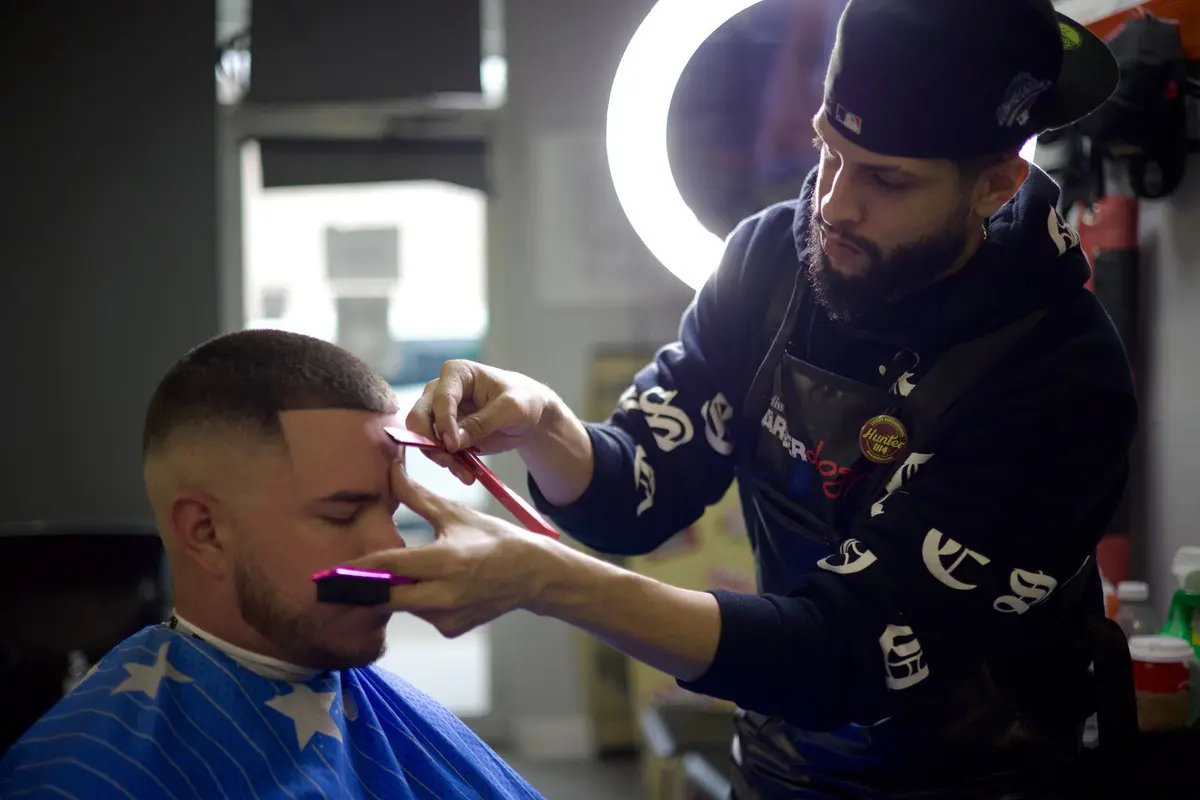
Choosing between a taper and a fade requires an understanding of how hair length influences the perception of your facial structure. While both styles rely on a gradient of hair lengths, their impact on your appearance differs significantly due to the placement and intensity of the transition.
A taper focuses on the natural hairline, shortening the hair only at the sideburns and neckline. A fade, conversely, removes hair down to the skin, creating a high-contrast transition that changes the apparent shape of the head.
- Difficulty
- Beginner
- Total time
- 45 minutes in chair
- Cost
- Moderate
- Cadence
- Every 3-4 weeks
Ingredients
- Matte styling cream: Allows you to view the true shape of the cut without light reflection.
Tools List
- Clear handheld mirror
Step by step
Analyze your jawline
Examine the width of your jaw compared to your cheekbones. If you have a wide jaw, a taper maintains the hair weight on the sides of your head, which helps to balance the visual proportions. If your jaw is narrow, a fade can introduce sharp lines that provide structural definition.
Tip: Pull your hair back completely to see the raw shape of your head.Determine neck shape
Look at the nape of your neck to see if you prefer a natural finish or a hard line. A taper follows the existing hairline, which is generally more forgiving as it grows out over four weeks. A fade creates a distinct border, which requires more frequent upkeep to prevent an uneven look.
Tip: Longer necks benefit from a gradual taper rather than a high-contrast fade.Communicate the transition
Specify the transition height to your barber. A taper should be described by the length of the sideburns and the depth of the neckline. A fade should be defined by the starting point, such as low, mid, or high, which indicates where the skin-level hair transitions to the length above.
Tip: Bring a photo of your specific hair texture.Define the perimeter
Decide on your edge-up preference. A taper relies on a soft finish, while a fade typically includes a sharp line-up around the temples and neck. This edge creates the contrast that defines a fade and provides a clean visual boundary for the transition.
Tip: Keep the line-up natural rather than arched too deeply.Balance the top length
Ensure the length on top harmonizes with the sides. A fade demands more length on top to counteract the severity of the skin exposure on the sides. A taper allows for a shorter, more conservative top length while still appearing intentional and finished.
Tip: Use a matte finish product to check the haircut balance.
Trouble
Why does my fade look messy after one week?
Hair growth creates a visual line quickly against skin-level fades. Visit your barber every ten days for a touch-up.
Can a taper be worn with glasses?
Yes, a taper is ideal for glasses wearers because it maintains volume around the ears, which prevents the frames from feeling isolated on the head.
What is the best cut for a round face?
A high, tight fade can elongate the appearance of the face by reducing the width on the sides.
How do I communicate a low taper?
Specify that you want the hair around the ear and neckline shortened, but the hair above the temples kept at its existing length.
A taper preserves the silhouette, while a fade defines the boundary of the skull.
Focus on the transition point—that is where the style is made or lost.
Compare other short cuts: the taper, undercut and pixie guides.