On Under-Painting (And Why I Stopped)
I was a convert for four months. Under-painting worked — until I figured out what it was compensating for, and fixed that instead.
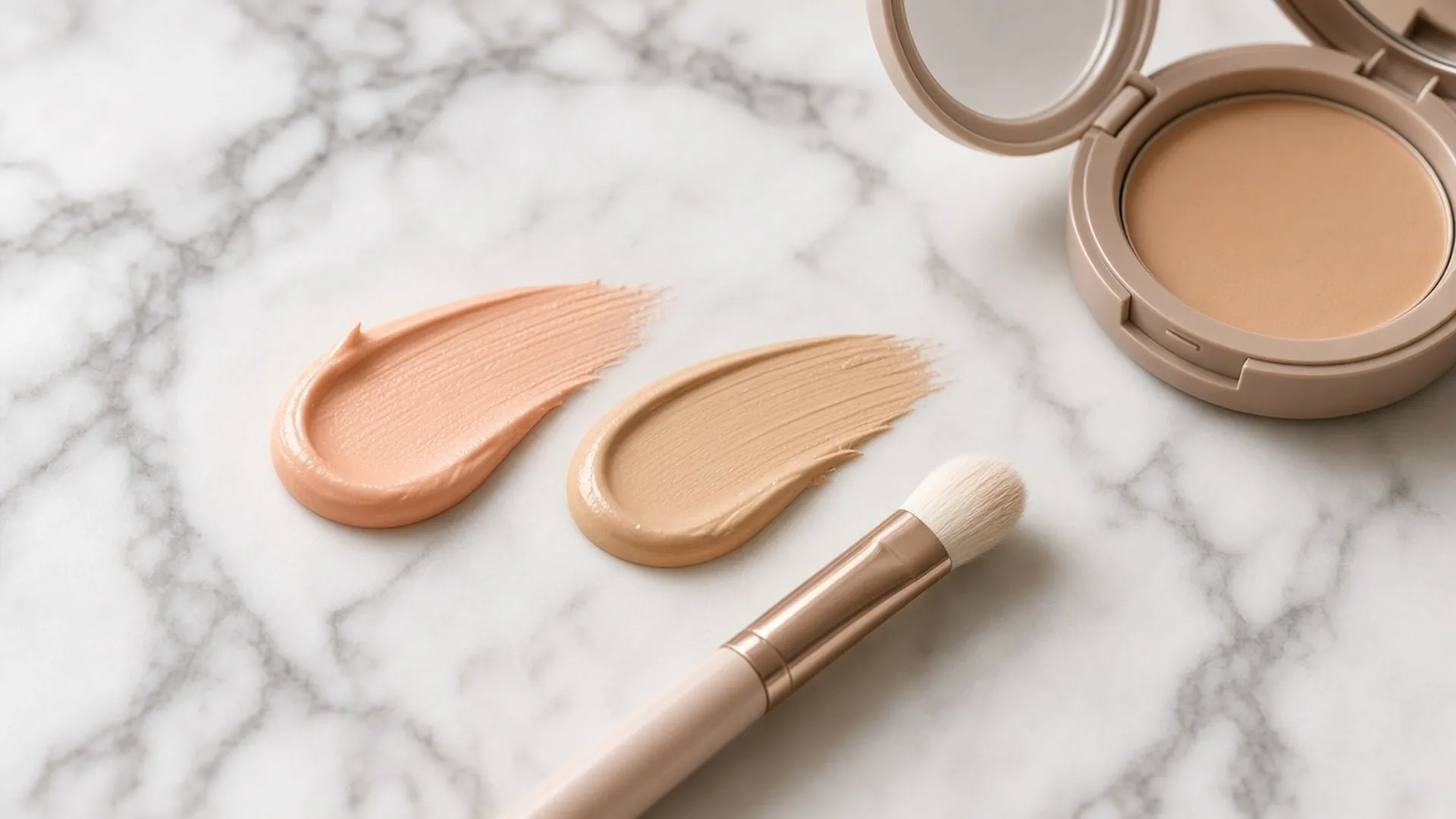
I was a convert for four months. Under-painting worked — until I figured out what it was compensating for, and fixed that instead.
Under-painting is the practice of applying color-correcting product to the face before foundation — peach or orange tones pressed into the under-eye to cancel the blue-grey of dark circles, occasionally green on the cheek plane to quiet redness. It comes from portrait painting. It entered beauty about a decade ago by way of a handful of editorial makeup artists who posted it online, and then it became the thing everyone was doing, and then I became the thing doing it.
I was not impulsive about it. I researched. I bought the right products — a peach cream corrector from a French brand with good pigment weight, a separate orange stick for the outer corner where my circles are darkest. I watched how the artists applied it. I practiced. Within a week, I had a method. Within a month, I was evangelical about it in the way you are evangelical about something when it is new and working and you have not yet had cause to question it.
The corrector was solving something real. I just hadn't asked yet what was causing it.
Four months in, and out
When it worked.
It worked. That is the honest thing to say first, before the rest of this, which is about why I stopped. The corrector went on in a thin layer — two fingers, patted, not dragged — and then the foundation went over it, sheered out at the edges, and the circles were gone. Not concealed. Gone, from a certain distance. The face read as rested. I did a dinner in Paris in February and a woman I admire asked what I was doing differently. I told her. She bought the corrector the next morning. I was pleased with myself in the specific way of a person who has discovered something other people haven't yet.
Four months of this. The palette sat to the left of the mirror, which is the spot reserved for the things I use daily. I built the step into the routine with the same seriousness I give to everything else — same pressure, same timing, same two minutes of attention. I was a practitioner, not a dabbler.
The moment I stopped.
I was traveling for work — three cities, eight days, the kind of trip where sleep becomes a negotiation and the room is always slightly too warm. On the fifth morning, I ran out of the corrector. I had packed the wrong case. I did the foundation without it and stood at the bathroom mirror waiting for the damage to be visible.
It wasn't. Not the way I expected. The circles were there, quieter than on a bad week, but present. I applied a small amount of foundation over them twice — the method I'd used before under-painting — and it was fine. Not remarkable, but fine. I thought: this is a bad day, the real test will be when I'm home.
When I was home, I looked at what had changed. Not in the last week — in the last four months. I had, sometime around month two of the under-painting experiment, also started cleaning my face more carefully before sleep. Not a new product. A better cleanse. Earlier to bed two nights a week. Less wine on those nights, mostly because I was tired and not because I was disciplined. The circles had been improving for reasons I had attributed, wholesale, to the corrector.
I tested it, the way you test a hypothesis when you are too stubborn to admit you already know the answer: two weeks without the corrector, with the same cleanse, the same sleep schedule. The circles were the same as they'd been when I was using the corrector. Which meant the corrector had been correcting for a problem that preparation had already solved, and I had been crediting the wrong thing.
What I do instead.
I still own the corrector. It goes on for specific occasions — very little sleep, very bright light, the kind of event where the circles would read from across a table. But it is not part of the daily routine. It is in the same drawer as the lip liner I use twice a year, which is where things go when they have earned their keep but lost their necessity.
What I do instead is less interesting to write about, which is part of why I'm writing about it. I clean my face before sleep. I use a low-pH second cleanse, tepid water, cotton flannel — none of this will surprise anyone who has read the second-cleanse column. I sleep as much as I can, which is sometimes seven hours and sometimes five and is out of my hands on most nights. I drink less. I am not evangelical about any of it. There is no palette. There is no before-and-after. There is just a face that looks like it slept, most mornings, without any correcting being done to it.
On technique as distraction.
There is a version of beauty practice that is about solving problems. There is another version that is about doing things — techniques, steps, tools, applications — and feeling like a person who takes care. The two versions often look identical from the outside. The distinction only becomes clear when you try removing the technique and find the problem has gone with it.
Under-painting is not a bad technique. The artists who use it on set — long hours, artificial light, faces that need to read perfectly from twenty feet — are using it correctly. The corrector is doing work there. What I had done was taken a precision tool and applied it to a problem it wasn't the solution to. It was the right answer to a question I wasn't actually asking.
I think about this in other parts of the routine sometimes. The serum that does something, probably. The mist that feels good. The extra step that arrived in a press box and stayed because I liked the bottle. Most of them are fine. Some of them are correctors I bought before I figured out what was upstream. The shelf is thinner than it was. I do not miss what's gone.
Two follow-ups are worth reading next to this one. The five-product no-makeup kit is the routine that took the corrector's place on weekdays. And before blaming dark circles on anything, check the bulb you are judging them under: overhead light invents shadows under the eye that daylight does not show.
I had been crediting the technique. It was the preparation that had done it.