On lighting your own bathroom
The most unkind light in your home is the one you do your face in. A small, slightly obsessive argument for changing one bulb before you change one product.
The most unkind light in your home is the one you do your face in. A small, slightly obsessive argument for changing one bulb before you change one product.
For most of my first year in this flat, I thought my skin had changed. It looked grey in the mornings. There were shadows under my eyes I did not remember owning, and a texture across my forehead that I tried, in order, to exfoliate, to moisturise, to prime and to forgive. Then one Saturday I did my face in the bedroom, by the window, because the bathroom bulb had gone. And there was my face again, perfectly ordinary, looking much as it always had.
The skin had not changed. The light had. The bathroom has a single fitting in the middle of the ceiling with a cold, bright bulb in it, and it was lighting me the way a car park is lit: from directly above, with no mercy and no interest in how I felt about it.
I tell you this because I suspect a good number of the products on your shelf were bought to fix something the light invented. I know some of mine were.
A good number of the products on your shelf were bought to fix something the light invented.
What the ceiling is doing to you.
Light from directly overhead falls on the top of everything. The forehead, the top of the nose, the cheekbones. And everything underneath is left in shade: the eye sockets, the area under the cheekbones, the line along the jaw, the little hollows either side of the mouth. This is a lovely way to light a sculpture. It is a cruel way to light someone trying to put concealer on at seven in the morning, because it draws shadows that are not really there and then asks you to cover them.
So you cover them. You put more concealer under the eyes than you need, and it looks heavy by lunchtime. You blend your foundation thoroughly in the places the light reaches and skimp in the places it does not, and step outside with a tidemark at the jaw. You look for texture because the light is skimming across the surface, raking it, making every pore a small crater. And then you buy something for the texture.
The colour of the bulb does its own damage. A very cold, bluish white makes most skin look grey and tired, and it encourages you to add warmth — bronzer, blush, a warmer foundation — that then looks orange in the street. A very warm, yellow light does the opposite: everything looks flushed and kind, and you leave the house paler and patchier than you thought. Neither is the light you will actually be seen in.
What I changed.
The bulb.
The first thing, and the cheapest. I took out the cold white bulb and put in one somewhere between warm and neutral white — the kind the packaging tends to call warm white or something close to daylight, without being the harsh, bluish end of daylight. I am not going to give you numbers, because the labels vary and I do not trust myself to choose by them anyway. Stand in the shop, look at the packaging, choose the one that sits in the middle. Not candlelight. Not an operating theatre. Something like a bright, slightly overcast morning.
The direction.
This made the larger difference. Light that comes from the front, at about the height of your face, fills in the shadows the ceiling creates. Light from both sides of the mirror does it even better, because neither half of your face is in shade. If you can, this is what a mirror with lights at either side, or lights built into the frame, is for. It is not vanity. It is simply light pointed at the thing you are trying to see.
If you rent, or would rather not rewire anything, you can get most of the way with a bathroom-safe mirror that has its own lighting, or by doing your face somewhere else — a dressing table by a window, a mirror in the hallway with a lamp beside it. The bathroom is where we have decided faces get done. It is not a law.
The window.
And the habit I would keep even if the bathroom were perfectly lit. Before I leave, I take a hand mirror to the nearest window and look. Daylight is the light I will be seen in for most of the day, and it is honest in a way no bulb quite manages. If something is too heavy, or not blended at the jaw, or a slightly different colour from my neck, the window tells me. It takes ten seconds.
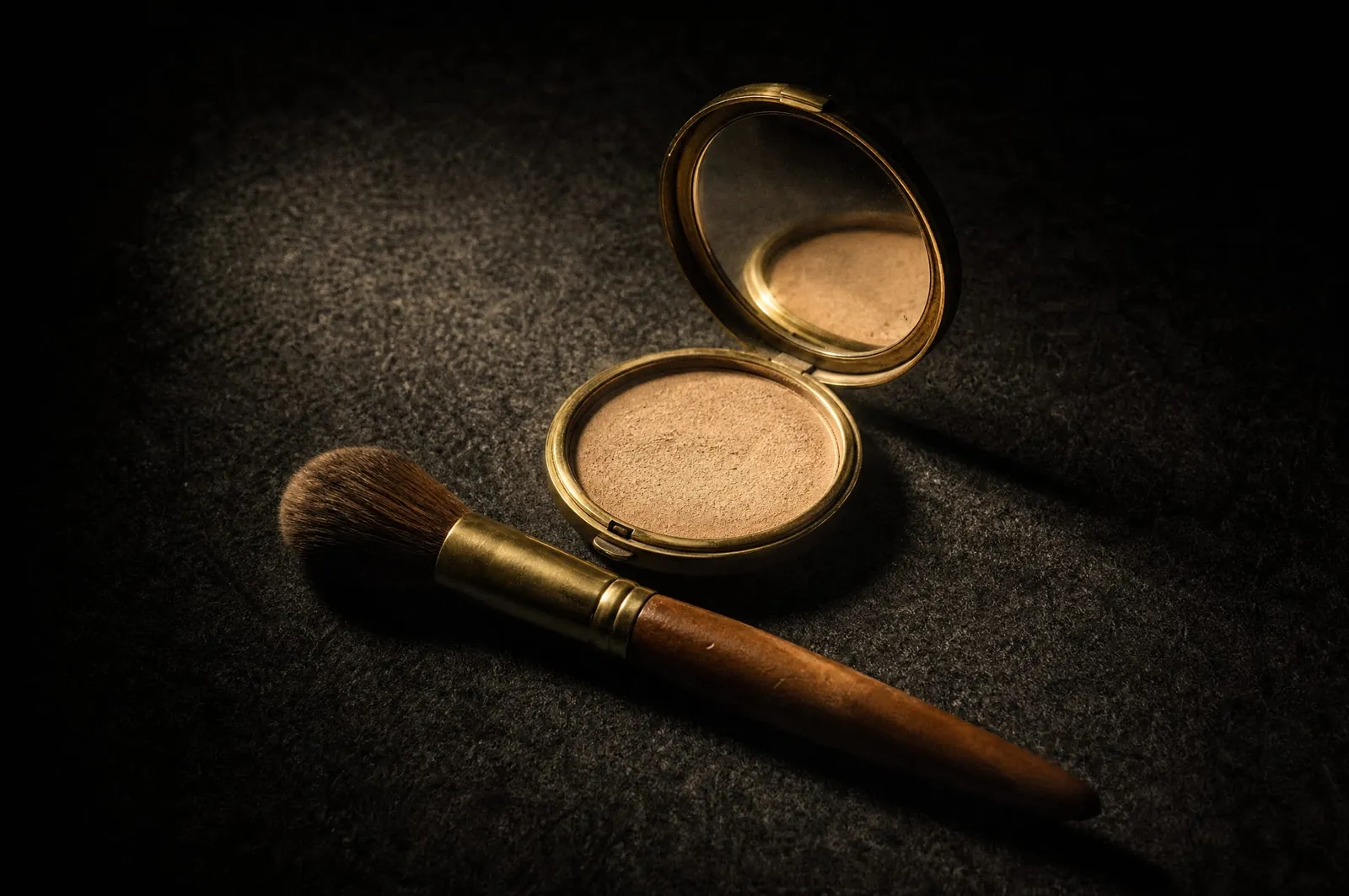
Daylight is the light you will be seen in. Check your face there, for ten seconds, before you check it anywhere else.
A word about wiring.
I need to be the dull one for a paragraph. Bathrooms are wet rooms, and electricity and water are a bad pairing. Any light fitting you put in a bathroom needs to be rated for use in a bathroom — the packaging or the shop should be able to tell you — and the closer it is to the bath, the shower or the basin, the more that matters. Changing a bulb in an existing fitting is a household job. Moving a fitting, adding new lights beside a mirror, or wiring in an illuminated mirror is not. That is a job for a qualified electrician, and I would not take anyone's advice otherwise, including mine.
Turn the power off before you change even a bulb, let the old one cool, and do not do it with wet hands. I know. But someone has to say it, and in this column it is me.
What it saved me.
I did my face for a week under the new bulb, with the window check, and noticed I was using less of almost everything. Less concealer, because the shadows under my eyes were mostly shadows. Less foundation, because I could see where it was needed and where it was not. No primer at all, because the texture it was meant to blur had mostly been the light raking across my forehead. I had been compensating for a ceiling.
That is the argument, really. Before you buy the next thing to correct something you see in the bathroom mirror, change the bulb, move the light to the front of your face, and look again by the window. If the problem is still there, by all means buy the product. Often it will not be. It will have gone out with the old bulb.
“I spent a year treating my skin for a light fitting. Change the bulb first. It is the cheapest edit on the shelf.” — Nelly
The bulb is also where the glass-skin column starts its argument, and the daylight test at the window is the same one used to judge a no-makeup face at four in the afternoon. Dark circles that seem to call for a corrector are worth rechecking in that daylight first, which is roughly where the column on under-painting ends up.
Filed by Nelly, from the desk · Makeup / Light