The case for the same coat for ten years
I have worn the same coat for a decade. It is the most complimented thing I own. On buying once, buying well, and the quiet power of being recognisable.
I have worn the same coat for a decade. It is the most complimented thing I own. On buying once, buying well, and the quiet power of being recognisable.
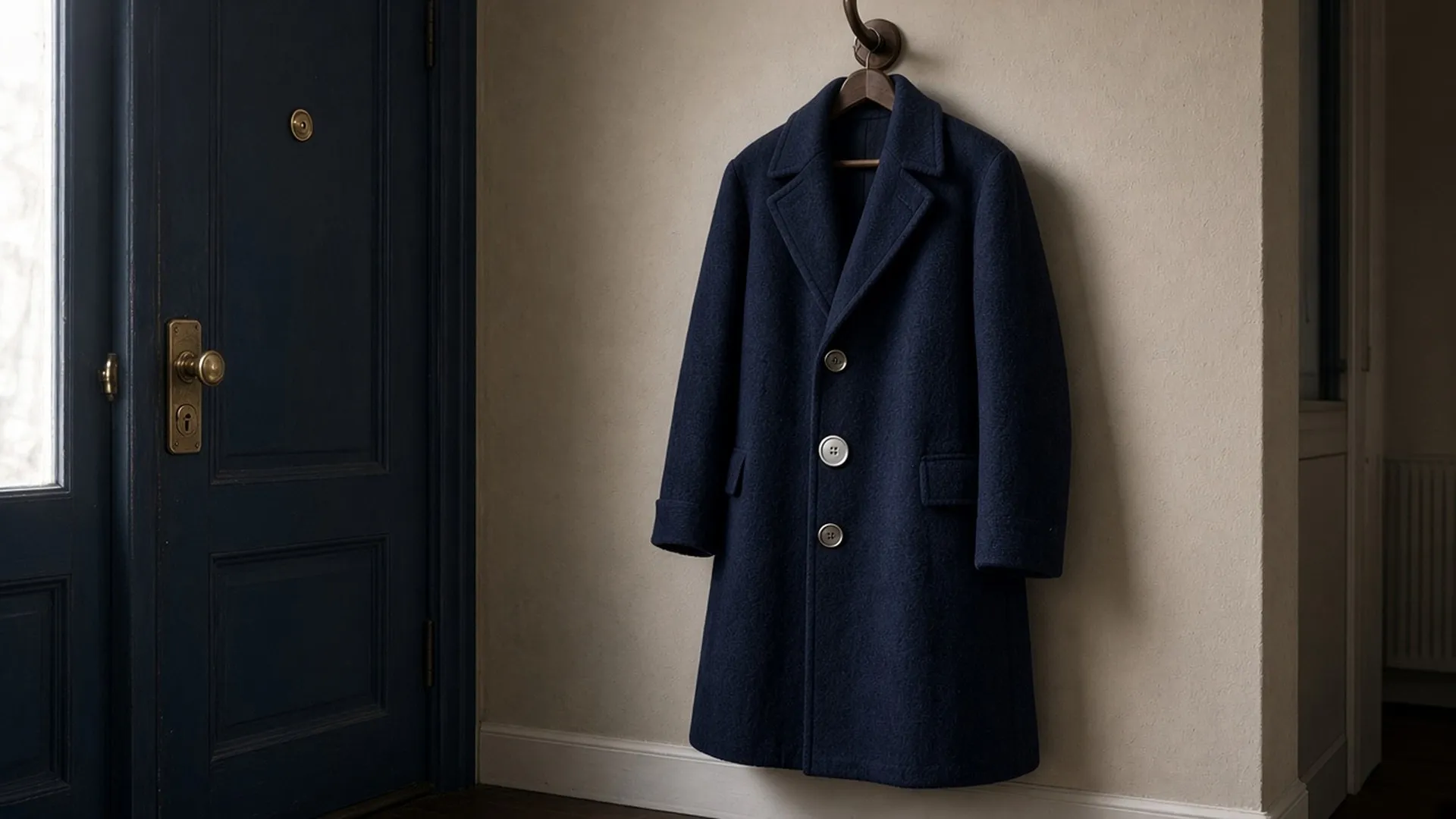
I have worn the same coat every winter for ten years. It is dark navy wool, single-breasted, falls to just below the knee, and has one button that does not match the others because the original went missing on a bus and I have decided to regard the replacement as character. It is the most complimented thing I own. It is complimented more now than when it was new, which tells you something about coats, and possibly about compliments.
I did not set out to keep it this long. I bought it in a year when I had more sense than money, after trying on far too many others, and I have simply never found a reason to replace it. Every autumn I take it out, brush it, look at it for a while, and put it on. That is the whole ritual, and it has saved me a decade of deliberation.
A good coat is not a purchase. It is a decision you only have to make once.
The case for being recognisable.
There is a quiet power in being the person in the navy coat. People find you on a crowded platform. Friends describe you to each other by it. Over time, a garment you wear constantly stops being clothing and becomes a kind of outline. That outline is more flattering than anything new could be, because it has been shaped, very slightly, by you.
There is also the practical case, which is less romantic and more persuasive. A coat is the thing people see first and most often for half the year. Every other item underneath it can be ordinary, and frequently is, because the coat is doing the talking. If you are going to spend properly on one garment, this is the one.
Buying once.
Fabric first.
Look for a dense wool, or wool with a small amount of something else for strength. Hold it to the light: you should not see much through it. Scrunch a corner of the hem in your fist for a few seconds and let go. Good cloth springs back with barely a crease. Cloth that holds the crumple will hold every crumple you ever give it. Check under the arms and at the cuffs for pilling on the shop sample, which is a preview of your coat in two winters.
Shoulders, always.
Try it on over the thickest jumper you will actually wear underneath. The shoulder seam should sit at the edge of your shoulder, not hang beyond it or pull inside it. Lift your arms forward as if reaching for a rail on the bus. If the back strains or the sleeves ride up to the forearm, it is not your coat. Shoulders are the one thing a tailor cannot reliably fix, so they are the one thing you should not compromise on.
The lining.
A full lining helps the coat slide on over knitwear and keeps the wool from wearing against itself. Look for a small pleat at the centre back of the lining, which gives you room to move without tearing it. Check the seams are sewn rather than glued, and that the lining is not pulling the hem out of shape. Linings wear out before good wool does. That is fine. A tailor can replace one, and it is far cheaper than a new coat.
The small things.
Buttons sewn on firmly, ideally with a little shank so they sit up from the cloth. Pockets deep enough for a hand and a pair of gloves. A dark, plain colour that will go with everything you own now and most of what you will own later. A cut that is neither very fashionable nor very unfashionable, because both of those things date.
Keeping it ten years.
- Brush it. A clothes brush, a few downward strokes after wearing, lifts dust before it settles into the weave. This one habit does more than anything else on this list.
- Hang it properly. A wide, shaped hanger that supports the shoulders. A thin wire hanger will give your coat two small horns by spring.
- Let it rest. If it comes home wet, hang it somewhere airy to dry slowly, well away from the radiator, and do not wear it again until it has dried completely.
- Clean rarely. Spot-clean marks with a damp cloth. Have it professionally cleaned once at the end of the season, or less, rather than every time it looks tired.
- Store it clean. Over summer, put it away clean, in a breathable cotton cover rather than plastic, with the pockets emptied. Moths go for wool that carries traces of wear, which is why it goes away clean. Cedar blocks or lavender sachets help; checking it once or twice over the summer helps more.
- Mend early. Restitch a loose button the evening you notice it. Have a small tear seen to before it becomes a large one.
What it has cost.
More than any other coat I have tried on, at the time. Much less than any other coat I could have bought, over ten years. I have not stood in a shop in October wondering what kind of person I am this winter. I already know. I am the woman in the navy coat with the wrong button.
New coats are admired. Old ones are recognised. I know which I would rather be.
The brushing habit has a source, told in what Nelly learned from her mother's closet. The same buy-once logic, applied to a single garment worn every day of the week, is the blue shirt schematic, and the case for comfort over the camera is in not dressing up for the lens.
Filed by Nelly, from the desk · Wardrobe / Outerwear