On not dressing up for the camera
Clothes that photograph well and clothes that live well are rarely the same clothes. What I learned dressing for the room instead of the lens.
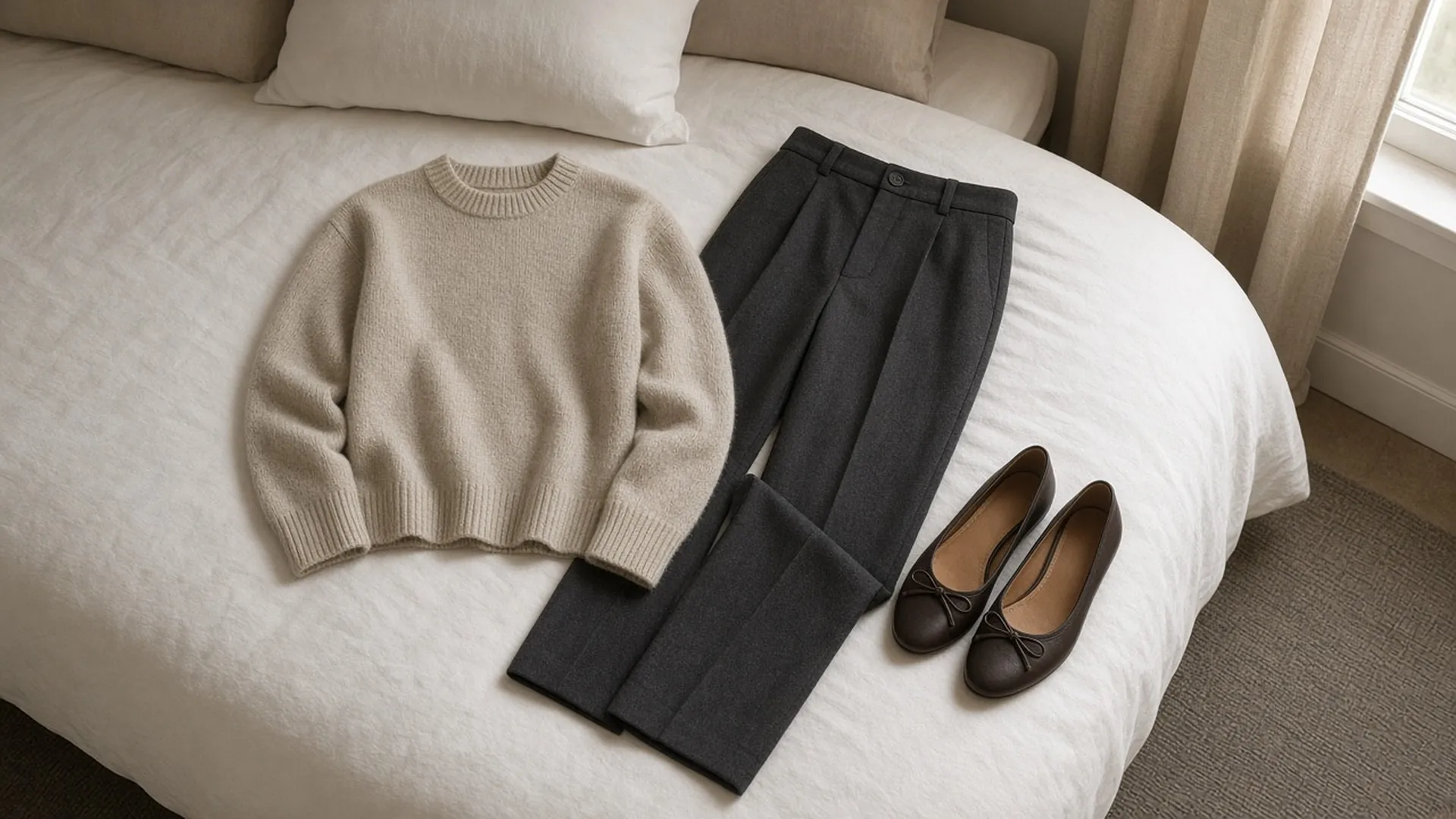
Clothes that photograph well and clothes that live well are rarely the same clothes. What I learned dressing for the room instead of the lens.
For a few years I dressed for photographs. Not professionally, not in any way I would admit to at a dinner party, but enough. I bought things because of how they would look in a picture, from a slight distance, in good light, for a fraction of a second. I knew which colours came out well and which turned muddy. I knew that a bit of shine read as expensive on a screen. I had, I am sorry to say, a good side.
What I did not have was a wardrobe I liked wearing. The clothes that photographed beautifully were often the ones I spent the evening adjusting, or sitting very straight in, or quietly regretting by the third hour. They looked wonderful on the phone afterwards. They were rather less wonderful in the taxi home.
At some point I noticed that the best evenings I had were almost never the ones with the best pictures. And the clothes I had been wearing on those evenings were not the ones I had chosen for the camera. They were the ones I had chosen for the room.
A photograph lasts a fraction of a second. The evening lasts four hours. Dress for the longer one.
What the lens wants.
A camera is a blunt instrument, even a very good one. It flattens. It loves contrast, strong saturated colour, crisp structure, a clear silhouette against a background. It likes sheen, because sheen catches light. It likes bold prints, because they register. It likes things that hold one shape, because the picture is taken from one angle.
None of those things is bad. But they are not the same things that make a garment pleasant to live in. A camera cannot feel the scratch of a seam. It does not know that the stiff collar is cutting into your neck or that the beautiful satin shows every crease the moment you sit down. It does not notice that you have not lifted your arm above your shoulder all night because the sleeves will not allow it.
What the room wants.
The room, by which I mean the actual people in the actual space with you, notices completely different things. It notices texture, which cameras mostly lose: the softness of a good knit, the weight of a wool skirt, the way a cotton shirt has gone gentle with washing. It notices how you move, and whether you are comfortable, and whether you seem to be enjoying yourself or managing your outfit.
It notices fit more than colour. It notices if you are relaxed. It notices, above all, your face, and your face is far more animated when you are not worrying about the dress. People who are comfortable in their clothes laugh more freely, lean in, gesture, eat the bread. Those are the people others remember from an evening, whatever the pictures say.
The clothes that live well tend to be quieter. Natural fibres. Shapes that allow you to sit, stand, walk to the station, and carry a bag. Colours that suit you in real light rather than in flash. Things that look slightly better at the end of the night than at the start, because they have softened into you.
Nobody across a dinner table has ever told me I photograph well. Several have told me I looked happy.
A few tests I now keep.
- Sit down in it. In the fitting room, on the little stool, for a full minute. If it pulls, rides up or digs in, it will do the same at every dinner you wear it to.
- Lift your arms. Reach forward as if for a glass across the table. Reach up as if for a coat on a hook. A garment you cannot move in is a garment you will hold yourself stiffly in.
- Walk. Up and down, ideally somewhere with a stair. Hems, shoes and waistbands reveal themselves on stairs.
- Look in daylight. Take it to a window if the shop allows. Fitting-room light and phone screens both flatter in ways that the street will not.
- Ask about the third hour. Not how it looks now, but how it will feel after dinner, on the walk home, at the end of a long day. Be honest. I usually know.
And when there is a camera.
Sometimes there is. A wedding, a work portrait, a video call that someone has decided to record. I do not entirely abandon sense. A plain, solid colour near the face is kind to most of us. Very fine stripes and tiny checks can shimmer oddly on screens, so I avoid them on calls. A collar or neckline that frames the face, like the one on the blue shirt, does most of what any photographer would ask.
But I wear clothes I can be comfortable in for the whole event, because the comfort shows in the pictures too, in the shoulders and around the eyes. The most flattering photographs anyone has taken of me in recent years were taken when I had forgotten the camera was there. That is hard to do in a dress you are fighting.
The lens sees you for an instant. The people in the room see you all evening. They are the audience that matters.
The mirror by the door, and the habit of taking one thing off before going out, come from the column on her mother's closet. The argument for wearing one good thing for years rather than something new for each photograph is made in the ten-year coat.
Filed by Nelly, from the desk · Wardrobe / Essay