Tailoring is a beauty product
The most flattering thing you can do costs less than a serum and happens on a side street, not at a counter. Why fit does what skincare only promises.
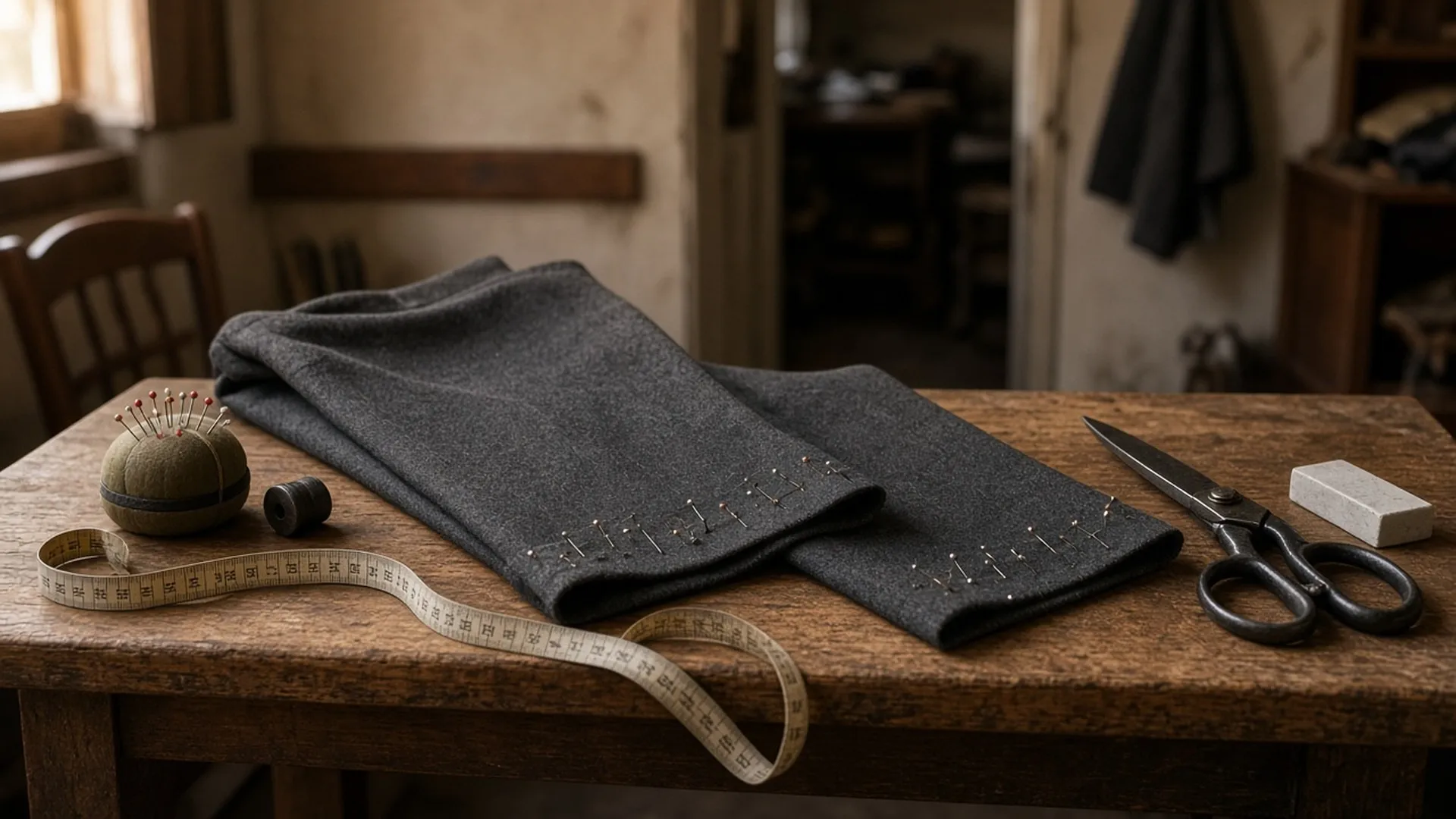
The most flattering thing you can do costs less than a serum and happens on a side street, not at a counter. Why fit does what skincare only promises.
I will not write down what I have spent on serums over the years. It is not a number that does me credit. What I will say is that the most flattering thing I have ever bought cost less than any of them, took ten minutes of standing still while someone with pins in their mouth tutted at my hem, and happened in a small shop on a side street that smelled of steam and machine oil.
It was a pair of plain black trousers taken up by about the width of two fingers. That was it. Suddenly they ended where my ankle began instead of puddling over my shoes, and I looked, in the mirror, like someone who knew what she was doing. Nothing about my face had changed. Everything about how my face was received had.
This is the argument. Fit does what skincare only promises. It changes your proportions, your posture, the way light falls across you, the way people read you from across a room. It is the most reliable beauty product I know, and it is sold without a single claim on the packet.
Skincare asks you to wait six weeks and hope. A good hem works before you have left the shop.
Why fit is a beauty product.
When clothes fit, the eye travels to the face. When they don't, it stops somewhere along the way: at the sleeve that swallows the hand, at the waistband that gapes, at the shoulder that slopes off a little sadly towards the elbow. We think of these things as the clothes being wrong. Other people think of them, without quite knowing it, as us looking tired.
A garment that fits also changes how you stand. I hold myself differently in a jacket whose sleeves end at the wrist bone. I do not pull at it, or tug it down, or keep adjusting it in shop windows. That small reduction in fuss reads as ease, and ease is about the most attractive thing a person can wear.
What to take first.
If you have never been to a tailor, do not start with the coat you love most. Start with something ordinary that you wear constantly and that is almost right. You will learn what your tailor is like, and what you are like, and the stakes are low.
Trousers that are too long.
The single easiest and most transformative alteration there is. Wear the shoes you will actually wear with them. Decide whether you want a clean break or none at all, and say so. Most people need less fabric at the ankle than they think.
Sleeves on jackets and coats.
A sleeve should show a little of the shirt cuff, or end at the wrist bone if there is no shirt. On many jackets this is straightforward. On those with working buttons at the cuff, it is a much bigger job, and a good tailor will tell you so.
A waist that gapes.
Trousers and skirts that fit the hips but stand away at the back of the waist can usually be taken in neatly. This is the alteration that makes inexpensive trousers look expensive.
Shirts that billow.
A little taking in at the sides, or a pair of darts at the back, and a shirt goes from borrowed to yours. Ask before you commit. Some cuts do not take it gracefully.
Easy, possible, and not worth it.
I am conservative about this, and I would rather you were too. Tailoring can do a great deal. It cannot rebuild a garment that was wrong from the start.
- Usually easy — Hems on trousers and plain skirts. Taking in a waist. Shortening sleeves on jackets without working cuff buttons. Shortening straps on a dress. Replacing buttons.
- Possible, with a good tailor — Tapering a trouser leg. Taking a jacket in at the sides. Letting something out, if there is spare fabric in the seams to let out. Shortening a jacket a little.
- Usually not worth it — Shoulders. Anything that needs to be made noticeably larger. Shortening a jacket by a lot, which throws the pockets and buttons out of proportion. Hems on heavily beaded, pleated or bias-cut fabric, unless you love the piece enough to pay for the trouble.
The shoulders are the rule I hold to hardest. If the shoulder seam does not sit where your shoulder ends, put the jacket back on the rail. No amount of affection will fix it.
How to go.
Wear, or bring, what you will wear underneath: the shoes, the shirt, the jumper that goes under the coat. Stand naturally while they pin. Do not suck anything in. You are not going to suck it in for the next five years, so do not suck it in for the fitting.
Ask what they would do, and listen, especially when the answer is that they would not bother. A tailor who talks you out of an alteration is a tailor worth going back to. Try the finished garment on before you leave, sit down in it, lift your arms, and say something then if it is wrong. It is much easier to fix in the shop than to explain on the phone.
As for cost, I will only say this: for less than a serum, you can have the trousers you wear three days a week finally fit. I know which one I notice in the mirror.
The most flattering thing in my wardrobe is not a garment. It is the two fingers of fabric someone had the sense to take away.
Fit runs through the other wardrobe columns as well. The ten-year coat starts from the same rule about shoulders, the blue shirt ends with a tailor turning its frayed cuffs, and the piece on dressing for the room explains why fit reads more than colour at a dinner table.
Filed by Nelly, from the desk · Wardrobe / Fit