What I learned from my mother's closet
Istanbul, a wardrobe that never changed, and the woman who taught me that elegance is mostly a matter of subtraction. A few things I took — literally and otherwise.
Istanbul, a wardrobe that never changed, and the woman who taught me that elegance is mostly a matter of subtraction. A few things I took — literally and otherwise.
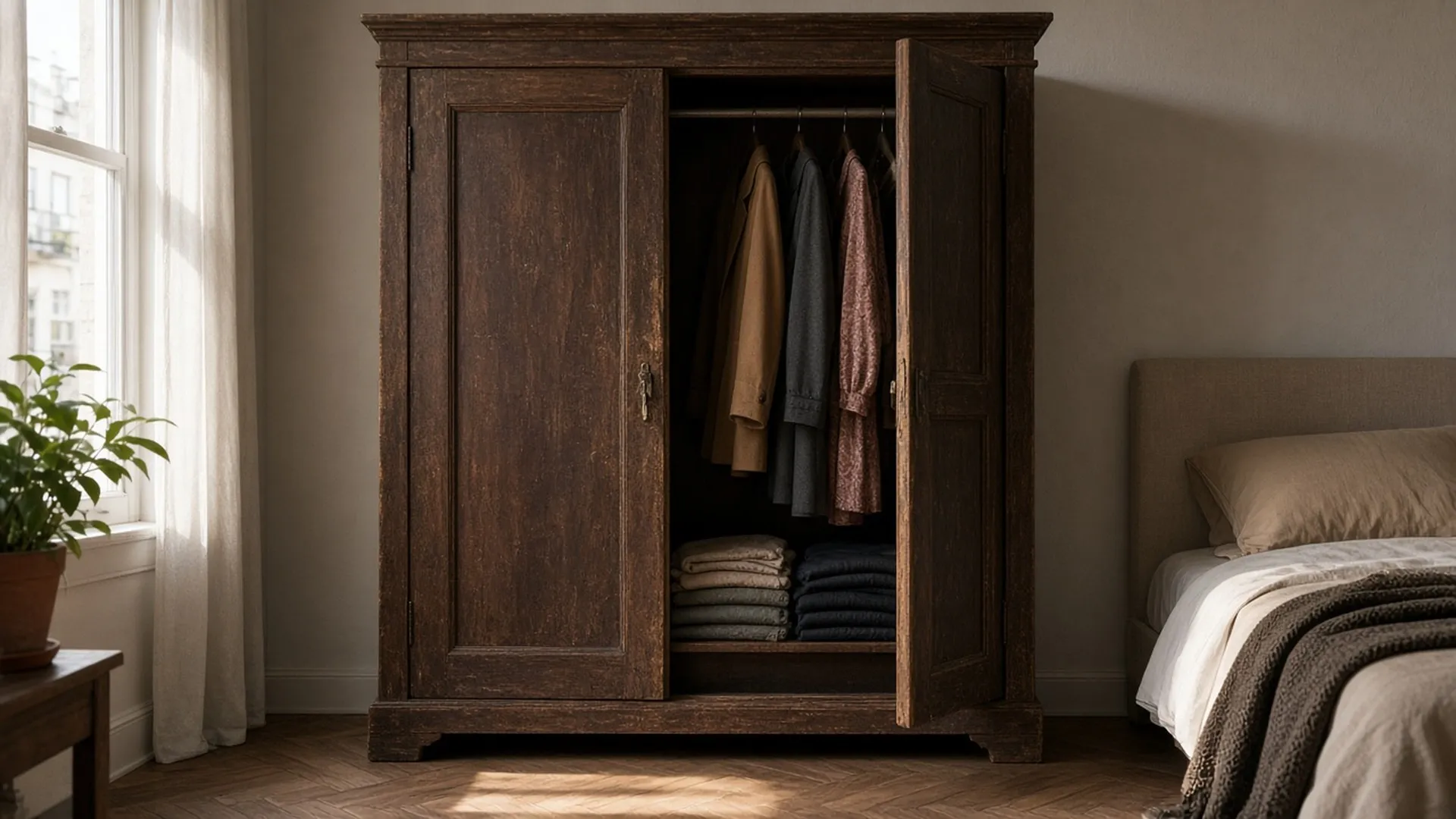
My mother's wardrobe stood against the bedroom wall of our flat in Istanbul, dark wood, two doors, a key that nobody ever turned. When I was small I thought it was enormous. When I went back as an adult I realised it was quite modest, and that it had only seemed enormous because of how little was inside it.
It did not change. That is the thing I remember most. Other mothers had seasons, new things arriving in bags, old things passed to cousins. Mine had the same wardrobe, more or less, for as long as I can recall. A navy skirt, a grey skirt, a camel one. A handful of white and ivory blouses. Two cardigans. One good wool coat. A silk scarf in a faded pattern of small blue flowers. A pair of black shoes that went to the cobbler more often than they went to parties.
As a teenager I found this unbearable. I wanted her to be more interesting. It took me an embarrassingly long time, and a move to New York, and a great many things I bought and did not wear, to understand that she was the most interesting dresser I knew.
She did not have a style. She had a decision, and she had made it before I was born.
The wardrobe.
Everything in it went with everything else. This was not an accident and it was not a theory. She simply never bought anything that did not have at least three friends already hanging beside it. If something new came into the house, it was usually because something old had worn out, and the new thing looked very much like the old one.
It smelled of lavender, from small cloth bags she tucked between the folded cardigans, and faintly of the iron. Blouses were hung buttoned at the top so the collars held their shape. Skirts were folded over the bar of the hanger, never clipped, because clips left marks. The coat hung at one end with space around it, as if it were a guest.
I did not notice, at the time, that she always looked right. Not fashionable. Right. Appropriate to the morning, to the market, to the wedding, to the hospital visit, to the long Sunday lunch. The same few things, rearranged, and somehow they were always the correct answer.
Subtraction, at the door.
There was a mirror in the hallway by the front door, and she stopped at it every time she went out. Not to add. To take away. A brooch would come off and go into the dish on the side table. The scarf would be untied and retied more simply. Once, memorably, an entire cardigan went back to the bedroom while the rest of us waited with our coats on.
I asked her about it once, when I was old enough to be rude. She said, roughly, that by the time you are dressed you have usually put on one thing too many, and the mirror is where you find out which one. Then she went out, and I stood there, slightly annoyed that it was such a good answer.
I have spent a lot of my working life writing about beauty, and I have still not found a better principle than that one. Most faces look better with one product removed. Most rooms look better with one object removed. Most outfits, certainly, look better with one thing left on the dish by the door.
Elegance is mostly what you decided not to wear.
What I took.
The scarf, literally.
The blue flowered one. I asked for it on a visit some years ago and she handed it over with the air of someone giving away a spare umbrella. It lives in my coat pocket in winter. I tie it the way she did, once around and loosely knotted, and it is the only accessory I own that people ask about.
The brush.
She brushed her coat every time she came in, a few strokes down the shoulders and the front, before hanging it up. I do the same. It is the reason my own coat has lasted as long as it has, which I have written about in the coat column, and which I did not credit her for at the time.
The mirror by the door.
I have one in my New York apartment, in the narrow hall, exactly where hers was. I stop at it. I take something off. Most days it is the second ring or the earrings I put on in a moment of optimism. I have never once regretted it on the stairs.
The cobbler.
Her shoes were resoled and reheeled until the uppers gave out, which took years. I have found a cobbler near me and I go more often than I would admit to most people. It is cheaper than new shoes, and the shoes fit better each time, because they already know me.
The idea, otherwise.
The thing I really took was not an object. It was the permission to stop. To decide what suits you, buy it well, look after it, and then get on with your day. She did not think about clothes very much, and I think that is precisely why she wore them so well. She had done the thinking once, properly, and then stopped.
What she would say about this.
She will either not read this or she will read it and say nothing, which in our family amounts to the same review. If she says anything, it will be that I have made a great deal of something very simple. She would be right. She usually is, about clothes. I have simply needed a few more words than she ever did to get there.
She never told me how to dress. She just stood at the mirror, took something off, and went out.
The wardrobe columns that grew out of this are one blue shirt worn fourteen ways and dressing for the room, not the camera, both of them about owning less and wearing it well. The cobbler's counterpart for clothes is a tailor on a side street.
Filed by Nelly, from the desk · Wardrobe / Essay