Why Your Body Lotion Fails Before Lunch
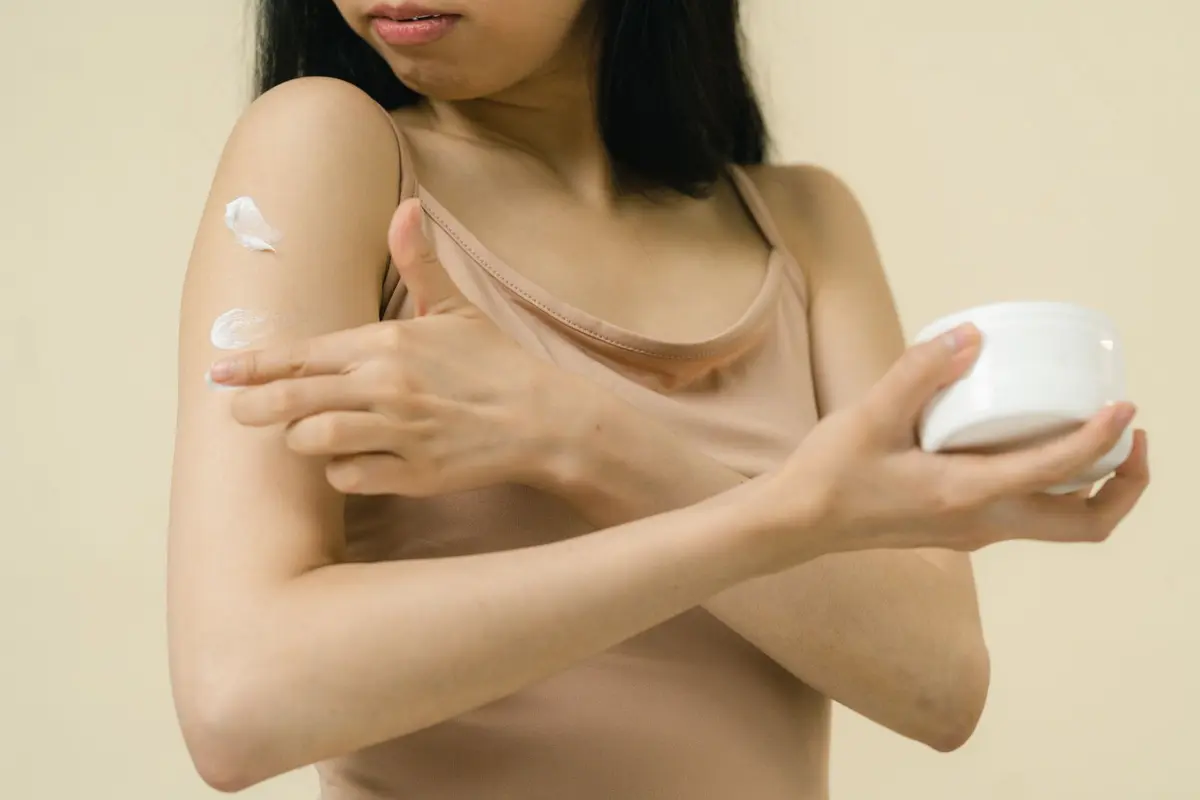
Most body moisturisers do not fail because of their formulation, but because of the state of the skin upon application. When you wait until your skin is completely dry to apply lotion, you miss the primary window for occlusive sealing. The hydration you seek is not found in the cream itself, but in the residual water from your shower that you are trapping against the epidermis.
Adjusting your routine to prioritise moisture retention requires only a change in timing. By working with the skin's natural permeability immediately after bathing, you extend the efficacy of your existing product through the entire workday.
- Difficulty
- Beginner
- Total time
- 5 minutes
- Cost
- Product dependent
- Cadence
- Daily post-shower
Ingredients
- Glycerin: A humectant that pulls water into the skin.
- Ceramides: Lipids that help reinforce the skin barrier.
Tools List
- Microfiber towel
- Hydrating body lotion
- Lightweight cotton robe
Step by step
Limit the post-shower dry
Do not towel your skin until it is bone dry. Instead, pat the skin gently with a towel to remove large water droplets, leaving the surface feeling damp to the touch. This thin layer of moisture is the vehicle your lotion requires to penetrate and seal effectively.
Tip: Use a microfiber towel to avoid abrasive friction.Apply while steam persists
The ideal environment for application is within the bathroom where the humidity remains elevated. Keeping the door closed helps maintain this ambient moisture, which prevents the immediate evaporation of the water currently on your skin. Apply your lotion in sections, starting from the extremities and moving toward the torso.
Tip: Keep your lotion bottle inside the shower stall for accessibility.Use a cross-hatching motion
Rather than rubbing the product in until it disappears, use a press-and-glide motion. This ensures an even distribution across the skin surface. Covering the entire area thoroughly creates a more robust barrier against the dry air of the house or office.
Tip: Avoid over-massaging, which can lead to pilling.Allow for initial absorption
Wait at least thirty seconds before allowing clothing to touch the skin. If fabric adheres to the skin immediately, it will wick away the moisture you just applied, effectively negating the benefits of the lotion. Stand still and allow the product to settle into the outer layer of the stratum corneum.
Tip: A lightweight robe is ideal for this waiting period.Layer if necessary
If you find your skin remains dry by midday, apply a second, thinner layer to high-friction areas such as elbows and knees. Focus this second application specifically on the joints where movement often breaks down the moisture barrier. This reinforcement prevents the premature loss of hydration throughout the day.
Tip: Apply in thin layers rather than one heavy glob.
Trouble
Why does my lotion pill on the skin?
Pilling usually occurs due to over-application or rubbing the skin for too long. Use less product and focus on pressing it into the skin rather than massaging it vigorously.
Does water temperature affect my lotion?
Yes. Very hot water strips the skin of natural oils, making it harder for any lotion to restore balance. Keep shower water lukewarm to preserve the lipid barrier.
Should I apply lotion to my face?
No. Body lotions are often formulated with heavier occlusives and higher fragrance levels that may be unsuitable for the thinner, more delicate skin on the face.
Can I use an oil instead?
Oils are effective sealants but lack the water content of lotions. For best results, use a water-based lotion first, then seal it with a light layer of oil if needed.
The cream is not the hydration; it is the seal that keeps the water in.
Consistency in application timing is the most overlooked variable in skin care.
More: the post-shower window, lotion vs cream vs butter and which oils absorb fastest.