Detangling Spray or Conditioner: The Choice Explained
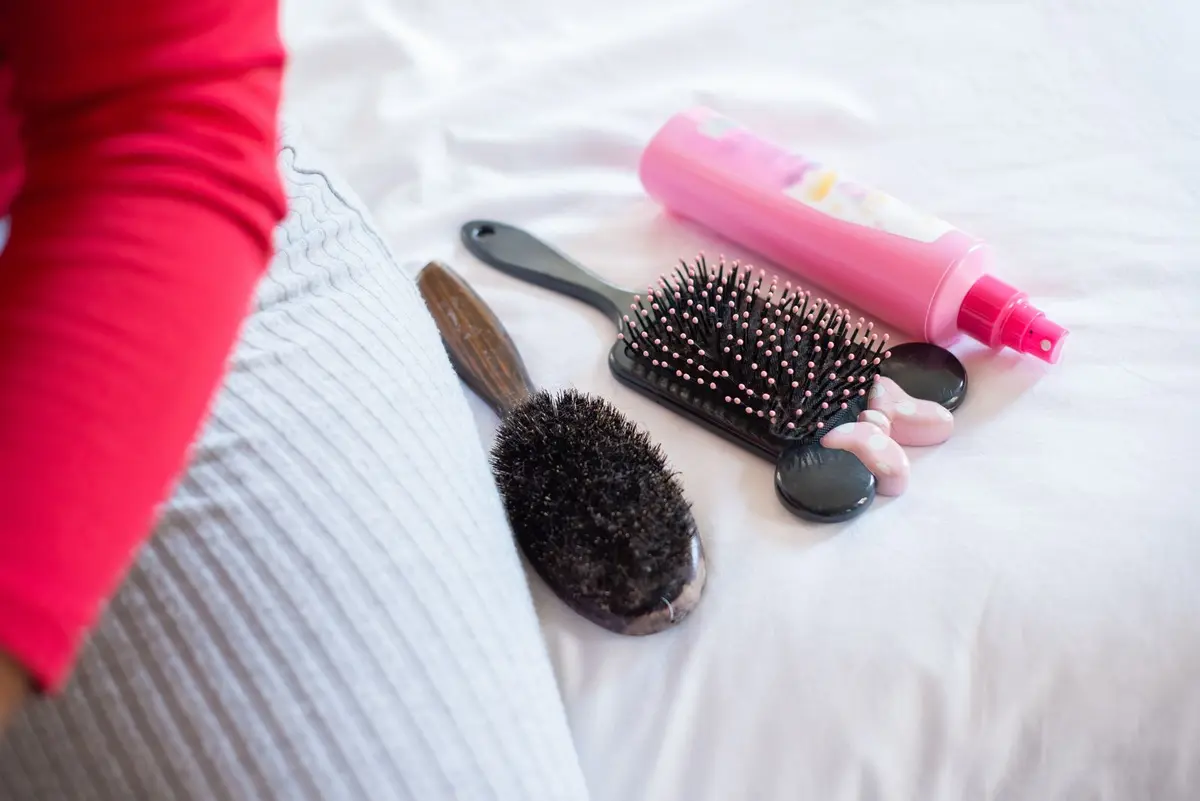
The distinction between a rinse-out conditioner and a detangling spray is structural rather than purely cosmetic. Conditioner is engineered to penetrate the cuticle and deposit weight, providing long-term structural lubrication. A detangling spray functions as a temporary surface tension reducer, designed specifically for immediate friction relief during mechanical styling.
Selecting the incorrect product for your immediate goal often leads to either heavy, limp hair or insufficient slip during the brush-out process. This guide defines the specific use cases for each, ensuring you maximize the utility of your current kit.
- Difficulty
- Beginner
- Total time
- 10 minutes
- Cost
- Low
- Cadence
- Daily for detangling, bi-weekly for deep conditioning
Ingredients
- Cetrimonium Chloride: Common in sprays for antistatic properties
Tools List
- Wide-tooth comb
- Microfiber towel
Step by step
Prepare the hair texture
Begin with damp hair, as dry hair is prone to mechanical snapping regardless of the product used. If you are using conditioner, ensure the hair is saturated in the shower. If you are using detangling spray, mist the hair lightly to restore elasticity before beginning the detangling process.
Tip: Use a microfiber towel to remove excess water before applying either product.Distribute the agent
Apply conditioner strictly from mid-lengths to ends, using a wide-tooth comb to push the product into the strands. For detangling spray, focus on the knotted areas only, spraying from a six-inch distance to ensure an even, light coating. Over-applying spray can leave a tacky residue that attracts dust.
Tip: Finger-rake the product through to ensure no section is left untreated.Execute the detangle
Always start at the bottom of the hair and work toward the root. Use a slow, controlled motion to work through snags. If using conditioner, rinse thoroughly with cool water to close the cuticle; if using spray, allow the hair to air-dry or proceed immediately to styling.
Tip: Never force the comb through a tight knot.Final seal
Once the hair is fully detangled, avoid over-brushing, which generates static. If you have fine hair, stick exclusively to light detangling sprays. For thicker, coarser textures, a leave-in conditioner or rinse-out product is mandatory to maintain control throughout the day.
Tip: Store your detangling tools away from steam.
Trouble
My hair feels greasy after using spray.
You are likely over-applying. Reduce the quantity to a light mist and focus only on the tips.
Why does my hair still tangle after conditioner?
The product may not be reaching the inner sections. Try sectioning your hair into four quadrants during the conditioning phase.
Can I use both at once?
Yes, if the hair is severely matted. Use the conditioner first as a base, then the spray to provide slip for the final pass of the comb.
Does the spray replace a leave-in conditioner?
Generally, no. Detangling sprays are thinner and offer less humectant benefit than a dedicated leave-in product.
Conditioner changes the structure; detangling spray changes the surface.
Consistency in your detangling method saves more length than any miracle product.