The barrier, explained calmly
Everything you own is either protecting your skin barrier or quietly dismantling it. No panic, no jargon — just what the barrier is, and how to stop fighting it.
Everything you own is either protecting your skin barrier or quietly dismantling it. No panic, no jargon — just what the barrier is, and how to stop fighting it.
The word barrier has been through the marketing department, and it came out sounding like an emergency. Barrier repair. Barrier rescue. Barrier-damaged, said with the tone people usually reserve for structural engineers. I would like to take some of the drama out of it, because the drama is part of the problem. A frightened person buys four new products, and four new products are very often how the barrier got into trouble in the first place.
So, calmly. Your skin barrier is the outermost layer of your skin doing its ordinary job. It is not a product, it is not a trend, and it is not fragile in the way the bottles suggest. It is quite good at what it does. What it is not good at is being interfered with every evening by someone who means well.
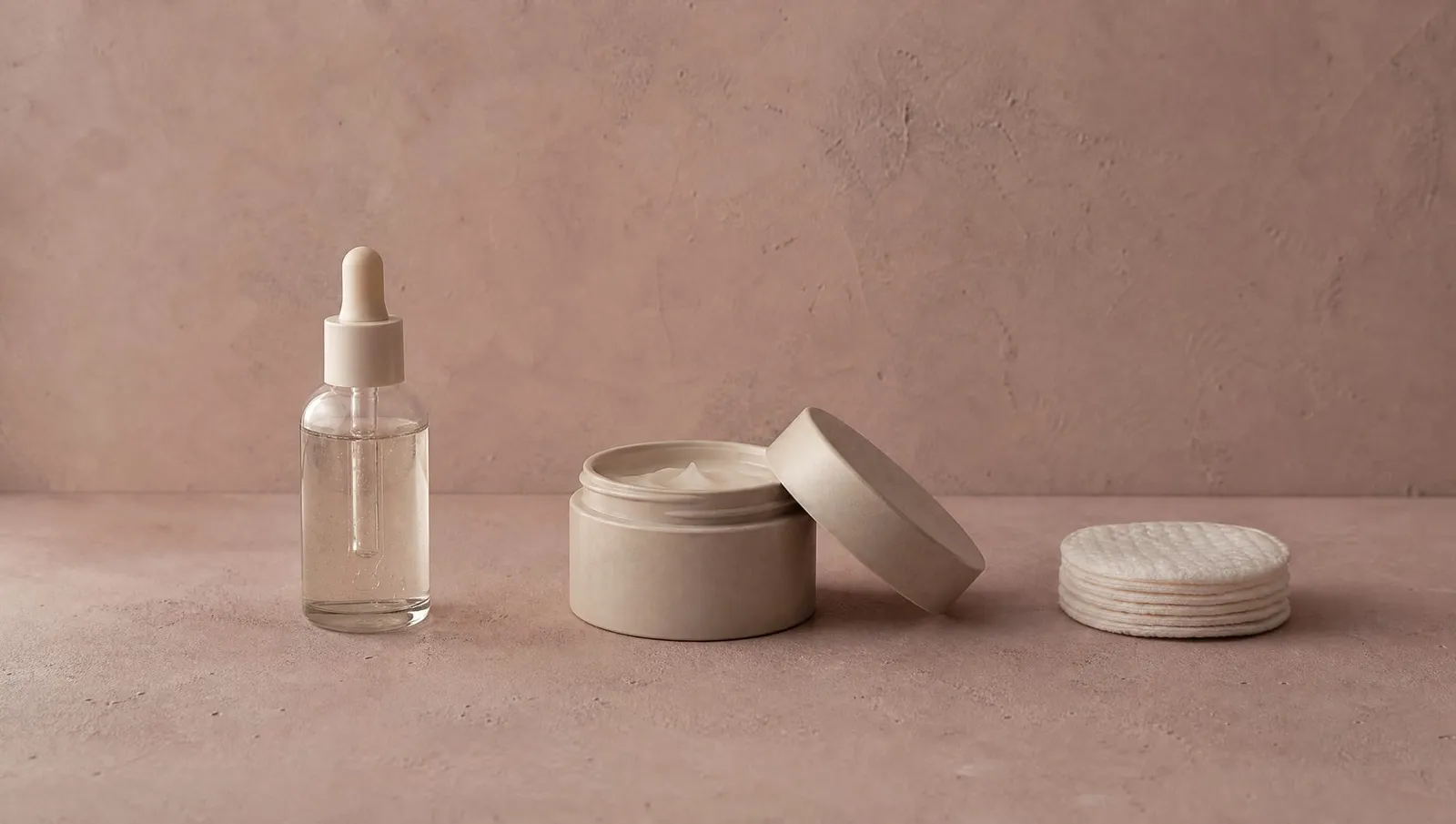
A frightened person buys four new products, and four new products are very often how the barrier got into trouble in the first place.
What it is.
The image that gets used most often is a brick wall, and it is a decent one, so I will use it too. The bricks are flattened skin cells at the very surface. The mortar between them is a mix of fats your skin makes itself — ceramides are the ones you will see named on labels — and the two together form a layer that keeps water in and keeps most of the outside world out.
That is the whole job. Keep water in, keep irritants out. When the wall is intact, you do not notice it at all, which is the point. Your face feels like nothing in particular. Water does not sting. Your moisturiser goes on without a reaction. You forget about your skin for whole afternoons at a time.
The wall also rebuilds itself, constantly and without being asked. You do not have to manufacture the mortar. You only have to stop knocking holes in it faster than it can be patched.
How it tells you it is unhappy.
A barrier under strain is rarely dramatic. It is annoying. The signs are small and they tend to arrive together:
- Products that used to be fine now sting for a moment when they go on.
- Your face feels tight soon after cleansing, and stays tight.
- Fine flaking appears in the same places — the sides of the nose, the chin, between the brows.
- A flush across the cheeks after washing that takes longer to fade than it used to.
- Skin that feels oily and dry at once, which sounds impossible and is extremely common.
None of these on its own is a diagnosis. Together, they are usually the skin saying that it has been asked to do too much. If what you have is a rash that spreads, redness that does not come and go but stays fixed in place, swelling, or anything that itches badly or will not settle after a few weeks of being gentle, that is not something to solve with a moisturiser, and it is worth seeing a dermatologist or your GP.
What quietly dismantles it.
This is the uncomfortable section, because the list is mostly things people do on purpose, in the name of good skin.
Too much exfoliating.
Scrubs, acid toners, peeling pads, an acid serum on top of an acid cleanser. Each one removes some of the surface, which is what it is for. Used occasionally, that is fine. Used every night, in combination, you are taking bricks out faster than they can be replaced, and then wondering why the wall leaks.
Too many actives at once.
A retinoid, an acid and a strong vitamin C can each be perfectly sensible. Stacked in one routine, started in the same week, they are a schedule your skin never agreed to. The trouble is rarely one product. It is the accumulation.
Hot water and harsh cleansing.
Hot water feels thorough and it takes fats off the surface along with everything else. A cleanser that leaves you squeaky is doing the same. Lukewarm water and a gentle cleanser are dull advice, and they are most of the answer.
Friction, weather, and fragrance.
Rough towels and enthusiastic rubbing. Cold wind outside and central heating inside, which together make a London February. And for some people, fragrance in skincare, which intact skin may tolerate perfectly well and irritated skin very often does not. None of these is a villain. All of them add up.
How to stop fighting it.
The answer is less, and it is less for longer than you would like.
Cleanse gently, once or twice depending on the day, with lukewarm water. Put on something plain and fragrance-free afterwards to slow down how fast water leaves the skin — a moisturiser, an oil, whatever your face is comfortable under. Wear sunscreen in the morning, because sun is one more thing the wall has to defend against. Use your actives one at a time, on a few nights a week, and not all in the same fortnight. Pat rather than rub. Give the whole thing weeks rather than days.
If your skin is already in the state I described above, the quicker route is to stop everything that is not essential for a while and then bring things back slowly, one at a time. I have written that up step by step in the barrier rebuild week. It is deliberately boring, and it works because it is boring.
The thing I most want you to take from this is that a healthy barrier is not something you buy. It is what is left when you stop getting in its way. The best compliment your skin can pay you is that you forget it is there.
A healthy barrier is not something you buy. It is what is left when you stop getting in its way.
Filed by Nelly, from the desk · Skin / Sensitive