Diffuser or Blowdryer: Selecting the Right Drying Tool
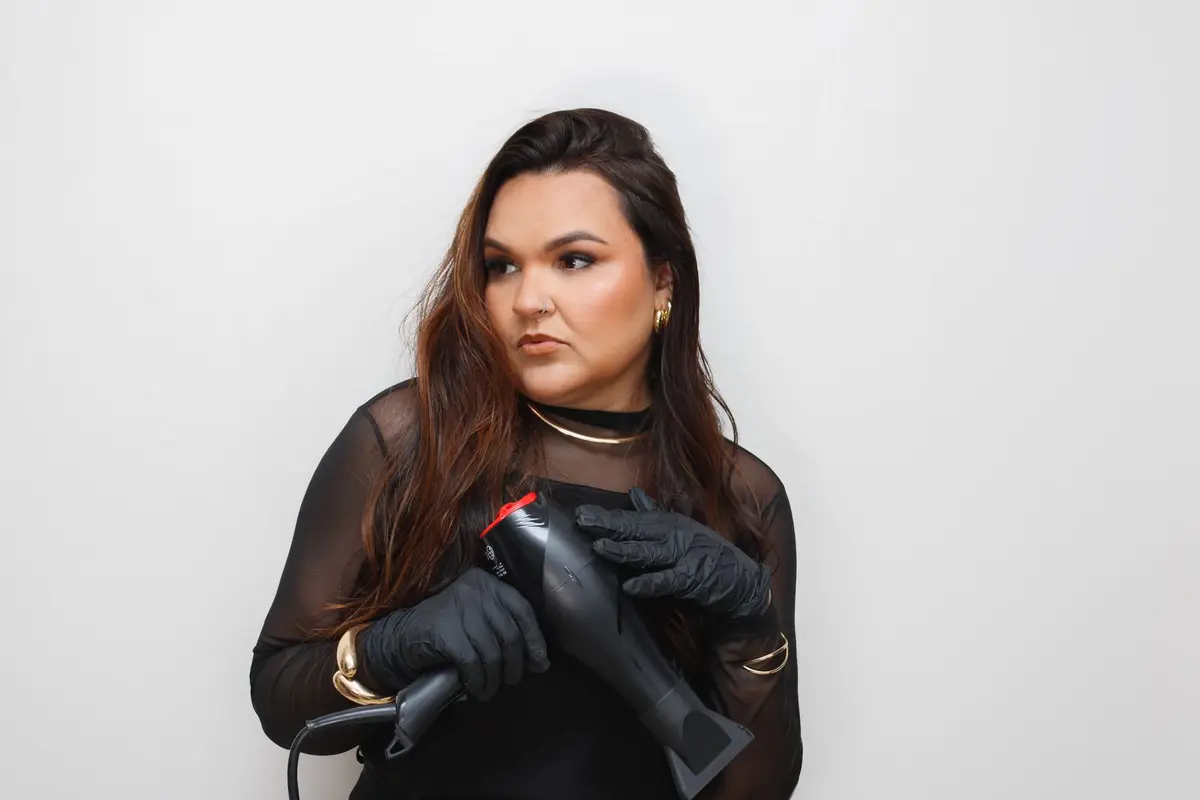
Drying hair is a foundational step that dictates the longevity and shape of a style. Most standard blowdryers are capable of two distinct modes of operation depending on the nozzle attachment used. Choosing between a concentrated stream of air and a diffused, gentle breeze changes how the hair fiber behaves during the transition from wet to dry.
Understanding when to use each configuration prevents unnecessary mechanical stress. Selecting the appropriate tool requires an assessment of your hair’s natural texture and the desired final silhouette.
- Difficulty
- Beginner
- Total time
- 15 to 45 minutes
- Cost
- One-time investment
- Cadence
- Weekly
Ingredients
- Heat: Used to evaporate water; must be managed via tool distance.
Tools List
- Blowdryer with variable heat/speed settings
- Diffuser attachment
- Concentrator nozzle
- Microfiber towel
Step by step
Begin with moisture removal
Use a microfiber towel to remove excess water until the hair is damp rather than soaking wet. Avoid rubbing the hair with the towel, as friction disrupts the cuticle. Blotting preserves the integrity of the strand before heat is introduced.
Tip: Damp hair dries faster and requires less heat exposure.Select the nozzle configuration
Attach the concentrated nozzle if you intend to smooth the cuticle for a sleek finish. If you aim to preserve natural waves or curls, attach the diffuser. Ensure the attachment is clicked firmly into the dryer barrel to prevent it from detaching during operation.
Tip: Check the attachment stability before turning the dryer on.Apply airflow with steady motion
If using a concentrator, point the air downward from root to tip to smooth the hair surface. If using a diffuser, cup the hair within the prongs and lift toward the scalp, holding the dryer steady for several seconds. Do not rake through the hair while it is wet to maintain texture shape.
Tip: Keep the dryer moving to avoid localized overheating.Cool the hair
Switch the dryer to the cool setting once the hair is 90 percent dry. This step sets the shape and closes the cuticle. Distribute cool air evenly across the entire head to finalize the style.
Tip: Cool air is the most effective way to lock in volume.Final check
Inspect the hair for any remaining damp spots, particularly at the nape of the neck or roots. Once the hair feels entirely room temperature and dry, the styling process is complete. Avoid further manipulation until the hair has fully cooled.
Tip: Wait until cool to touch before pinning or brushing.
Trouble
Why is my hair frizzy after diffusing?
You may be touching the hair too much while it is damp. Let the diffuser do the work and resist the urge to run your fingers through the curls.
Is the concentrator necessary for straight hair?
Yes. Without it, the airflow is too turbulent, which forces the strands to move erratically and creates unnecessary friction.
How can I tell if my dryer is too hot?
If you cannot comfortably hold your hand in the airflow, it is too hot. Lower the heat setting immediately to prevent damage to the hair protein.
Can I use a diffuser on short hair?
Yes, it provides controlled volume without blowing short layers into messy positions. Use the diffuser prongs to gently lift the roots.
The diffuser mimics air drying; the concentrator forces the hair into a specific, structured shape.
Focus on airflow management rather than products.