Mastering the Plopping Hair Technique
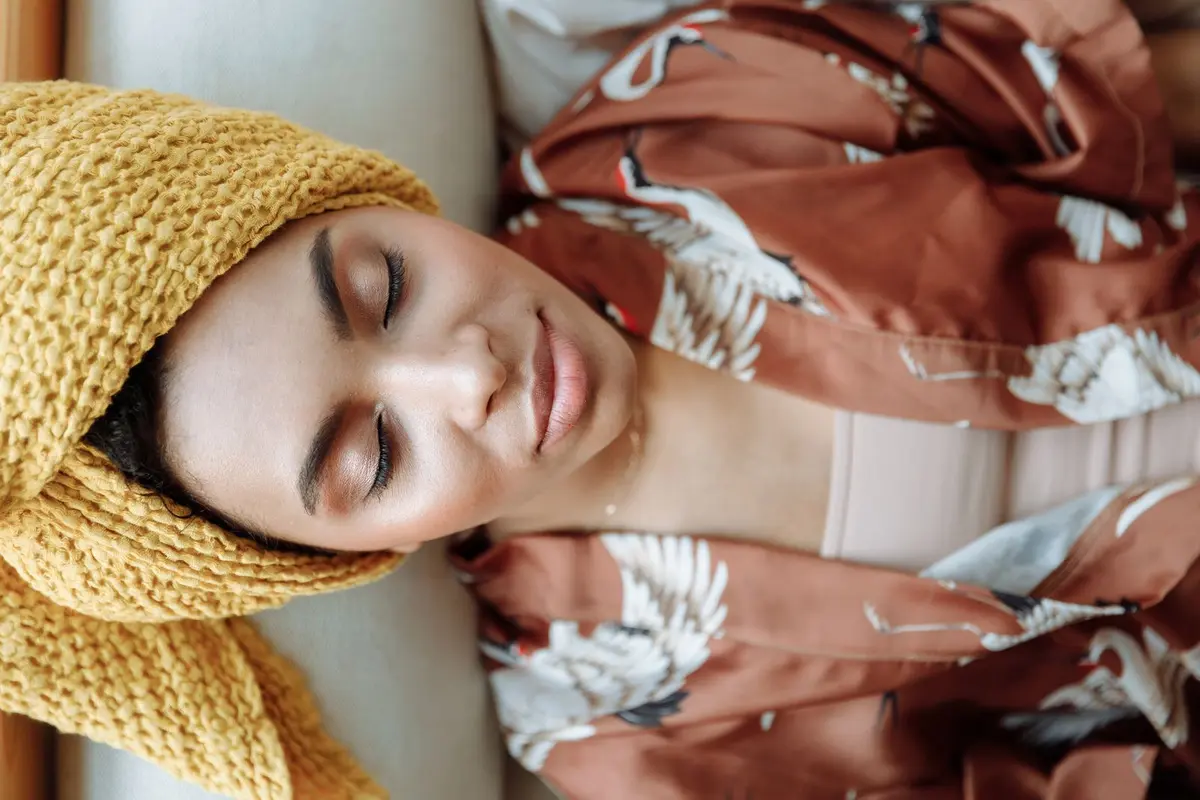
Plopping is a drying technique designed for those with natural wave or curl patterns. By utilizing a soft, absorbent material rather than a traditional terrycloth towel, you reduce the mechanical friction that causes disruption to the hair cuticle. The goal is to encourage the hair to remain in its natural coil while removing excess moisture.
This process does not require specialized equipment, only a cotton t-shirt or a dedicated microfiber wrap. Consistency is the primary factor in achieving uniform results across your texture.
- Difficulty
- Beginner
- Total time
- 30 minutes
- Cost
- Low
- Cadence
- Each wash day
Ingredients
- None: This is a mechanical process only
Tools List
- Clean long-sleeved cotton t-shirt
- Digital timer
- Optional: Hair diffuser
Step by step
Prepare your surface
Lay a long-sleeved cotton t-shirt flat on a surface like a bed or chair with the neck closest to your body. Ensure the fabric is clean and free of heavy residues that might transfer to the hair. Smooth the fabric out to avoid unnecessary creases that could leave lines in the hair pattern.
Tip: Old cotton is often softer and more absorbent than new jersey.Position the hair
With your head tilted forward, lower your hair into the center of the shirt. Ensure the ends of your hair are touching the fabric first, allowing the lengths to fold accordion-style toward your scalp. Do not twist or scrub the hair during this process.
Tip: Keep your head steady to maintain the integrity of the curls.Secure the wrap
Take the bottom hem of the shirt and bring it up to cover the nape of your neck. Take the sleeves and tie them firmly around the back of your head, ensuring the fabric is snug against the scalp. Tuck in any loose ends to ensure the entirety of the hair is contained within the wrap.
Tip: Use a knot that is easy to untie.Wait for absorption
Leave the wrap in place for approximately twenty minutes. This allows the fabric to pull excess water away from the hair strands while the curls remain in a compressed, clumped state. Avoid exceeding thirty minutes to prevent the hair from becoming too damp and heavy from prolonged confinement.
Tip: Set a timer to ensure consistency.Remove and diffuse
Gently untie the sleeves and release the hair. Do not comb or rake your fingers through the hair, as this will break up the clumps formed during the drying process. Air dry the remaining moisture or use a diffuser on a low-heat, low-airflow setting.
Tip: Shake the hair gently at the roots to add volume.
Trouble
Why is my hair flat at the roots?
You may be leaving the wrap on for too long or wrapping it too tightly. Limit the time to fifteen minutes and ensure you do not pull the hair taut against the scalp when securing the sleeves.
Is the fabric choice important?
Yes. Avoid terrycloth, as the loops in the fabric catch the hair and cause fraying. Cotton jersey or microfiber cloths provide a smooth surface that minimizes mechanical disturbance.
Can I leave this on overnight?
No. Leaving hair wrapped for extended periods can cause irritation to the scalp and encourage the hair to remain in a damp state for too long, which is unnecessary for styling.
What if my curls are still frizzy?
Ensure you are not touching or manipulating the hair while it is wet. The plop is intended to set the hair in place; touching it after release will disrupt the clumps.
The objective of the plop is to let gravity assist in curl definition, not to force a style.
Consistency is the only metric that matters here. Do not experiment with new variables until you have mastered the base technique.
Wondering how long to leave the shirt on? Why plopping duration matters tests ten minutes against twenty; other ways to dry, from towels to diffusers, are compared under drying decision, and wash and styling schedules live in hair routine.