Why the Taper is the Best Cut for Fine, Straight Hair
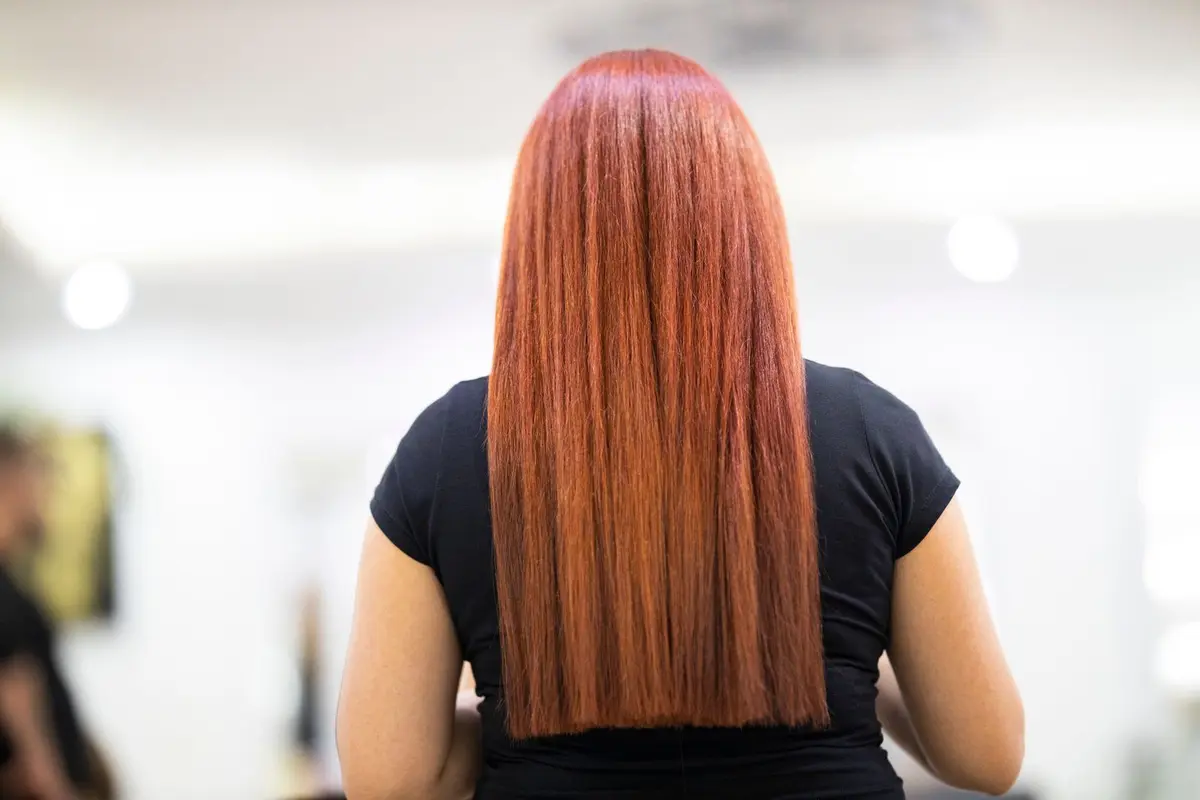
Fine, straight hair often suffers from a lack of density at the perimeter. When the ends are cut bluntly, the hair tends to look sparse and heavy at the bottom, creating a triangle effect that does not flatter the face. A taper, however, removes bulk from the mid-lengths to the ends, allowing for a refined, intentional shape.
By tapering the hair, you introduce subtle variation in length. This prevents the ends from clumping together and instead encourages them to fall with individual movement. It is a structural shift that makes fine hair appear more purposeful.
- Difficulty
- Beginner
- Total time
- 45 minutes
- Cost
- Low to Moderate
- Cadence
- Quarterly
Ingredients
- N/A: This guide focuses on mechanical cutting technique.
Tools List
- Professional thinning shears
Step by step
Prepare clean, dry hair
Ensure the hair is freshly washed and completely dry. Do not attempt a precision cut on damp hair, as fine, straight hair expands and shifts when wet. Brush through the lengths to remove all knots or tangles.
Tip: Use a light, non-greasy detangler to ensure the comb glides through.Section the hair
Part the hair according to your natural preference. Divide the hair into four manageable quadrants using clips. This prevents uneven cutting and ensures symmetry across the left and right sides of the head.
Tip: Secure sections tightly to prevent slippage.Execute the point-cut
Working with thin vertical slices, lift the hair away from the head at a 45-degree angle. Using professional-grade thinning shears, cut into the ends at an angle rather than across the grain. This removes weight without creating a blunt line.
Tip: Less is more; remove small amounts of hair at a time.Refine the perimeter
Release the hair and check the length against a mirror. If the ends still feel too dense or blunt, repeat the point-cutting technique only on the final inch of the hair. Avoid cutting deep into the interior, as this will lead to visible layering or thinning.
Tip: Hold the shears parallel to the floor for consistency.Final polish
Comb the hair back to its natural fall to ensure the taper is uniform. If you notice any stray or heavy pieces, isolate those specific strands and repeat the point-cut. Ensure that no harsh lines remain.
Tip: Use a mirror behind you to verify the back silhouette.
Trouble
How do I know if I have taken too much off?
If your ends look translucent or feel like straw, you have over-thinned. Stop immediately and wait four weeks for the hair to recover before attempting further refinement.
My taper looks uneven after I wash it.
Fine, straight hair shows every error. Wet the hair, re-section it, and identify the heavy side. Use a mirror to cross-reference the length against the shorter side.
Can I do this with standard scissors?
Standard scissors are not suitable for a taper as they create blunt lines. You must use thinning shears or texturizing scissors to achieve the soft, tapered effect.
Why does my hair still feel heavy at the bottom?
You may not be pulling enough hair into the point-cut. Ensure you are working in smaller, thinner vertical sections to reach the bulk effectively.
A taper is a structural shift that makes fine hair appear more purposeful.
Consistency is the foundation of a good cut. Take your time.