Maintaining the Weight Line in a Bob
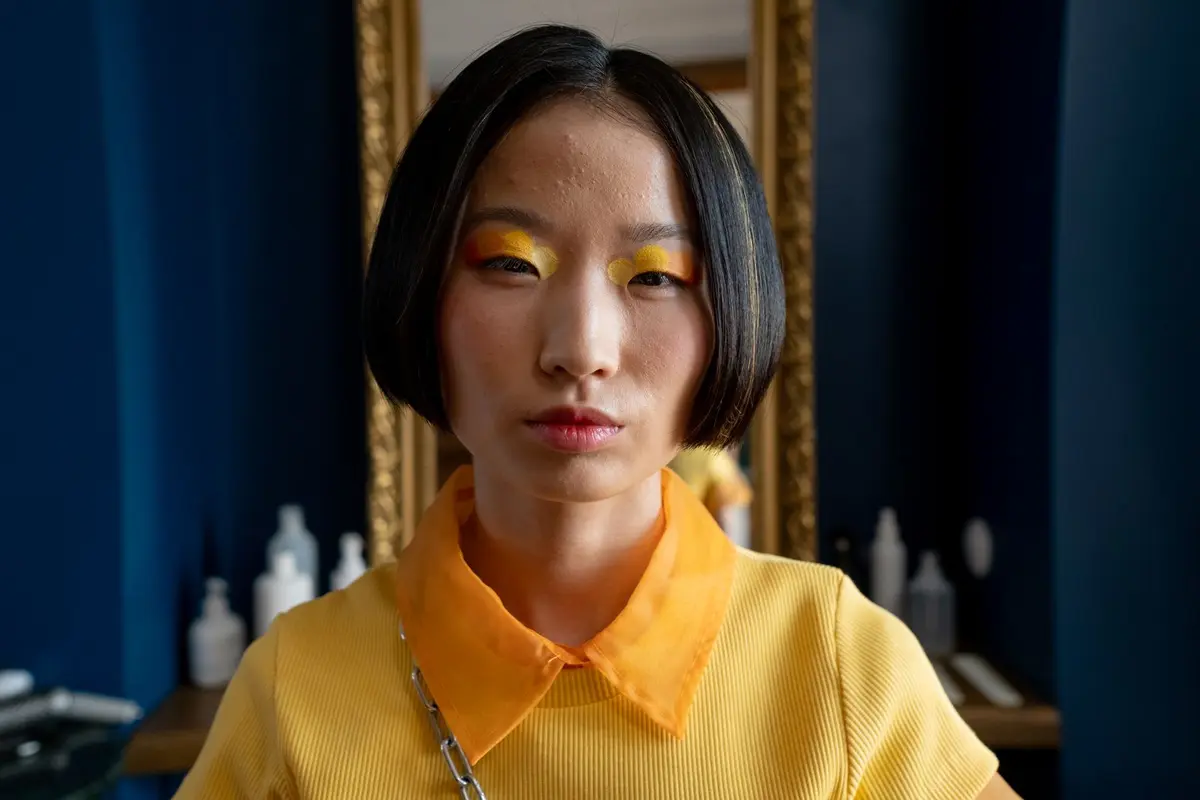
A bob relies on a precise weight line to maintain its shape. When heat styling is performed incorrectly, hair often flips outward or loses the density required to hold that crisp perimeter. The goal is to preserve the bluntness of the cut while smoothing the surface texture.
This process requires minimal equipment and a focus on controlled tension. By avoiding high-heat tools at the ends, you maintain the density necessary for the hair to drape correctly.
- Difficulty
- Beginner
- Total time
- 20 minutes
- Cost
- Low
- Cadence
- Weekly maintenance
Ingredients
- Thermal protectant: Forms a barrier against moisture loss
Tools List
- Boar-bristle round brush
Step by step
Section the hair
Divide the hair into four clean quadrants. Start by creating a center part, then section from the crown to behind each ear. Use flat clips to secure each section away from the ends to prevent creasing.
Tip: Use non-slip clips to avoid indentations.Apply a heat protectant
Distribute a lightweight thermal protectant evenly through damp hair. Focus on the mid-lengths, ensuring the ends receive only the remaining residue. Excess product on the ends will create unnecessary weight and cause the bob to separate.
Tip: A little goes a long way.Execute the tension blow-dry
Use a boar-bristle round brush with a small diameter to match the curve of the nape. Pull the hair straight down with consistent tension, keeping the dryer nozzle pointed downward. Stop the dryer three inches before reaching the ends to prevent over-drying the weight line.
Tip: Direct the airflow down the hair shaft.Set the ends with a paddle brush
Once the hair is 90 percent dry, switch to a paddle brush. Use the flat side of the brush to smooth the ends downward, allowing the natural weight of the hair to anchor the shape. This technique prevents the ends from curling upward.
Tip: Keep the brush movement slow.Final polish
Apply a single drop of finishing oil to your palms. Smooth your hands over the surface of the hair once to tame flyaways without breaking the structure of the weight line. Avoid the perimeter entirely to ensure the bob retains its bluntness.
Tip: Keep the oil off the ends.
Trouble
Why does my hair flip out at the bottom?
You are likely applying too much heat to the ends with the round brush. Stop your dryer early and let the hair air-cool in a downward position to maintain the shape.
How do I keep my bob from looking poofy?
Poofiness is often a result of over-drying. Ensure your hair is conditioned properly and use a paddle brush instead of a round brush for the final drying phase to keep the hair flat.
Is a flat iron necessary for a bob?
A flat iron is usually unnecessary and often damaging for a blunt cut. Controlled tension with a blow dryer and brush provides a cleaner, more natural result that preserves the weight line.
How often should I restyle?
Limit heat styling to your wash days. Constant reheating will compromise the density of the ends and cause the weight line to look thin or ragged over time.
The health of a bob is defined by the weight of its ends.
Focus on the downward tension, not the heat.