The barrier-rebuild week.
Seven nights of taking things away, then three weeks of putting them back one at a time. The week is the intervention; the repair takes a month.
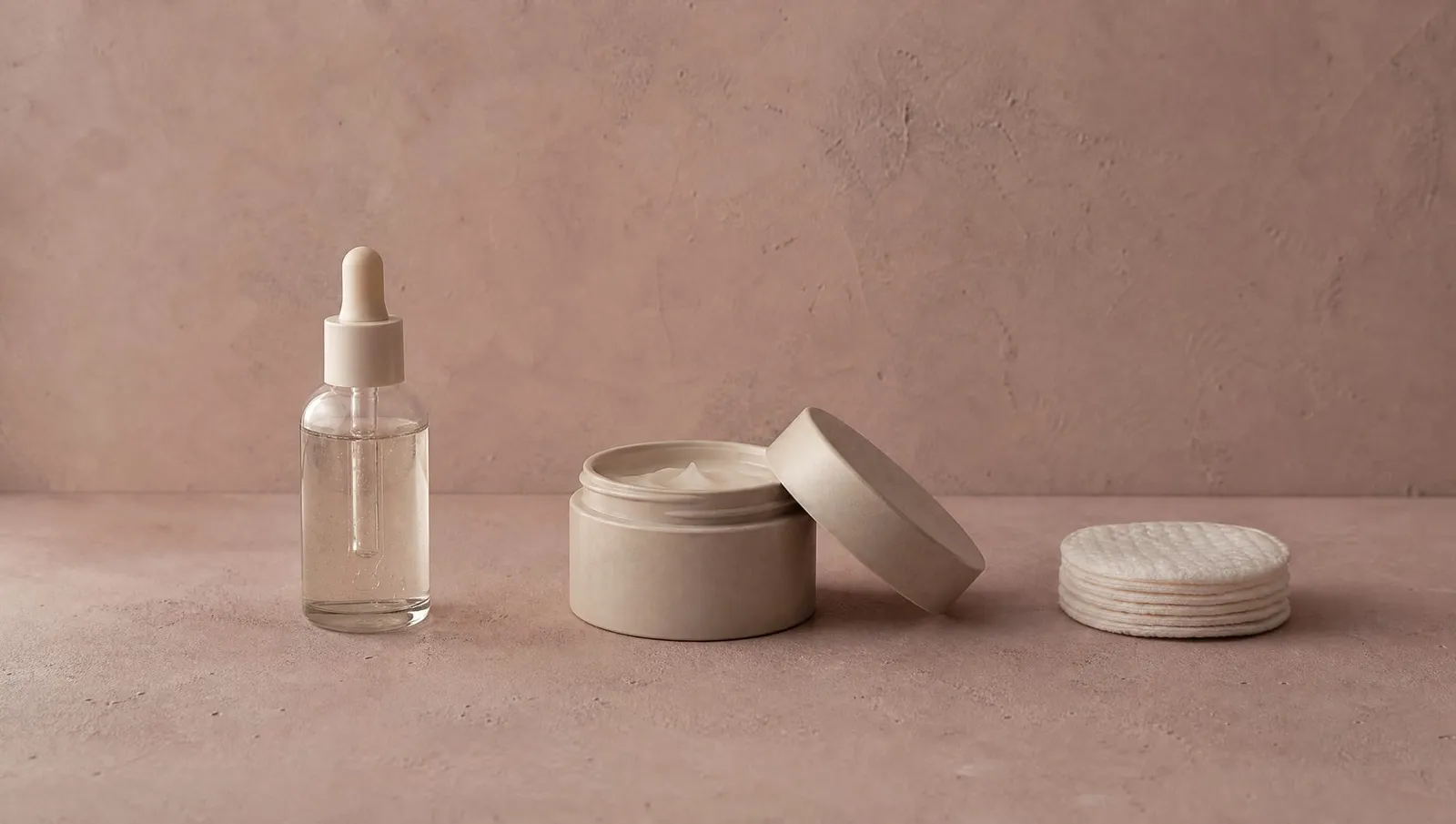
Seven nights of taking things away, then three weeks of putting them back one at a time. The week is the intervention. The repair runs closer to a month, and I have never found a version of this that works in four days.
You know the state I am describing. Water stings. Moisturiser stings, briefly, in a way it did not use to. There is a fine flake at the side of the nose that reappears an hour after you deal with it, and a flush across the cheeks that arrives at the end of a cleanse and stays for twenty minutes. Nothing is dramatic enough to photograph. Everything is annoying enough to think about all day.
This is a barrier that has been asked to do too much. Usually the cause is not one product but the accumulation of several — an acid on Monday, a retinoid on Tuesday, a vitamin C every morning, a scrub somewhere in there because the texture was not improving fast enough. Each one is defensible. Together they are a schedule your skin never agreed to.
What follows is what I do about it, and it is deliberately unimpressive. Seven nights, four products, no actives at all. Then three weeks of adding things back at a pace that feels absurdly slow until you understand what is being rebuilt: a lipid layer of roughly equal parts ceramides, cholesterol and fatty acids that your skin makes at its own speed and will not be hurried.
Beginner · About four minutes a night · Nightly for seven nights, then a slow return · Four products, three of which you probably own
Run the checks in your own bathroom light, and not in a magnifying mirror.
Four products, seven nights.
Night one · The subtraction — Take everything off the shelf.
Acids, retinoids, vitamin C, scrubs, clay masks, anything labelled resurfacing, and anything scented. Put them in a drawer rather than a bin, because most of them are fine and you will want them back in three weeks. Fragrance goes too, including the essential oils in the products marketed as gentle. If a barrier is compromised, the molecules that normally sit on the surface get further in than they were designed to, and that is where the stinging comes from.
The exfoliant is the hardest to give up, because texture gets slightly worse before it gets better. That bump is the old surface leaving. Do not treat it.
Every night · 40 seconds — A cleanse that barely counts.
Micellar water on a cotton pad, one pass over the face, a second pass only where there was makeup. No foam, no washcloth, no hot water. Water above about forty degrees pulls lipids out of the surface faster than anything you can put back, which is why the cleanse that feels most thorough is the one making this worse.
Do not rinse the micellar off this week unless the formula insists. One less exposure to your tap water, which may be harder than you think.
Every night · Within 60 seconds — Humectant on damp skin.
Hyaluronic serum goes on while the face is still faintly damp, not dry, and the window for that is shorter than the internet suggests — under a minute in a heated room. Two or three drops pressed in with flat palms. On dry skin in dry air a humectant has nowhere to draw water from except the layer underneath it, which is the opposite of the point, and it is why some people insist hyaluronic acid made their skin drier. They are not wrong. They were using it wrong.
If your bathroom is cold and the mirror stays clear, dampen with a splash of plain water rather than trying to be quick.
Every night · The seal — Three drops, pressed not rubbed.
Facial oil over the serum, warmed between the palms first, pressed onto the face in three or four contacts rather than massaged around. Massage on an inflamed barrier is friction you do not need this week. The oil is not treating anything; it is a lid on the water you just put in, and it cuts the overnight loss enough that you wake up without the tight feeling across the cheekbones.
If you own a plain squalane or a thick fragrance-free balm, either will do the same job. This is not the week for an oil blend with twelve botanicals in it.
Every morning · One product — Mineral SPF, and nothing underneath.
Rinse with cool water only, no cleanser, then mineral SPF straight onto the face. Zinc and titanium sit on top of the skin rather than absorbing into it, which is the entire reason to switch for these four weeks — chemical filters go where a damaged barrier will feel them, and the stinging you blamed on your sunscreen last summer was probably this. A mineral formula takes longer to rub in and leaves more of a cast. Neither is a reason to skip it.
Apply it in two thin layers a minute apart rather than one thick one. You get the same protection with half the white.
Weeks two to four · The return — One thing back, every fifth day.
This is the part everybody skips, and it is why the barrier week keeps having to be repeated. Add one product back, use it, then wait five days before adding the next. Moisturiser first if you missed yours, then sunscreen preference, then a single active — and the single active is usually not the one you missed most. If anything stings, flushes for more than ten minutes, or brings the flaking back, that product goes in the drawer for another month rather than being negotiated with.
Reintroduce a retinoid at two nights a week, on named nights, never at the frequency you were using before. Whatever that frequency was, it is part of how you got here.
The shelf — what this actually needs
- A micellar water with no fragrance in it
- A plain hyaluronic serum, applied damp
- A single-ingredient facial oil or squalane
- A mineral SPF 30 or higher
- A drawer for everything else
What’s in it
- Ceramides, cholesterol, fatty acids — The three lipids your barrier is made of, in roughly equal parts. Your skin makes them at its own pace.
- Hyaluronic acid — Holds water. Holds nothing at all if the skin under it is dry and the air is dry — apply damp, then seal.
- Zinc oxide — Sits on the surface instead of absorbing. The reason mineral SPF stings less on damaged skin.
- Fragrance and essential oils — Fine on intact skin, frequently the problem on compromised skin. The first thing out of the routine.
The Barrier Rebuild Week, itemized — Seven nights of subtraction. Four products, nothing else.
Nothing on this list repairs your skin. The list exists so that your skin can repair itself.
How to know it is working.
Two checkpoints, day seven and day twenty-eight, measuring different things. Most of the water loss stops within the first three days, which is why the first week feels like a success. The lipid layer takes closer to a month to replace, which is why week one is not the end of it. Run the checks in your own bathroom light, and not in a magnifying mirror.
- Day seven: plain water no longer stings, and the flush after cleansing is gone inside two or three minutes rather than twenty.
- Day seven: your face feels the same at 8pm as it did at 8am, with no tight patch at the cheekbones.
- Day twenty-eight: the fine flaking at the nose has not come back once, including on the mornings you were careless.
- If moisturiser still stings on day seven, you have missed something scented — check the cleanser, the SPF, and the hand cream you sleep in.
- If the redness is fixed in place rather than coming and going, this is not a barrier problem and it is worth a dermatologist rather than another week of oil.
When it isn't going to plan.
My skin got worse on days three and four. Do I stop?
No. Texture often gets slightly rougher before it settles, because you have removed the exfoliant that was taking the old surface off for you and your own turnover has not caught up. It resolves around day five. What should not happen is new stinging, new burning, or spreading redness — those mean something in the four products does not agree with you, and the most likely culprit is a scented micellar water.
Can I keep my vitamin C? It has never bothered me.
Keep it and the week does not work. Most vitamin C serums sit at a low pH by design, and a low pH on a compromised barrier is a sting waiting to happen even when it has been uneventful for two years. It goes back in during week three, and if it stings then, it was contributing all along.
I have oily skin. Does the oil step apply to me?
Yes, and it is usually the step oily skin needs most, because the barrier damage was caused by treating the oil. Use two drops rather than four and keep it off the t-zone if you would rather. Oil on the surface does not make sebum production worse; the acids you were using to control it did.
Do I need a ceramide cream on top of all this?
It is a reasonable addition and it is not a requirement. A plain occlusive does most of the same work for the price of a coffee. If you already own a ceramide moisturiser with no fragrance in it, use it in place of the oil rather than in addition to it — this week is short on purpose.
“The week is not the repair. The week is the pause that lets the repair start, and the repair takes about a month whatever the label says.” — Nelly
If you want the background before the method, the barrier, explained calmly covers what the barrier is, the small signs it is struggling, and the habits that usually wear it down.
Filed by Nelly, from the desk · 15 August · N. 11 · Skin / Sensitive