Two notes are a chord, three are a room.
Layering is arithmetic, not romance. One base, one heavy note, one light one — and a hard stop after that.
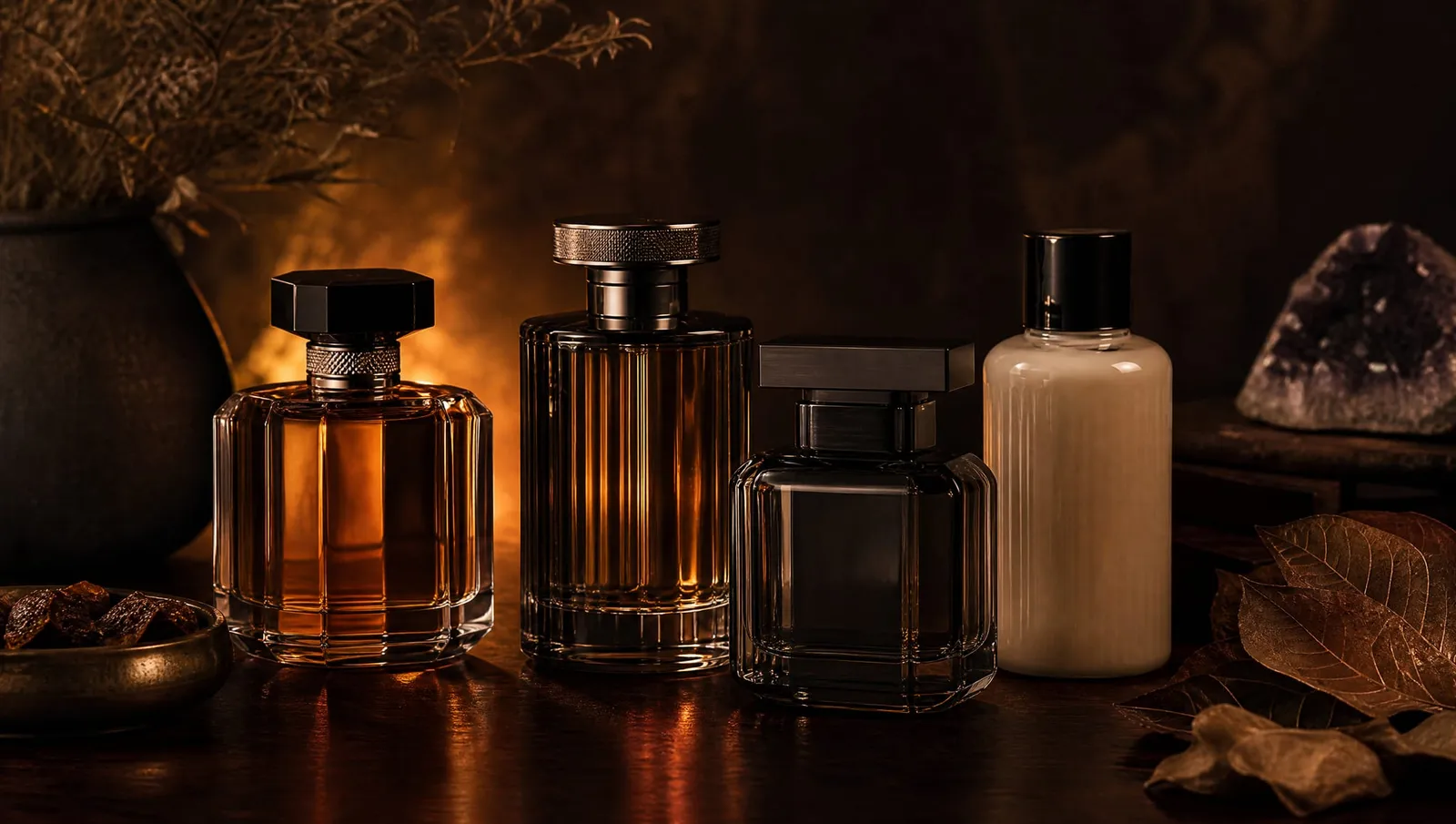
Layering is arithmetic, not romance. One base, one heavy note, one light one — and a hard stop after that.
Layering fragrance is sold as an act of self-expression and is in practice an act of restraint. The people who do it well are not adding. They are choosing two things that agree with each other and then stopping, which is far harder than it sounds when you own eleven bottles.
Here is the whole thesis, and I would rather you took this than any product name below. Two notes are a chord. Three are a room — pleasant if you built it deliberately, and disorienting if you did not. Four is a corridor nobody can get out of, least of all the person standing next to you on a tram. The failure mode of layering is not that it smells bad. It is that it smells like a decision somebody else made in a duty-free at midnight.
What follows is a base, a heavy note, a light note, and two disciplines that make them work: where not to put it, and how to check what you have done.
Intermediate · 3 min · Daily, or whenever you leave the house · ~€0 once the pair is chosen
The first time you are listening too hard, and the whole point of a good pairing is that it stops announcing itself and starts being what you smell like.
Three minutes, and then stop.
Step one · 60 seconds — Lotion first — scent needs something to hold.
Fragrance is volatile molecules leaving a surface, and the speed depends on what they are leaving from. Dry skin sheds a scent noticeably faster than moisturised skin — hours faster, in my own unscientific but very repeated experience with the same perfume on the same wrist. Unscented body lotion on damp skin after a shower gives the whole structure something to sit on. If your lotion is scented, that is your first note whether you meant it or not. Commit to it, or buy the unscented one and keep the decision for later.
Apply where the skin is warm and thin — inner wrists, the inside of the elbow, the base of the throat. Warmth is what pushes the molecules off you and toward everyone else.
Step two · 30 seconds — The heavy note goes underneath.
Order matters here for the same reason it does in skincare: heavier molecules evaporate more slowly, so they remain when everything above them has gone. Put the resinous or woody thing down first, close to the skin — an oil is ideal, being almost all base note with little alcohol to flash off. Two dabs, not sprays. On the throat and one wrist, and then leave the wrist alone. This is the note that will still be present at 6pm, so it should be the one you actually like rather than the one you were given.
Fragrance oils are stronger per drop than they smell in the bottle. Start with half of what you think, then judge it at twenty minutes, not at ten seconds.
Step three · 30 seconds — The light note goes over, and only just.
This is the note that greets people in the first ten minutes and then leaves — citrus, green, aldehydic, a light floral. One spray, from fifteen centimetres, into the air at the collarbone rather than onto the oil. What you are after is a second thing that agrees with the first, not a competitor. The reliable pairings are the boring ones: warm under citrus, woody under green, powdery under floral. What does not work, and I have tried it more than once out of stubbornness, is two florals. Two florals is not a chord. It is two people talking over each other.
If you can smell both notes distinctly, you have layered. If you can only smell the newer one, the top note is too loud — one spray, or step further back.
Step four · 10 seconds — Where it does not go.
Not on the hair, unless it is a proper hair mist — eau de parfum is drying and it sits there for days, long after you have changed your mind. Not on clothing: alcohol marks silk, and a fragrance developing against fabric rather than skin smells thinner and sharper. And not rubbed. Rubbing your wrists together does not help the scent develop, it crushes the top notes with friction and heat and skips you straight to the dry-down. Dab and leave. The most common layering mistake I see is not a bad pairing — it is a good pairing rubbed into oblivion in the first thirty seconds.
Behind the ears is a leftover from an era of higher collars. It puts a warm note directly under someone else's nose at hugging distance. Use it deliberately or not at all.
Step five · 20 minutes later — The twenty-minute test.
You go nose-blind to your own fragrance within about fifteen minutes — the receptors adapt, the signal stops registering, and this is the mechanism behind every person who has ever left the house wearing four times too much and felt fine about it. So the only honest reading comes after the alcohol has flashed off. Twenty minutes in, hold your wrist at the distance you would hold a book. If you can smell it there, it is right. If you have to press it to your nose, add one spray next time. If you can smell it without lifting your arm, you have built a room.
Ask one person you trust, once, and then never again. Anyone you ask twice will start being polite, and polite is useless data.
The shelf — what this actually needs
- An unscented body lotion
- One fragrance oil — the base of the chord
- One lighter fragrance to sit over it
What’s in it
- Ambroxan — The modern amber workhorse. Warm, faintly mineral, and it clings — exactly what you want underneath, and exactly why it overwhelms on top.
- Iso E Super — A soft woody molecule most people cannot smell in isolation. It makes other notes read fuller, which is why it is in almost every layering set sold.
- Bergamot — The default bright opening. Loud for twenty minutes, entirely gone by ninety. Never build a pairing around it.
- Vanillin — Reads as comfort or as cheap depending entirely on dose. Underneath, in small amounts, one of the most forgiving base notes there is.
Fragrance, Layered, itemized — Two notes are a chord, three are a room.
Perfume is the only thing you wear that you cannot check in a mirror.
How to know it's a chord and not a room.
Judge a layering combination on the third wearing, not the first. The first time you are listening too hard, and the whole point of a good pairing is that it stops announcing itself and starts being what you smell like.
- At twenty minutes you can smell it at book distance and not at arm's length.
- At 6pm the base note is still there on the throat and the top note has cleanly gone. That is the structure working as intended.
- Somebody notices it once, in a lift, and cannot immediately name it. Nameable is usually a single bottle worn too heavily.
- If you get a headache by lunch, it is yours before it is anyone else's. Halve the top note first — the base is rarely the culprit.
- If the pairing smells sharp and thin rather than warm, you skipped the lotion. Scent on dry skin loses the base fastest.
When the layering goes flat.
How many fragrances can I actually layer?
Two. Three if one is the lotion and it is barely scented. Beyond that the notes stop resolving and you are simply the loudest thing in the room — a different goal, and not one I would choose.
Does layering make fragrance last longer?
The lotion does. The second fragrance does not — it adds width, not length. If longevity is the problem, buy the oil or the parfum concentration of what you own rather than adding a second scent.
Why does the same perfume smell different on me than on my sister?
Skin pH, sebum and temperature all change the evaporation curve, and oily skin holds base notes longer than dry skin. This is real, not a shop assistant's line — and it is why testing on paper tells you nothing useful.
Can I layer two things from different houses?
Yes, and often better than within one house, where the notes are designed to be so compatible you get nothing new. The branded layering sets are the safe version — pleasant, rarely surprising.
My fragrance disappears after an hour.
Three likely causes: dry skin with nothing to hold it, an eau de toilette doing exactly what an eau de toilette does, or you have gone nose-blind while it remains perfectly present to everyone else. Check the third before you buy anything.
“Choose the base note first and keep it for a year. The lighter thing over the top can change with the season, but the note underneath is the one people learn as yours.” — Nelly
Choosing the pair is half the job; wearing it at the right volume is the other half, and it has its own column on keeping layered scent out of the mall. The same restraint, applied to a room instead of a wrist, is one candle rather than a shelf of them.
Filed by Nelly, from the desk · 15 August · No. 11 · Fragrance / Layering